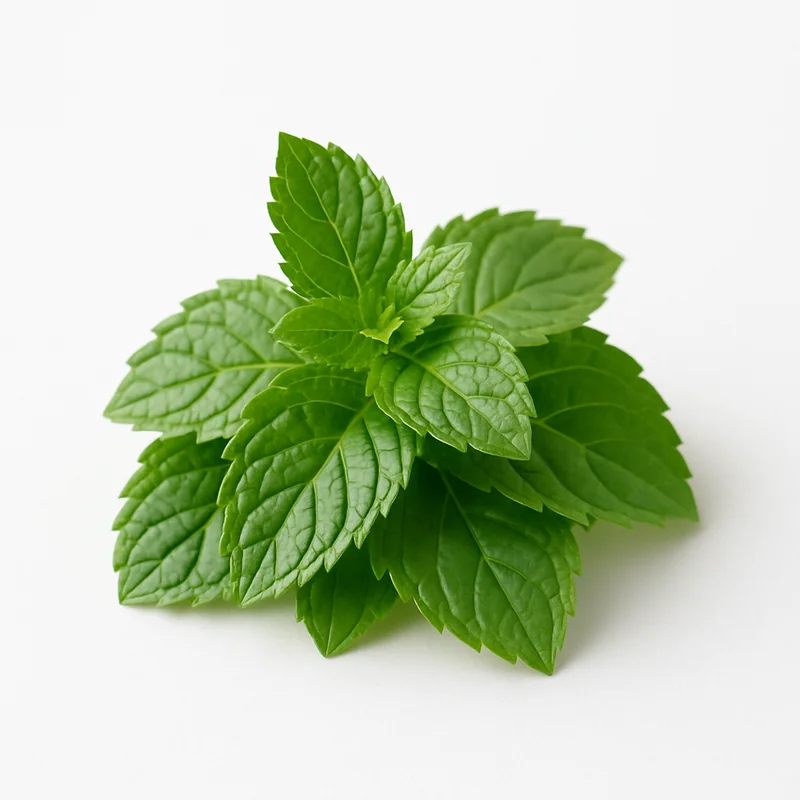
Peppermint
Peppermint is a aromatic herb rich in menthol and polyphenols, offering digestive support and anti-inflammatory benefits with minimal calories but notable micronutrient density.
Nutrition · per ~2 g serving · ≈ a pinch
- Vitamin C0.64 mg<1% DV
- Folate2.3 mcg<1% DV
- Riboflavin0.01 mg<1% DV
- Vitamin B60.01 mg<1% DV
- Niacin0.03 mg<1% DV
- Thiamin0.00 mg<1% DV
- Vitamin A4.2 iu<1% DV
- Manganese0.02 mg1% DV
- Copper0.01 mg<1% DV
- Iron0.10 mg<1% DV
- Magnesium1.6 mg<1% DV
- Calcium4.9 mg<1% DV
- Potassium11.4 mg<1% DV
- Zinc0.02 mg<1% DV
- Phosphorus1.5 mg<1% DV
- Sodium0.62 mg<1% DV
- Polyunsaturated Fat0.01 g
- Saturated Fat0.00 g
- Monounsaturated Fat0.00 g
- Polyphenols~3.0 mg
Score · 96/100
Vitamins & minerals packed in relative to calories — the single biggest driver of the score.
How much protein it delivers, by absolute grams and per calorie.
Dietary fiber for gut health, satiety and steadier blood sugar.
Fat quality — unsaturated vs saturated, and trans-fat free.
Polyphenols, flavonoids and other beneficial plant compounds for this food group.
Low sugar with a high fiber-to-carb ratio scores best — gentler on blood sugar.
- Manganese51% DV
- Copper37% DV
- Vitamin C35% DV
- Folate29% DV
- Iron28% DV
Overview
Peppermint (Mentha piperita) is a hybrid mint native to Europe and the Middle East, now cultivated globally for culinary and medicinal purposes. As a concentrated herb, peppermint delivers substantial micronutrients per serving despite typical use in small quantities—particularly potassium (569mg/100g), calcium (243mg/100g), and iron (5.08mg/100g). The herb's primary bioactive compounds are menthol and menthone, which comprise 40-90% of the essential oil, alongside flavonoids like rosmarinic acid. For longevity-focused nutrition, peppermint's primary value lies in digestive optimization, anti-inflammatory action, and potential cognitive enhancement. The high fiber content (8g/100g) supports gut health, though practical peppermint consumption (as tea or garnish) typically provides 1-3g fiber per serving. Scientific evidence supports peppermint's role in reducing IBS symptoms, improving gastric motility, and potentially enhancing memory and focus through menthol's effects on cerebral blood flow. The polyphenol content contributes antioxidant activity relevant to age-related disease prevention. Peppermint's minimal caloric footprint makes it an excellent addition to longevity-focused protocols without metabolic burden.
Health Benefits (5)
- Improved digestive function and reduced IBS symptomsstrongMenthol relaxes smooth muscle in the GI tract, reducing spasms and improving gastric motility while promoting bile secretion for enhanced fat digestion
- Anti-inflammatory and antioxidant protectionmoderateRosmarinic acid and other polyphenols in peppermint scavenge free radicals and inhibit pro-inflammatory cytokine production, supporting cellular longevity
- Enhanced cognitive function and mental claritymoderateMenthol increases cerebral blood flow and may modulate acetylcholine pathways, improving memory consolidation and attention span
- Reduced headache frequency and intensitymoderateTopical and systemic menthol activates cold-sensing TRPM8 receptors, reducing muscle tension and migraine trigger sensitivity
- Antimicrobial and oral health supportmoderateMenthol exhibits direct antimicrobial activity against oral pathogens, reducing plaque formation and supporting long-term dental health
Food Pairings
- ·Pair with ginger tea because both enhance digestive motility and synergistically reduce nausea and bloating
- ·Combine with black tea for improved antioxidant absorption—catechins in tea increase polyphenol bioavailability
- ·Mix with lemon water to enhance iron absorption from peppermint through vitamin C, improving the bioavailability of the herb's 5mg/100g iron content
- ·Pair with fatty fish (salmon) because peppermint's bile-stimulating properties enhance fat-soluble nutrient absorption (omega-3s, vitamin D)
Practical Tips
- ·Steep fresh or dried peppermint for 5-10 minutes in 90-95°C water to maximize menthol extraction without destroying volatile compounds; avoid boiling
- ·Store dried peppermint in airtight, opaque containers away from light and heat to preserve menthol content—properly stored dried leaves retain potency for 6-12 months
- ·Consume 1-2 cups of peppermint tea 20-30 minutes after meals to optimize digestive benefits and avoid potential heartburn in sensitive individuals when consumed before food
- ·Grow fresh peppermint at home in a separate container—it spreads aggressively and will overtake garden beds, ensuring a cost-effective year-round supply
- ·For IBS or digestive complaints, consider enteric-coated peppermint oil capsules (500-1000mg per dose) for targeted colon delivery, though culinary use is safe and evidence-supported
Optimal Timing
Post-exercise consumption supports digestive recovery, reduces exercise-induced GI distress, and aids nutrient absorption from post-workout meals through enhanced gastric motility
- · Before bed if caffeine-sensitive (dried peppermint minimal caffeine, but some sensitivity exists)
- · Immediately before exercise on an empty stomach (may cause mild nausea in sensitive individuals)
Peppermint tea is compatible with fasting protocols and may enhance fat oxidation; however, menthol may increase stomach acid sensitivity—consume with caution if prone to reflux during fasts
