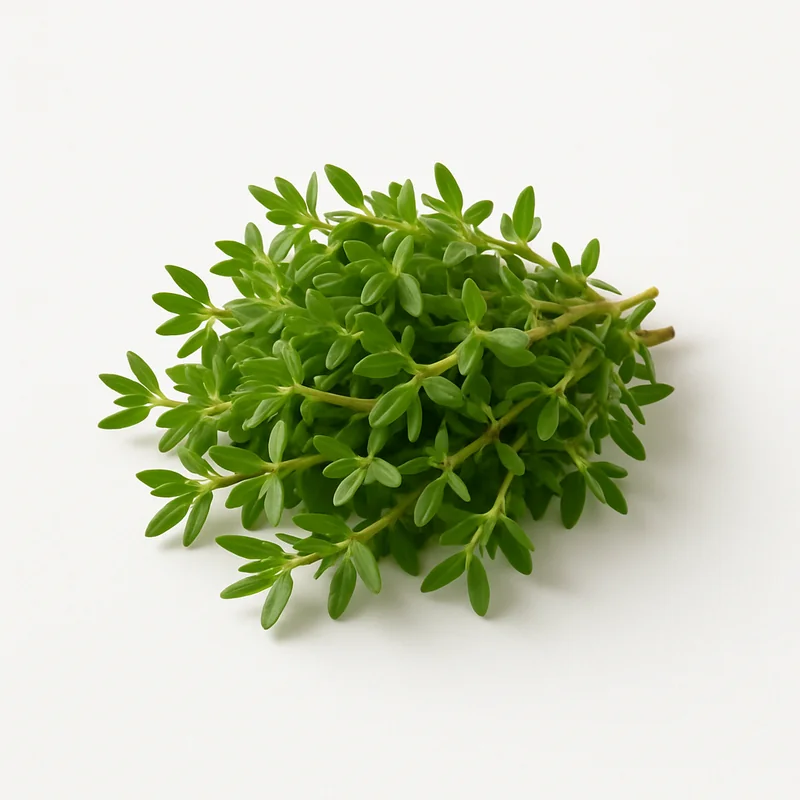
Thyme
Thyme is a Mediterranean herb rich in volatile oils, antioxidants, and minerals that support immune function and respiratory health. Despite its low calorie density, it delivers substantial amounts of iron, calcium, and vitamin C per gram.
Nutrition · per ~2 g serving · ≈ a pinch
- Vitamin C3.2 mg4% DV
- Riboflavin0.01 mg<1% DV
- Vitamin B60.01 mg<1% DV
- Niacin0.04 mg<1% DV
- Folate0.90 mcg<1% DV
- Vitamin A4.8 iu<1% DV
- Thiamin0.00 mg<1% DV
- Iron0.35 mg2% DV
- Manganese0.03 mg1% DV
- Copper0.01 mg1% DV
- Magnesium3.2 mg<1% DV
- Calcium8.1 mg<1% DV
- Zinc0.04 mg<1% DV
- Potassium12.2 mg<1% DV
- Phosphorus2.1 mg<1% DV
- Sodium0.18 mg<1% DV
- Polyunsaturated Fat0.01 g
- Saturated Fat0.01 g
- Monounsaturated Fat0.00 g
- Polyphenols~3.0 mg
Score · 97/100
Vitamins & minerals packed in relative to calories — the single biggest driver of the score.
How much protein it delivers, by absolute grams and per calorie.
Dietary fiber for gut health, satiety and steadier blood sugar.
Fat quality — unsaturated vs saturated, and trans-fat free.
Polyphenols, flavonoids and other beneficial plant compounds for this food group.
Low sugar with a high fiber-to-carb ratio scores best — gentler on blood sugar.
- Vitamin C178% DV
- Iron97% DV
- Manganese75% DV
- Copper62% DV
- Magnesium38% DV
Overview
Thyme (Thymus vulgaris) originated in the Mediterranean region and has been used in traditional medicine for over 2,000 years. As a culinary herb, it provides concentrated micronutrients—100g delivers 17.45mg of iron, 405mg of calcium, and 160mg of vitamin C, though typical consumption is 1-2 teaspoons (3-6g) per use. The herb's primary bioactive compounds are thymol and carvacrol, monoterpenes found in its essential oil that exhibit antimicrobial and antioxidant properties. Thyme's high fiber content (14g per 100g) supports gut health, while its mineral density—particularly iron and magnesium—aids energy metabolism and cardiovascular function. For longevity, thyme's antioxidant profile may help reduce oxidative stress and inflammation, both linked to aging and chronic disease. The herb's low sodium content and potassium-to-sodium ratio make it an excellent salt alternative, supporting blood pressure management. Regular consumption as part of Mediterranean-style cooking patterns associates with reduced cardiovascular disease risk and improved cognitive aging.
Health Benefits (5)
- Enhanced respiratory and immune functionmoderateThymol and carvacrol in thyme's essential oil exhibit antimicrobial and mucolytic properties, helping clear airways and modulate immune response. Vitamin C content supports neutrophil function and antibody production.
- Reduced inflammation and oxidative stressmoderateThyme contains flavonoids (luteolin, apigenin) and phenolic acids that scavenge free radicals and inhibit pro-inflammatory cytokine production, potentially slowing age-related cellular damage.
- Improved iron status and oxygen transportstrongThyme provides 17.45mg iron per 100g (though typical doses are smaller); pairing with vitamin C sources enhances non-heme iron absorption, supporting hemoglobin synthesis and mitochondrial function.
- Cardiovascular and cognitive supportemergingPolyphenols in thyme may improve endothelial function and reduce LDL oxidation. Some evidence suggests thymol improves cerebral blood flow and may support memory formation.
- Bone health supportmoderateHigh calcium (405mg/100g) and magnesium content contribute to bone mineralization and muscle function, especially important for aging populations.
Food Pairings
- ·Pair with citrus (lemon, lime) because vitamin C enhances iron absorption from thyme and potentiates antioxidant activity of phenolic compounds
- ·Combine with olive oil in dressings because fat-soluble compounds like thymol and flavonoids require lipid for optimal absorption and bioavailability
- ·Use with tomatoes and garlic in Mediterranean dishes because lycopene, allicin, and thymol work synergistically to reduce inflammatory markers
- ·Add to bone broths because thyme's minerals complement collagen-derived amino acids for joint and gut barrier support
Practical Tips
- ·Use fresh thyme within 1-2 weeks of purchase, or dry branches whole and store in airtight containers away from light for 6-12 months of potency
- ·Strip leaves from woody stems before cooking; add fresh thyme near end of cooking to preserve volatile oils, or early for slow-cooked dishes where oil infusion is desired
- ·Steep 1 teaspoon dried thyme in hot water for 5-10 minutes to make a functional tea; consume 2-3 cups daily for respiratory support during cold/flu season
- ·Grow thyme in a sunny, well-drained spot at home; it's one of the hardiest culinary herbs and provides consistent supply while ensuring pesticide-free product
- ·Replace salt with thyme in seasoning blends to reduce sodium while increasing mineral density—1 teaspoon thyme (~1g) provides negligible sodium but meaningful potassium and calcium
Optimal Timing
Thyme can be consumed throughout the day as a culinary herb. For specific benefits: consume with meals to enhance iron absorption; use in afternoon/evening broths for their calming properties; incorporate into dinner preparations for overnight antioxidant activity during sleep-based cellular repair.
Thyme tea can be consumed during fasting windows as it adds minimal calories (3-6 per cup) while providing bioactive compounds. Not recommended in therapeutic doses for pregnant women or those on blood-thinning medications without medical guidance.
