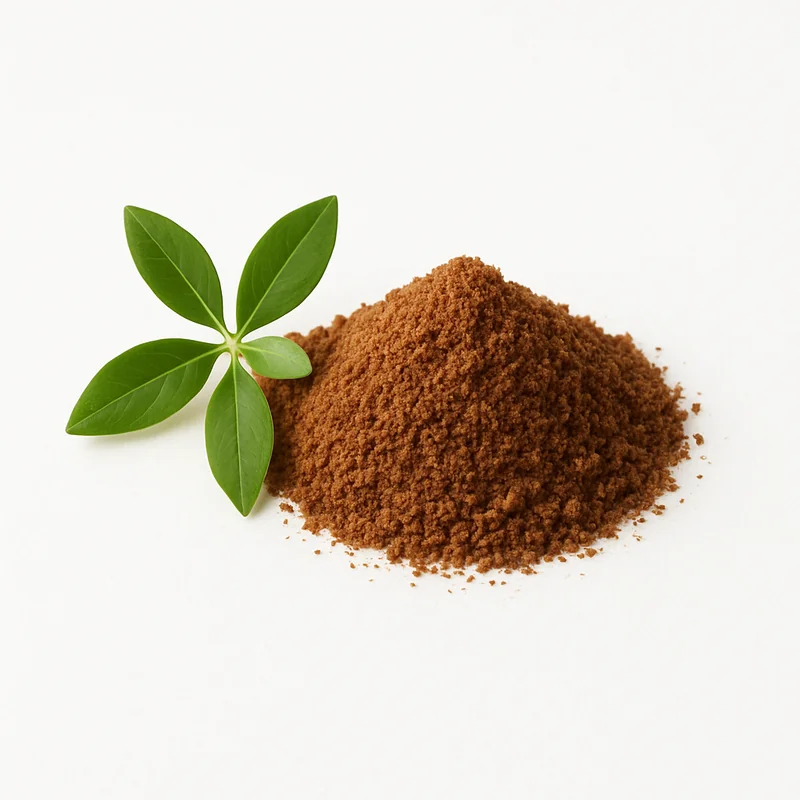
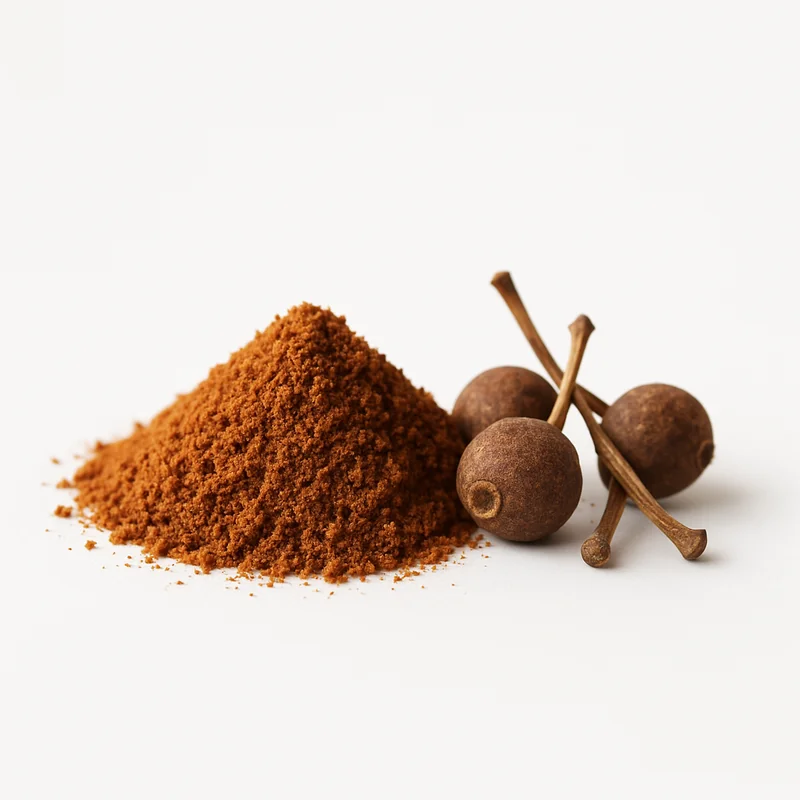
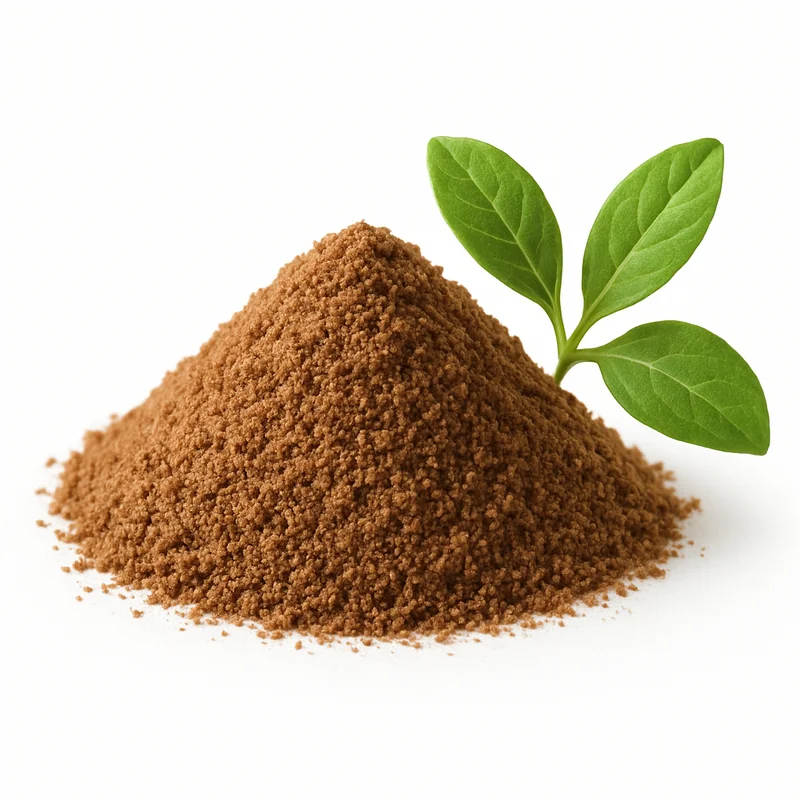
Allspice (Ground)
Ground allspice is a warm, complex berry spice rich in manganese and fiber, with eugenol-driven antioxidant, anti-inflammatory, and digestive benefits.
Nutrition · per ~2 g serving · ≈ a pinch
- Vitamin C0.78 mg<1% DV
- Niacin0.06 mg<1% DV
- Vitamin B60.00 mg<1% DV
- Vitamin A10.8 iu<1% DV
- Manganese0.06 mg3% DV
- Copper0.01 mg1% DV
- Calcium13.2 mg1% DV
- Iron0.14 mg<1% DV
- Magnesium2.7 mg<1% DV
- Potassium20.9 mg<1% DV
- Zinc0.02 mg<1% DV
- Phosphorus2.3 mg<1% DV
- Selenium0.04 mcg<1% DV
- Sodium1.5 mg<1% DV
- Saturated Fat0.05 g
- Quercetin~0.30 mg
- Polyphenols~3.0 mg
Score · 97/100
Vitamins & minerals packed in relative to calories — the single biggest driver of the score.
How much protein it delivers, by absolute grams and per calorie.
Dietary fiber for gut health, satiety and steadier blood sugar.
Fat quality — unsaturated vs saturated, and trans-fat free.
Polyphenols, flavonoids and other beneficial plant compounds for this food group.
Low sugar with a high fiber-to-carb ratio scores best — gentler on blood sugar.
- Manganese128% DV
- Copper61% DV
- Calcium51% DV
- Vitamin C44% DV
- Iron39% DV
Overview
Allspice (Pimenta dioica) is the ground dried unripe berry of a tropical evergreen native to Jamaica and Central America, named for its flavor that evokes a blend of cinnamon, clove, and nutmeg. Like cloves, its dominant bioactive is eugenol, supported by eugenol acetate, cineole, caryophyllene, and a dense set of polyphenol antioxidants, which together give it potent radical-scavenging and anti-inflammatory capacity. Ground allspice is concentrated at about 263 kcal per 100g, providing 6.1g protein, 72g carbohydrate (an excellent 57g of it fiber), and 8.7g fat. Its mineral profile is led by roughly 2.94mg manganese per 100g, along with 661mg calcium, 7.06mg iron, 135mg magnesium, 1044mg potassium, 1.01mg zinc, and 0.55mg copper. It also supplies vitamin C, vitamin A, niacin, and a small amount of vitamin B6. The longevity thesis rests on eugenol's strong antioxidant and NF-κB-inhibiting action—shared with cloves—plus traditional digestive and analgesic uses; its very high fiber content further supports gut and metabolic health. Quercetin and gallic acid in allspice contribute additional anti-inflammatory activity, and its name reflects its uncanny resemblance to a blend of several spices despite coming from a single berry. Typical culinary doses are 1-3g, and like other berry and seed spices it benefits from being ground fresh and bloomed in fat.
Health Benefits (4)
- Provides strong antioxidant protectionmoderateEugenol, quercetin, and gallic acid scavenge free radicals and protect cells from oxidative damage
- Reduces inflammation and painmoderateEugenol inhibits COX enzymes and NF-κB signaling and has mild analgesic, pain-channel-blocking action like that of cloves
- Aids digestion and relieves gasemergingEugenol and cineole act as carminatives, stimulating digestive secretions and easing bloating
- Supports gut health through fiberstrongVery high dietary fiber (57g/100g) feeds beneficial gut bacteria and supports regularity
Food Pairings
- ·Pair with meats and marinades because allspice's eugenol penetrates and tenderizes while adding warm depth, central to jerk seasoning
- ·Combine with root vegetables and squash because its clove-cinnamon profile complements natural sweetness
- ·Add to braises and stews because its fat-soluble eugenol disperses fully during slow cooking
Practical Tips
- ·Buy whole berries and grind fresh; ground allspice loses its complex aroma within months
- ·Use as a single-spice substitute for a cinnamon-clove-nutmeg blend in baking
- ·Bloom in oil or add early to braises so its fat-soluble compounds infuse the dish
- ·Store airtight and dark to preserve volatile eugenol-rich oils
Optimal Timing
Allspice's bioactives have no circadian dependency and it suits both savory meals and warm beverages throughout the day.
Negligible calories at culinary doses.
