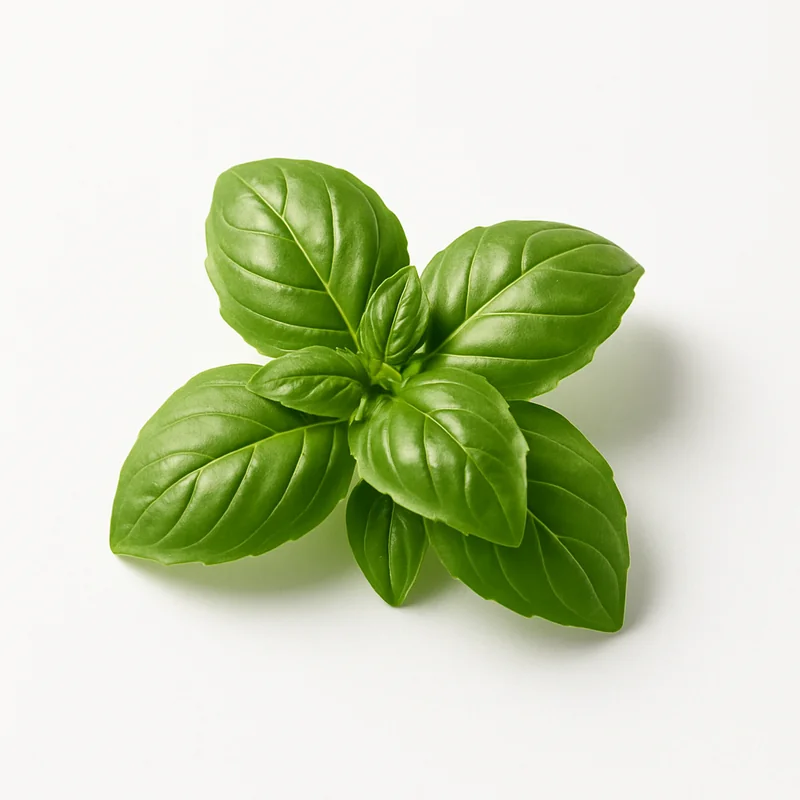
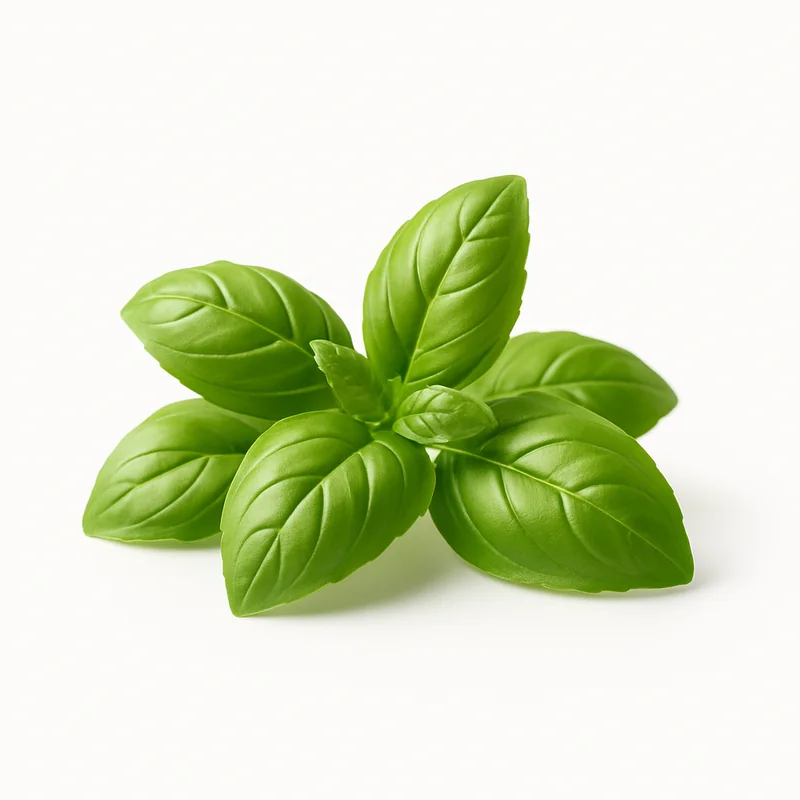
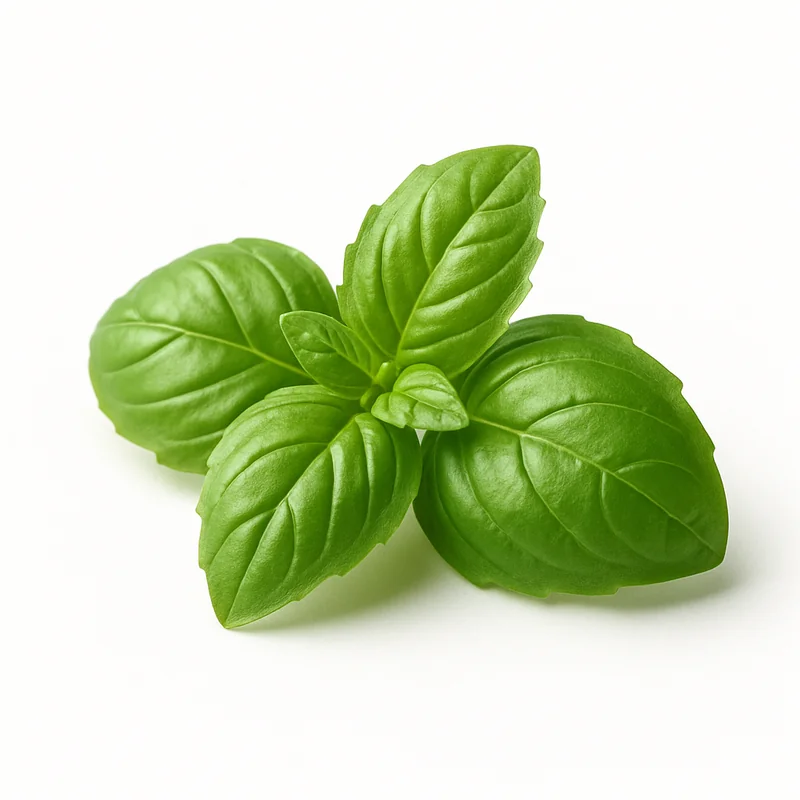
Basil is an aromatic herb rich in vitamin K and polyphenols, offering anti-inflammatory and antioxidant benefits with minimal calories. Fresh basil supports bone health, cardiovascular function, and cognitive longevity through its bioactive compound profile.
Vitamins & minerals packed in relative to calories — the single biggest driver of the score.
How much protein it delivers, by absolute grams and per calorie.
Dietary fiber for gut health, satiety and steadier blood sugar.
Fat quality — unsaturated vs saturated, and trans-fat free.
Polyphenols, flavonoids and other beneficial plant compounds for this food group.
Low sugar with a high fiber-to-carb ratio scores best — gentler on blood sugar.
Basil (Ocimum basilicum) originates from tropical regions of central Africa and Southeast Asia and has been cultivated for thousands of years across Mediterranean and Asian cuisines. As a nutrient-dense herb, basil delivers exceptional vitamin K content (415 mcg per 100g—exceeding daily needs in small amounts), critical for bone mineralization and vascular calcification prevention. The herb contains significant polyphenols including eugenol, linalool, and rosmarinic acid—compounds with documented antioxidant and anti-inflammatory properties that support arterial health and neuroinflammation reduction. Basil's potassium content (295 mg/100g) contributes to blood pressure regulation when consumed regularly. Unlike many herbs, basil retains most bioactives when fresh, though gentle heating preserves many compounds. For longevity-focused nutrition, basil serves as a calorie-free flavor amplifier that reduces sodium dependence while delivering metabolically active polyphenols. Regular consumption supports endothelial function, reduces oxidative stress, and may modulate inflammatory pathways implicated in aging. The herb's volatile oils enhance digestive secretions and bile production, improving fat-soluble nutrient absorption from paired foods.
Basil's bioactives have no circadian dependency and benefit from consistent daily consumption. Include at multiple meals for cumulative polyphenol intake and sustained anti-inflammatory effects. Morning or midday consumption aids digestion, while evening use supports overnight antioxidant processes.
Basil can be consumed during fasting periods as it contains negligible calories and does not trigger metabolic disruption. Fresh basil tea (steeped 5 minutes) offers concentrated polyphenols without breaking fast.
