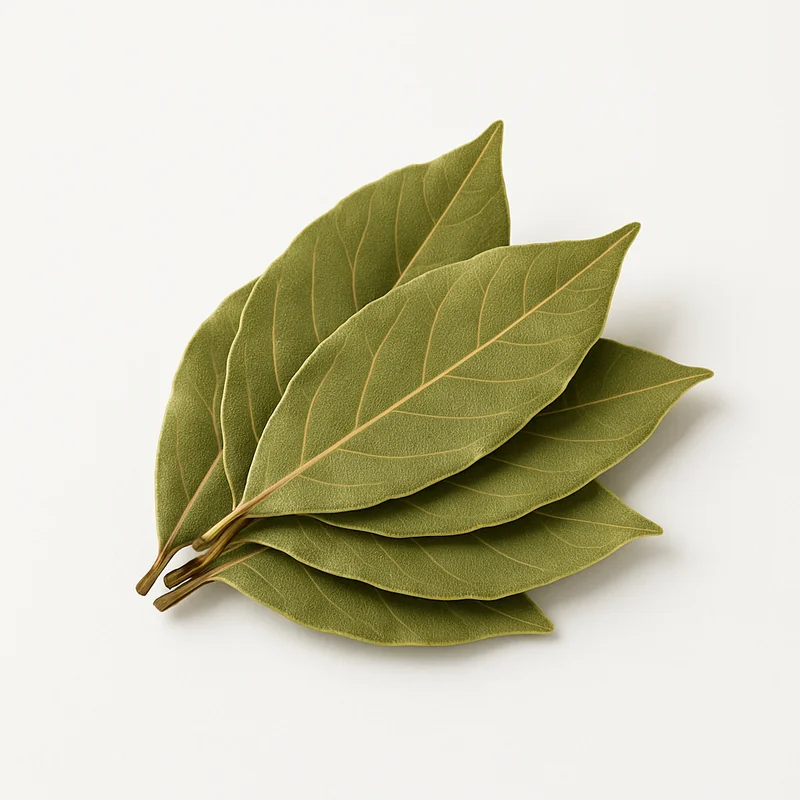
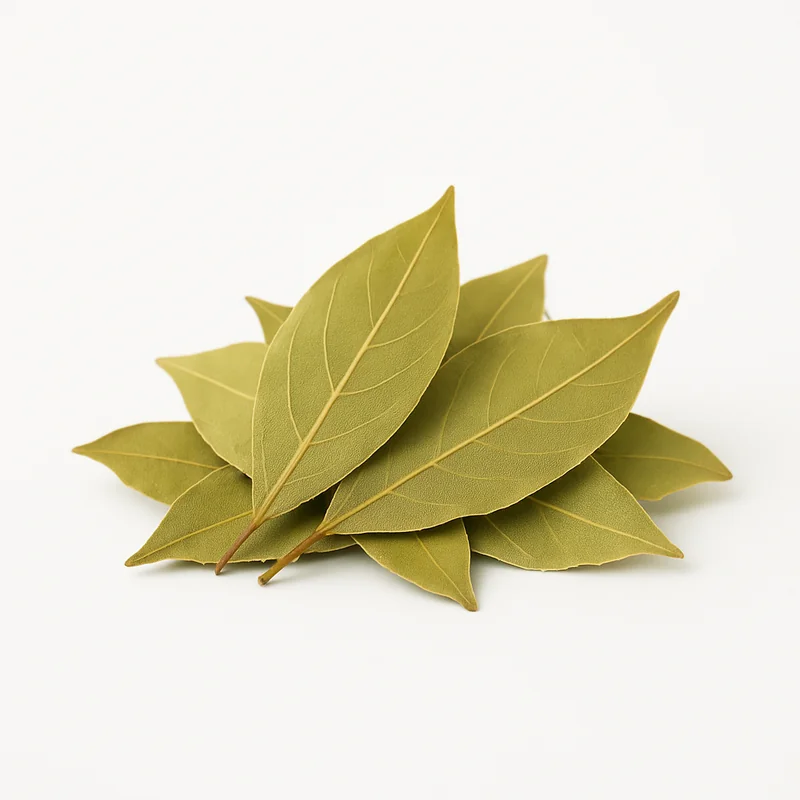
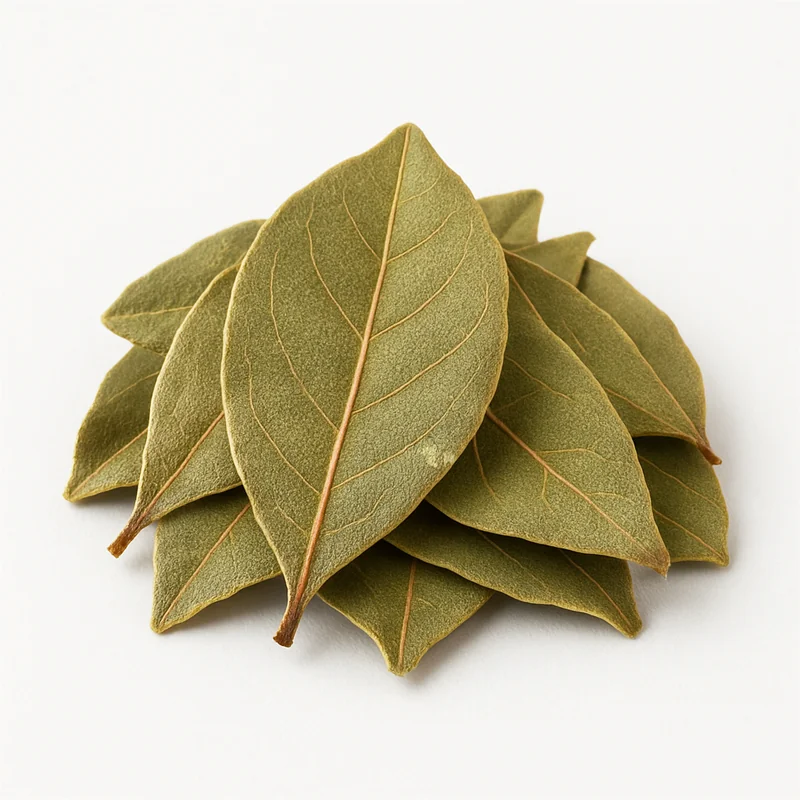
Dried bay leaf is an aromatic culinary leaf rich in iron, calcium, manganese, and vitamin A, carrying cineole and other terpenes used to flavor slow-cooked dishes.
Vitamins & minerals packed in relative to calories — the single biggest driver of the score.
How much protein it delivers, by absolute grams and per calorie.
Dietary fiber for gut health, satiety and steadier blood sugar.
Fat quality — unsaturated vs saturated, and trans-fat free.
Polyphenols, flavonoids and other beneficial plant compounds for this food group.
Low sugar with a high fiber-to-carb ratio scores best — gentler on blood sugar.
Bay leaf (Laurus nobilis) comes from the bay laurel, an evergreen tree native to the Mediterranean whose foliage crowned poets and victors in antiquity. The leathery, glossy leaves are dried and added whole to soups, stocks, braises, and sauces, then removed before serving—their flavor is extracted slowly rather than eaten directly. Nutritionally, dried bay leaves are concentrated: per 100 g they provide roughly 313 kcal, 7.6 g protein, 75 g carbohydrate (~26 g fiber), and a strong mineral profile including ~834 mg calcium, ~43 mg iron, ~120 mg magnesium, ~529 mg potassium, ~8.2 mg manganese—one of the richest food sources—and ~0.42 mg copper. They are also a notable source of vitamin A (~6185 IU) and vitamin C (~46 mg). The leaf's aroma derives from a volatile oil dominated by 1,8-cineole (eucalyptol), with α-terpinyl acetate, sabinene, and eugenol, plus polyphenols and the parthenolide-type sesquiterpene lactones. These constituents give bay its antioxidant, anti-inflammatory, and digestive properties, and some studies suggest bay leaf may help moderate blood glucose and lipids. Because the leaf is infused and discarded, its direct nutrient contribution is minimal, but its aromatic bioactives define the backbone flavor of countless slow-cooked dishes.
Bay leaf is an infusing aromatic with no time-of-day dependency; use whenever long-cooked dishes call for it.
Leaves are infused and removed, contributing essentially zero calories; fasting-compatible.
