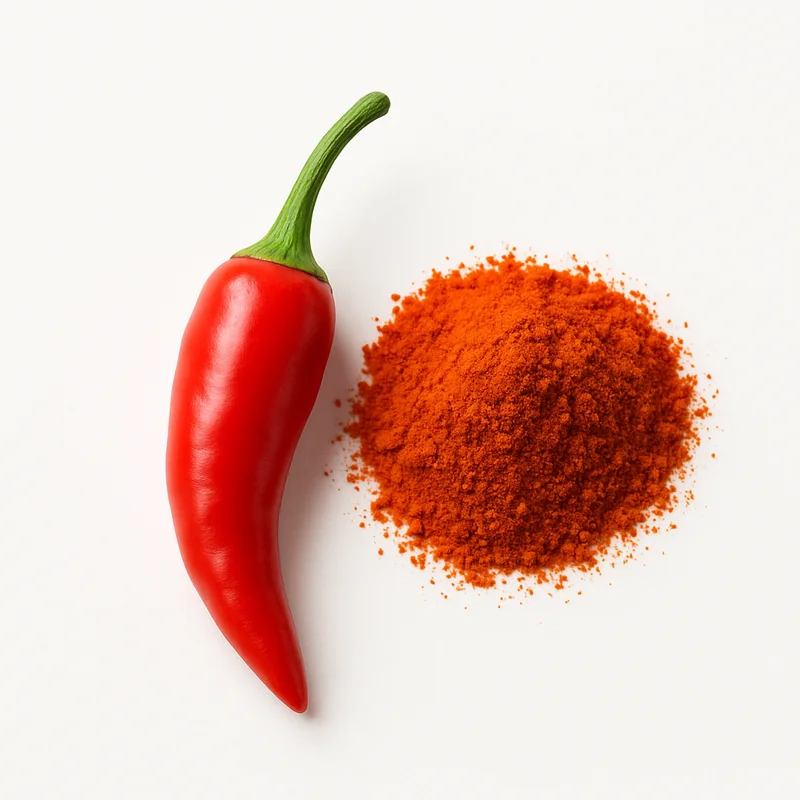
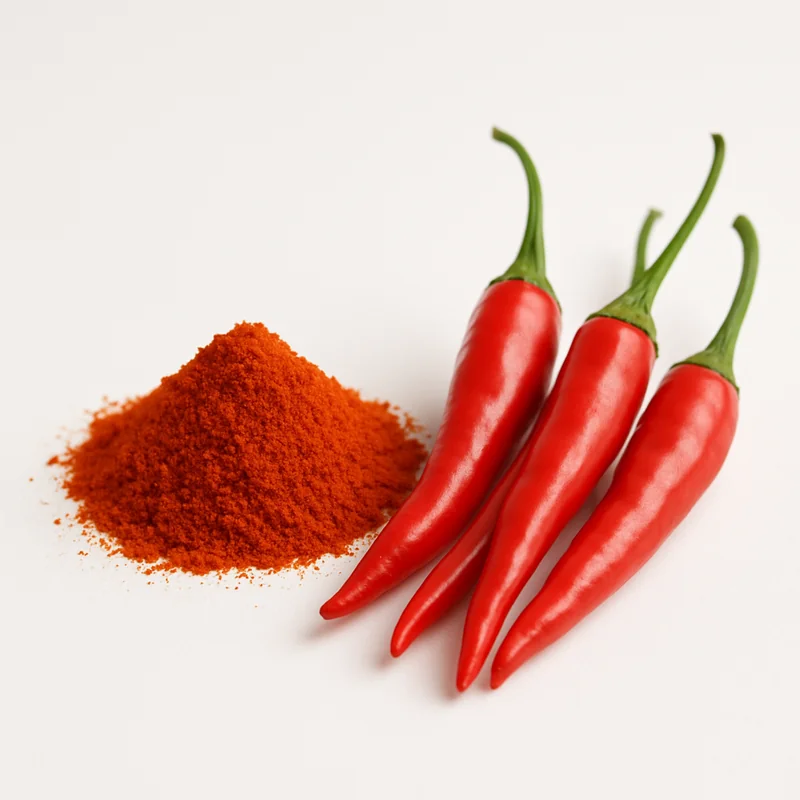
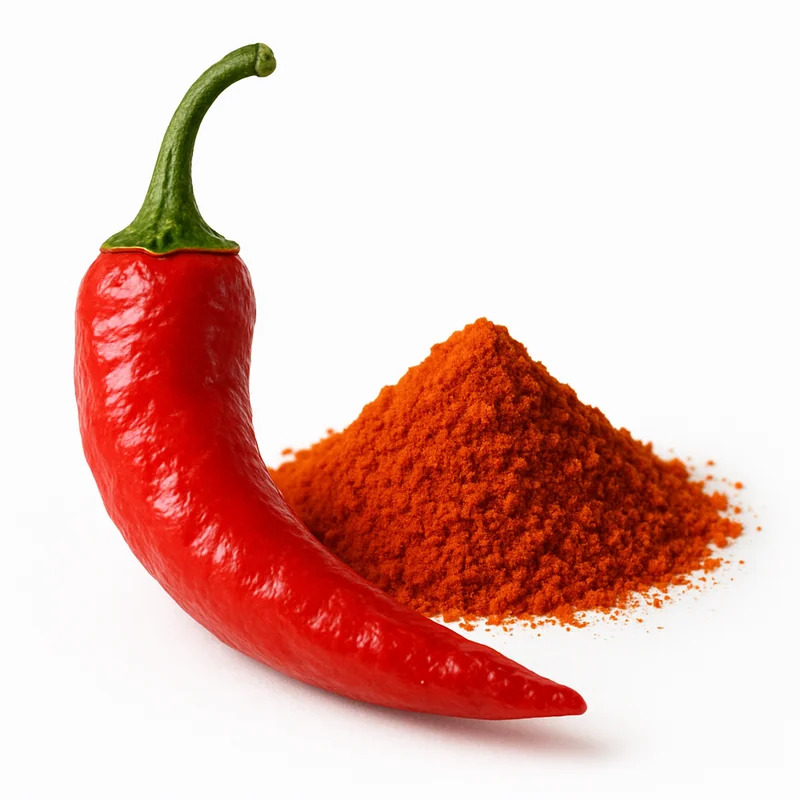
Cayenne Pepper
Cayenne pepper is an intensely hot ground chili powder rich in provitamin-A carotenoids and capsaicin, the thermogenic alkaloid behind its heat and metabolic benefits.
Nutrition · per ~2 g serving · ≈ a pinch
- Vitamin A832.2 iu17% DV
- Vitamin E0.60 mg4% DV
- Vitamin B60.05 mg3% DV
- Vitamin C1.5 mg2% DV
- Riboflavin0.02 mg1% DV
- Vitamin K1.6 mcg1% DV
- Niacin0.17 mg1% DV
- Thiamin0.01 mg<1% DV
- Folate2.1 mcg<1% DV
- Manganese0.04 mg2% DV
- Iron0.16 mg<1% DV
- Potassium40.3 mg<1% DV
- Copper0.01 mg<1% DV
- Magnesium3.0 mg<1% DV
- Phosphorus5.9 mg<1% DV
- Zinc0.05 mg<1% DV
- Selenium0.18 mcg<1% DV
- Calcium3.0 mg<1% DV
- Sodium0.60 mg<1% DV
- Saturated Fat0.07 g
- Beta-carotene~0.10 mg
- Carotenoids~0.12 mg
- Capsaicin~1.0 mg
Score · 97/100
Vitamins & minerals packed in relative to calories — the single biggest driver of the score.
How much protein it delivers, by absolute grams and per calorie.
Dietary fiber for gut health, satiety and steadier blood sugar.
Fat quality — unsaturated vs saturated, and trans-fat free.
Polyphenols, flavonoids and other beneficial plant compounds for this food group.
Low sugar with a high fiber-to-carb ratio scores best — gentler on blood sugar.
- Vitamin E199% DV
- Vitamin B6144% DV
- Manganese87% DV
- Vitamin C85% DV
- Riboflavin71% DV
Overview
Cayenne pepper is ground from dried ripe fruits of hot Capsicum annuum cultivars and is among the most pungent of culinary spices. Per 100 g it provides roughly 318 kcal, 12 g protein, 57 g carbohydrate, 17 g fat and 27 g dietary fiber. It is extraordinarily rich in provitamin-A carotenoids: about 41,600 IU of vitamin A per 100 g, reflecting heavy concentrations of beta-carotene, capsanthin and other pigments produced as the chili ripens red. Cayenne is also a meaningful source of vitamin C (about 76 mg), vitamin E (~30 mg, one of the highest among spices), vitamin K (~80 mcg), potassium (~2014 mg), manganese, iron and B6. The signature bioactive is capsaicin, the vanilloid that binds the TRPV1 heat-and-pain receptor; capsaicin drives thermogenesis, blunts appetite, and exerts vasodilatory, analgesic and anti-inflammatory effects. The deep-red carotenoids and tocopherols make cayenne a potent antioxidant spice as well. Used in small culinary pinches, cayenne contributes negligible calories while delivering concentrated heat and a daily dose of capsaicin and fat-soluble antioxidants, making it a favored functional spice for metabolic and cardiovascular support in a longevity-oriented diet.
Health Benefits (4)
- Boosts thermogenesis and supports metabolic ratemoderateCapsaicin activates TRPV1 receptors and the sympathetic nervous system, increasing energy expenditure and fat oxidation while modestly suppressing appetite and energy intake
- Supports cardiovascular functionmoderateCapsaicin promotes nitric-oxide-mediated vasodilation and may improve endothelial function and lipid handling, while high potassium counters sodium's pressor effect
- Delivers provitamin-A carotenoid and tocopherol antioxidantsstrongCarotenoids (beta-carotene, capsanthin) and vitamin E quench reactive oxygen species and reduce LDL oxidation, protecting tissues from oxidative damage
- Provides analgesic and anti-inflammatory effectsstrongRepeated TRPV1 activation by capsaicin depletes substance P in sensory neurons and downregulates inflammatory mediators, the basis for topical capsaicin pain relief
Food Pairings
- ·Pair with a fat source such as olive oil or avocado because capsaicin and the carotenoids and vitamin E are fat-soluble and far better absorbed with dietary fat
- ·Combine with citrus or other vitamin-C foods because vitamin C regenerates oxidized vitamin E for sustained antioxidant protection
- ·Use with lean protein dishes because capsaicin's thermogenic and appetite-modulating effects complement a higher-protein meal
Practical Tips
- ·Bloom cayenne briefly in warm oil to extract its fat-soluble carotenoids and capsaicin, then add to the dish
- ·Start with a small pinch; cayenne's heat is intense and builds, and capsaicin's effects are dose-dependent
- ·Store in an airtight, dark container, as the red carotenoid pigments bleach and degrade under light
- ·Handle with care and wash hands after use, since capsaicin readily transfers to eyes and skin
Optimal Timing
Capsaicin's thermogenic and appetite-modulating effects are useful around meals, and there is no strict circadian requirement; some prefer it earlier in the day for the metabolic lift.
- · late evening if heat disturbs sleep or causes reflux
Culinary pinches are calorically negligible and fasting-compatible; capsaicin may aggravate reflux or sensitive stomachs in large amounts.
