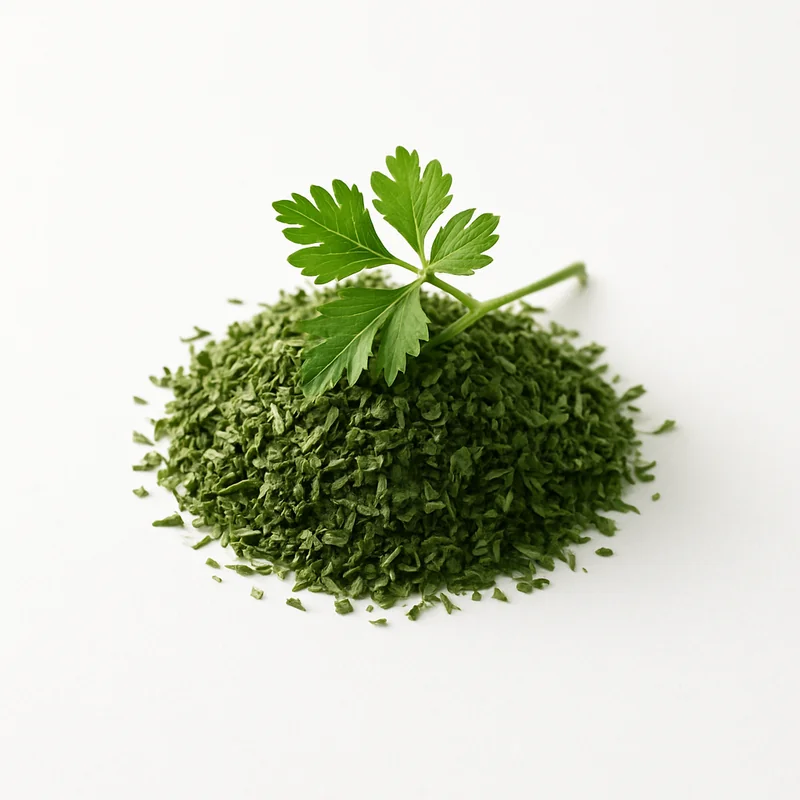
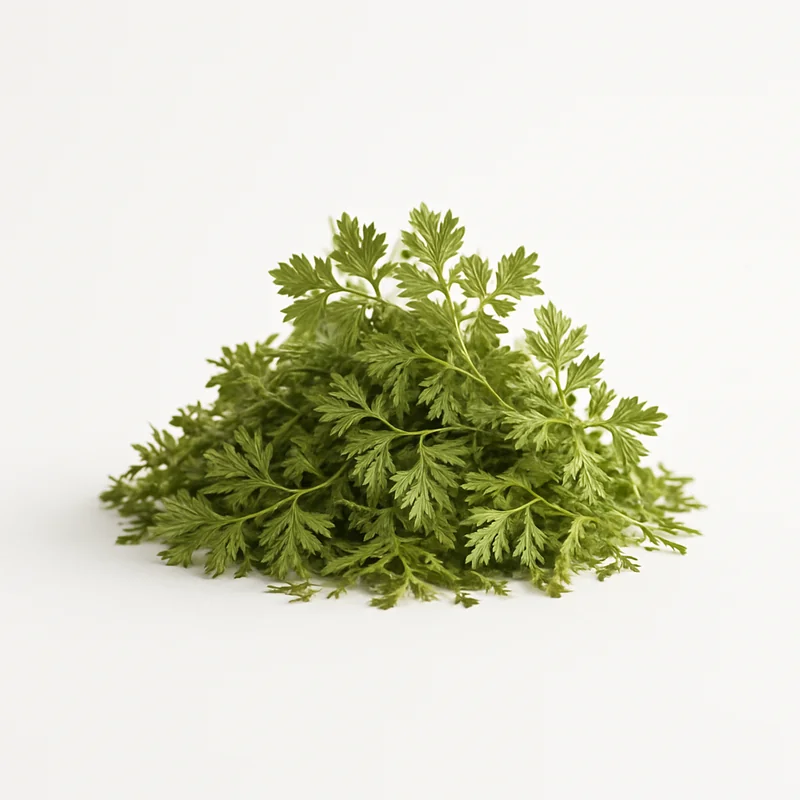
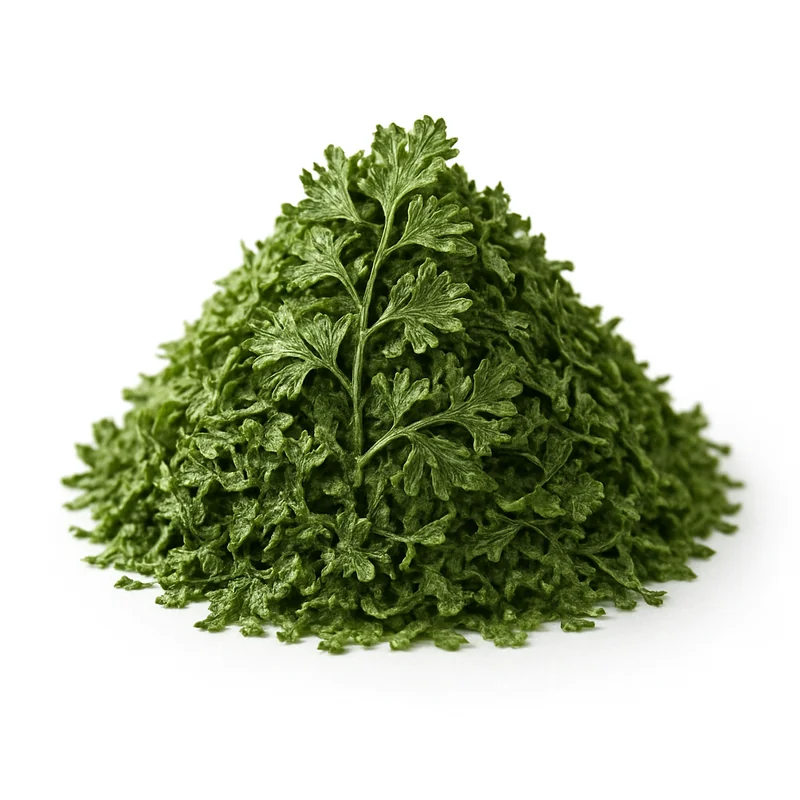
Dried chervil is a delicate anise-parsley herb extraordinarily rich in iron, manganese, vitamin C, and potassium, with aromatic compounds and antioxidant flavonoids.
Vitamins & minerals packed in relative to calories — the single biggest driver of the score.
How much protein it delivers, by absolute grams and per calorie.
Dietary fiber for gut health, satiety and steadier blood sugar.
Fat quality — unsaturated vs saturated, and trans-fat free.
Polyphenols, flavonoids and other beneficial plant compounds for this food group.
Low sugar with a high fiber-to-carb ratio scores best — gentler on blood sugar.
Chervil (Anthriscus cerefolium) is a delicate annual herb in the carrot family, native to the Caucasus and southern Russia and naturalized across Europe. With lacy leaves and a subtle aroma blending parsley and anise, it is one of the classic French fines herbes and a refined finishing herb for eggs, soups, and sauces. Dried chervil is strikingly nutrient-dense: per 100 g it provides roughly 237 kcal, 23.2 g protein, 49 g carbohydrate (~11 g fiber), and one of the most extreme mineral profiles among culinary herbs. It is among the richest food sources of iron (~32 mg) and especially manganese (~8.8 mg), with very high calcium (~1346 mg), magnesium (~130 mg), potassium (~4740 mg—exceptional), copper (~0.44 mg), and phosphorus (~450 mg). It also supplies abundant vitamin C (~50 mg) and vitamin A. Chervil's gentle anise scent comes from a volatile oil containing methyl chavicol (estragole) and 1-allyl-2,4-dimethoxybenzene, accompanied by flavonoids such as apiin and luteolin glycosides that contribute antioxidant capacity. Because chervil is used in small finishing amounts and is heat-sensitive, its bulk nutrient contribution is modest, but its mineral concentration and aromatic flavonoids place it firmly within the tradition of culinary medicine.
Chervil's minerals and bioactives have no time-of-day dependency and suit everyday finishing use.
Finishing amounts are negligible in calories and fasting-compatible.
