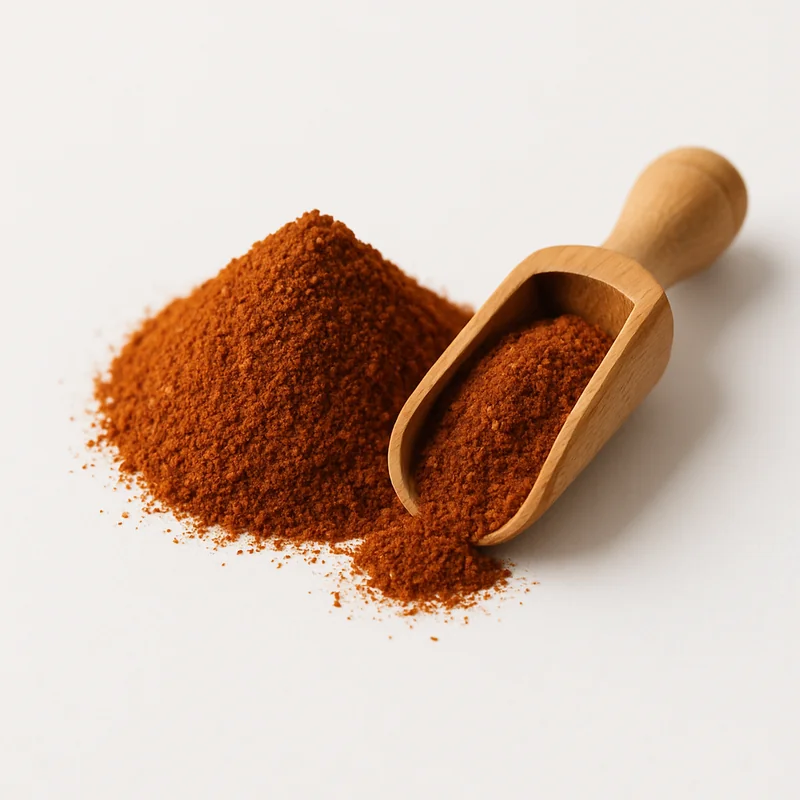
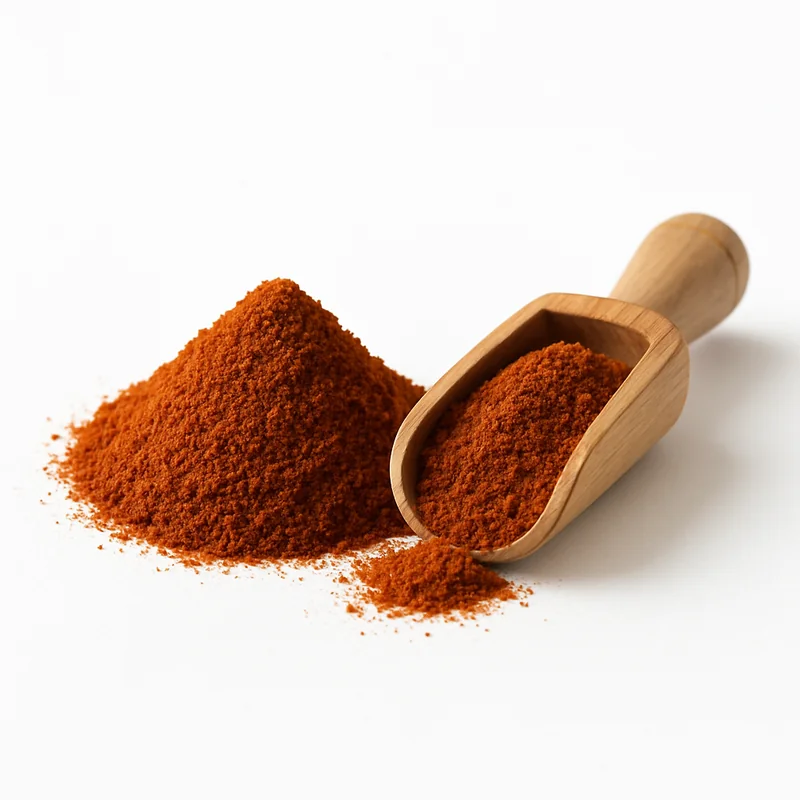
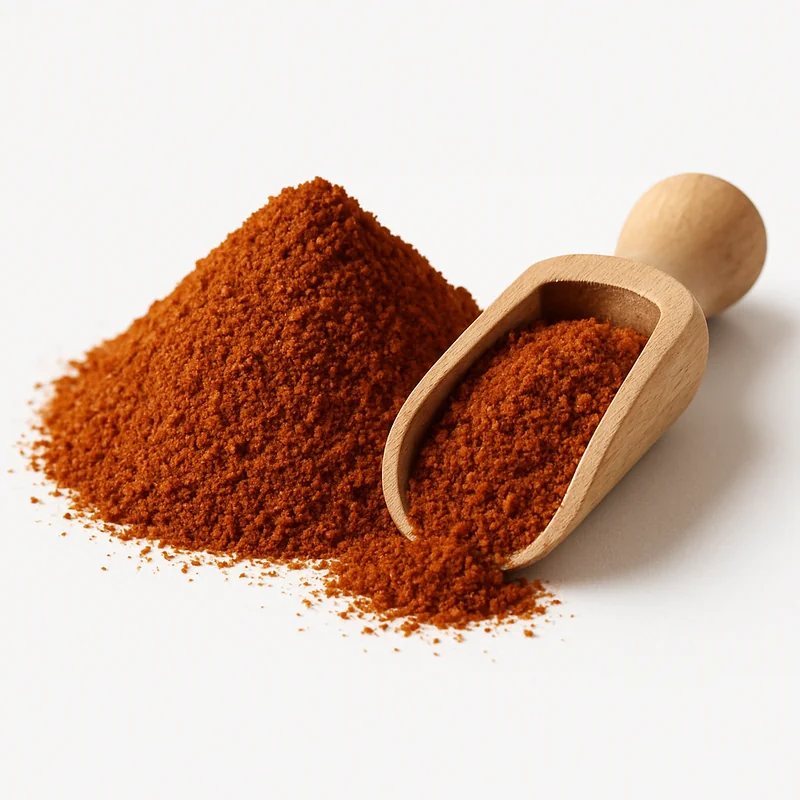
Chili Powder
Chili powder is a blended spice of ground dried chilies with cumin, garlic and oregano, rich in provitamin-A carotenoids and capsaicin with moderate heat.
Nutrition · per ~2 g serving · ≈ a pinch
- Vitamin A601.4 iu12% DV
- Vitamin E0.76 mg5% DV
- Vitamin B60.05 mg3% DV
- Vitamin K2.1 mcg2% DV
- Niacin0.21 mg1% DV
- Riboflavin0.02 mg1% DV
- Thiamin0.01 mg<1% DV
- Folate1.7 mcg<1% DV
- Vitamin C0.12 mg<1% DV
- Sodium57.3 mg2% DV
- Iron0.35 mg2% DV
- Copper0.02 mg2% DV
- Manganese0.04 mg2% DV
- Potassium39.0 mg<1% DV
- Magnesium3.0 mg<1% DV
- Calcium6.6 mg<1% DV
- Zinc0.05 mg<1% DV
- Selenium0.27 mcg<1% DV
- Phosphorus6.0 mg<1% DV
- Saturated Fat0.05 g
- Beta-carotene~0.10 mg
- Carotenoids~0.12 mg
- Capsaicin~1.0 mg
- Polyphenols~3.0 mg
Score · 94/100
Vitamins & minerals packed in relative to calories — the single biggest driver of the score.
How much protein it delivers, by absolute grams and per calorie.
Dietary fiber for gut health, satiety and steadier blood sugar.
Fat quality — unsaturated vs saturated, and trans-fat free.
Polyphenols, flavonoids and other beneficial plant compounds for this food group.
Low sugar with a high fiber-to-carb ratio scores best — gentler on blood sugar.
- Vitamin E254% DV
- Vitamin B6144% DV
- Sodium125% DV
- Iron96% DV
- Vitamin K88% DV
Overview
Chili powder, as sold in North America, is a seasoning blend built on ground dried Capsicum annuum chilies and rounded out with cumin, garlic powder, oregano and sometimes salt, giving moderate heat and a savory depth distinct from pure cayenne. Per 100 g it provides roughly 282 kcal, 13 g protein, 50 g carbohydrate, 14 g fat and 35 g dietary fiber. Reflecting its chili base, it is rich in provitamin-A carotenoids, supplying about 30,000 IU of vitamin A per 100 g from beta-carotene, capsanthin and related pigments, along with vitamin E (~38 mg), vitamin K (~106 mcg), vitamin C (~6 mg), iron (~17 mg), potassium (~1950 mg), manganese, magnesium and B6. Its bioactive heat comes from capsaicin contributed by the chili fraction, which activates the TRPV1 receptor to drive thermogenesis, vasodilation and appetite modulation, while the carotenoids and tocopherols supply fat-soluble antioxidant capacity. The added cumin and oregano contribute their own antioxidant polyphenols and trace minerals. Because formulations vary and many contain added sodium, the absolute mineral and salt content depends on the brand. Used in typical culinary tablespoons, chili powder adds negligible calories while delivering a balanced dose of capsaicin, carotenoids and herb-spice antioxidants suited to a longevity-minded, plant-forward kitchen.
Health Benefits (4)
- Promotes thermogenesis and appetite modulationmoderateCapsaicin from the chili base activates TRPV1 and sympathetic signaling, increasing energy expenditure and fat oxidation while modestly reducing energy intake
- Supplies provitamin-A carotenoid and tocopherol antioxidantsstrongBeta-carotene, capsanthin and high vitamin E quench reactive oxygen species and limit lipid peroxidation in membranes and lipoproteins
- Supports cardiovascular and metabolic healthmoderateCapsaicin promotes nitric-oxide vasodilation and the blend's potassium and antioxidants support blood pressure and limit LDL oxidation
- Adds layered antioxidant polyphenols from blend componentsmoderateCumin and oregano in the blend contribute thymol, carvacrol and phenolic acids that augment the spice's overall antioxidant and anti-inflammatory profile
Food Pairings
- ·Pair with a fat source such as oil, avocado or cheese because the carotenoids, vitamin E and capsaicin are fat-soluble and absorbed better with lipids
- ·Combine with beans and tomatoes because the chili's vitamin C and the tomatoes' lycopene complement its carotenoid antioxidants in classic chili dishes
- ·Use with lean protein because capsaicin's thermogenic effect pairs well with a higher-protein, satiating meal
Practical Tips
- ·Bloom chili powder in warm oil at the start of cooking to release its carotenoids and toast the cumin and garlic for deeper flavor
- ·Check the label for added salt, as many commercial blends are partly sodium
- ·Store airtight away from light and heat; the carotenoids and volatile spice oils fade over a few months
- ·Toast lightly and briefly to avoid scorching, which makes the blend bitter
Optimal Timing
Capsaicin's metabolic effects are useful around meals and the carotenoids have no circadian dependency; chili powder fits any meal of the day.
- · late evening if heat causes reflux or disturbs sleep
Culinary amounts are calorically negligible and fasting-compatible, though salted blends contribute sodium.
Concerns
- · High sodium
