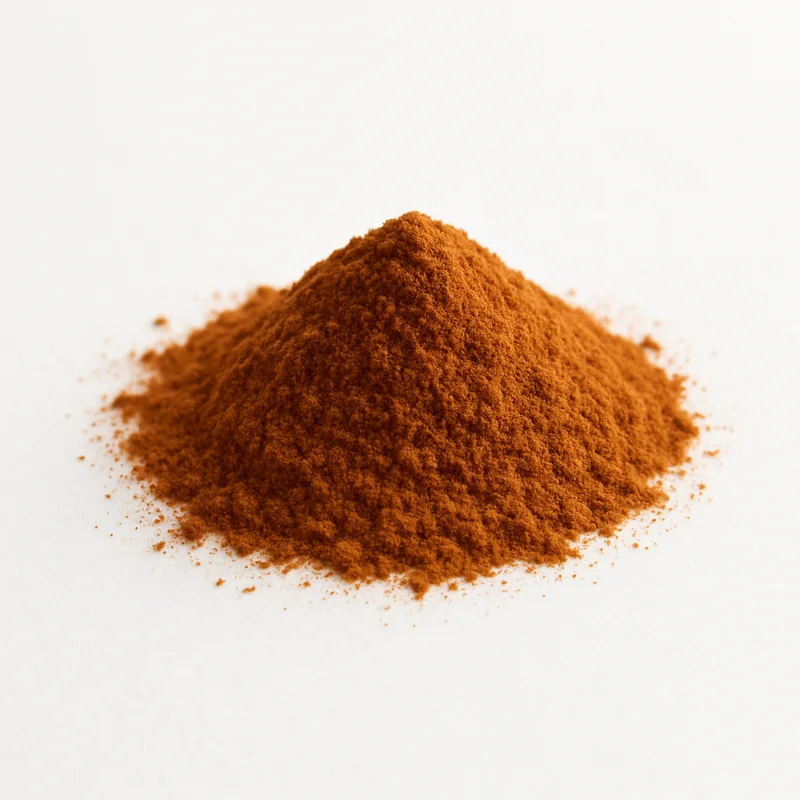
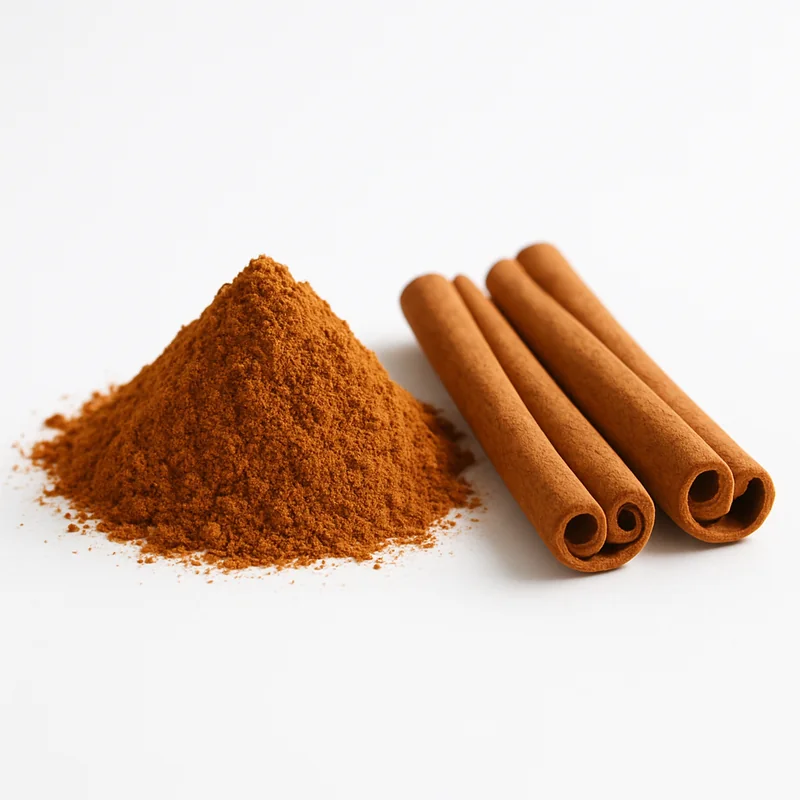
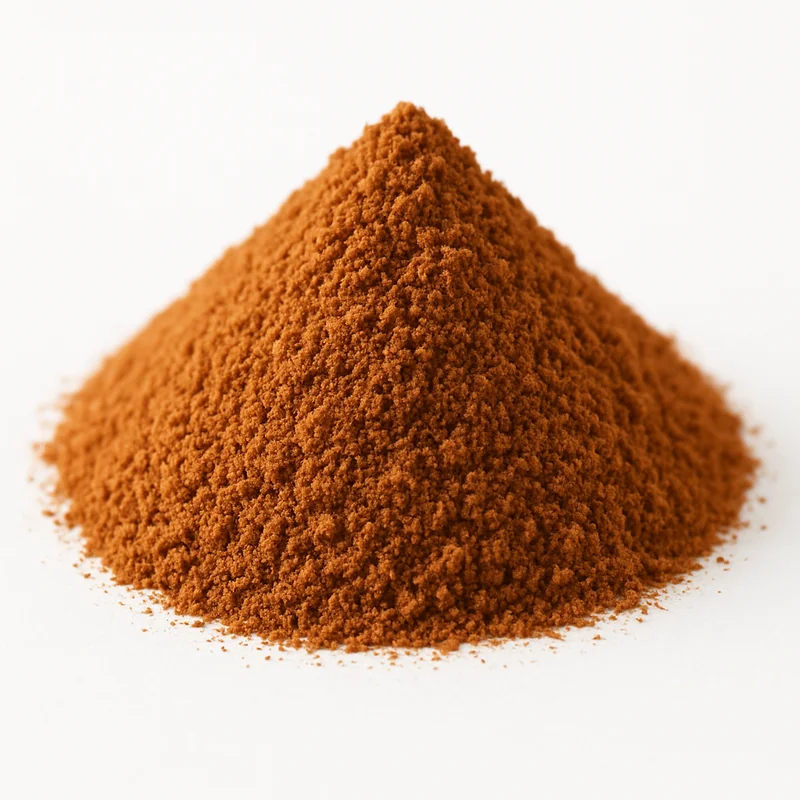
Cinnamon (Ground)
Ground cinnamon is an aromatic bark powder exceptionally rich in manganese, calcium, and fiber, with cinnamaldehyde-driven antioxidant and metabolic benefits.
Nutrition · per ~2 g serving · ≈ a pinch
- Vitamin K0.62 mcg<1% DV
- Vitamin E0.05 mg<1% DV
- Vitamin B60.00 mg<1% DV
- Niacin0.03 mg<1% DV
- Vitamin A5.9 iu<1% DV
- Vitamin C0.08 mg<1% DV
- Folate0.12 mcg<1% DV
- Manganese0.35 mg15% DV
- Calcium20.0 mg2% DV
- Iron0.17 mg<1% DV
- Copper0.01 mg<1% DV
- Zinc0.04 mg<1% DV
- Magnesium1.2 mg<1% DV
- Potassium8.6 mg<1% DV
- Selenium0.06 mcg<1% DV
- Phosphorus1.3 mg<1% DV
- Sodium0.20 mg<1% DV
- Saturated Fat0.01 g
- Polyphenols~3.0 mg
Score · 97/100
Vitamins & minerals packed in relative to calories — the single biggest driver of the score.
How much protein it delivers, by absolute grams and per calorie.
Dietary fiber for gut health, satiety and steadier blood sugar.
Fat quality — unsaturated vs saturated, and trans-fat free.
Polyphenols, flavonoids and other beneficial plant compounds for this food group.
Low sugar with a high fiber-to-carb ratio scores best — gentler on blood sugar.
- Manganese759% DV
- Calcium77% DV
- Iron46% DV
- Copper38% DV
- Vitamin K26% DV
Overview
Cinnamon is the ground inner bark of Cinnamomum trees, with Ceylon ('true' cinnamon, C. verum) and Cassia (C. cassia) the two main commercial types. Its defining bioactive is cinnamaldehyde, the volatile oil responsible for its warm aroma and most of its metabolic and antioxidant effects, alongside cinnamic acid, eugenol, and a dense matrix of proanthocyanidin polyphenols that give cinnamon one of the highest antioxidant (ORAC) ratings of any spice. Ground cinnamon is concentrated at about 247 kcal per 100g, providing 4g protein, 81g carbohydrate (an exceptional 53g of it fiber), and just 1.2g fat. Its mineral profile is remarkable: roughly 17.5mg manganese per 100g (well over a full day's worth in a single teaspoon), 1002mg calcium, 8.3mg iron, 60mg magnesium, and 431mg potassium. It also supplies vitamin K, vitamin A, and small amounts of B vitamins. The longevity angle centers on cinnamon's influence on insulin signaling—polyphenols and cinnamaldehyde may improve insulin sensitivity and modestly lower fasting glucose—plus its potent polyphenol antioxidant load that counters oxidative stress. A practical caution: Cassia cinnamon is high in coumarin, which can be hepatotoxic in large daily amounts, so Ceylon is preferred for regular medicinal-scale use. Typical culinary doses are 1-6g daily.
Health Benefits (4)
- Supports healthy blood sugar and insulin sensitivitymoderateCinnamaldehyde and type-A proanthocyanidins enhance insulin receptor signaling and slow gastric emptying, modestly lowering postprandial and fasting glucose
- Delivers high antioxidant capacitystrongDense proanthocyanidin and cinnamic acid content scavenges free radicals and gives cinnamon among the highest ORAC values of common spices
- Reduces inflammationmoderateCinnamaldehyde and eugenol inhibit NF-κB-driven inflammatory cytokine production
- Supports cardiovascular and lipid healthemergingPolyphenols may modestly improve total and LDL cholesterol and triglycerides while supporting endothelial function
Food Pairings
- ·Pair with oatmeal or yogurt because cinnamon blunts the glycemic response of carbohydrate-rich foods
- ·Combine with coffee or cocoa because shared polyphenols compound antioxidant intake and reduce the need for added sugar
- ·Add to slow-cooked stews and curries because its volatile oils infuse fat-based dishes evenly during long simmering
Practical Tips
- ·Choose Ceylon cinnamon for daily or therapeutic use to avoid coumarin exposure from Cassia varieties
- ·Add toward the end of cooking or sprinkle raw to preserve heat-sensitive cinnamaldehyde aroma
- ·Use as a sugar-replacing flavor enhancer to cut added sugar in baked goods and beverages
- ·Store ground cinnamon airtight and dark; potency fades within 6-12 months as volatile oils dissipate
Optimal Timing
Cinnamon's glucose-modulating effects are most useful when consumed alongside carbohydrate-rich foods to blunt the postprandial spike.
Negligible calories at culinary doses. Limit Cassia cinnamon to small daily amounts due to coumarin content.
