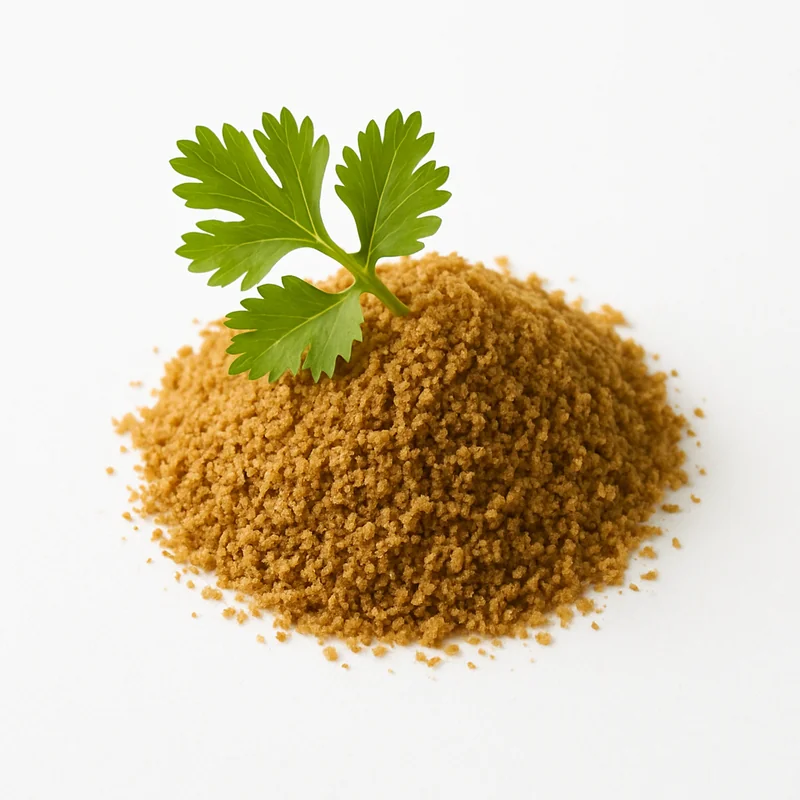
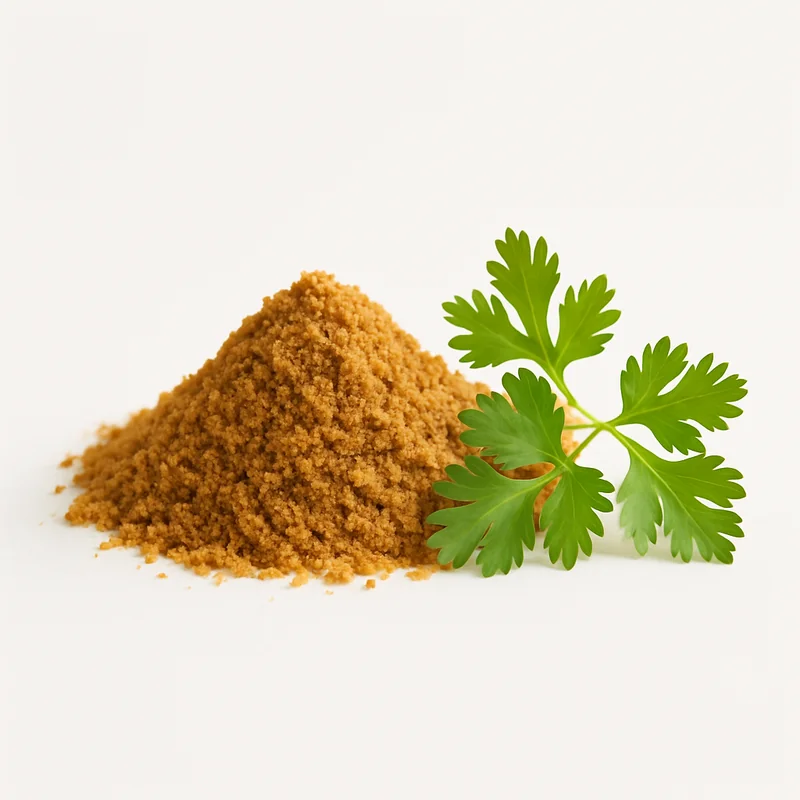
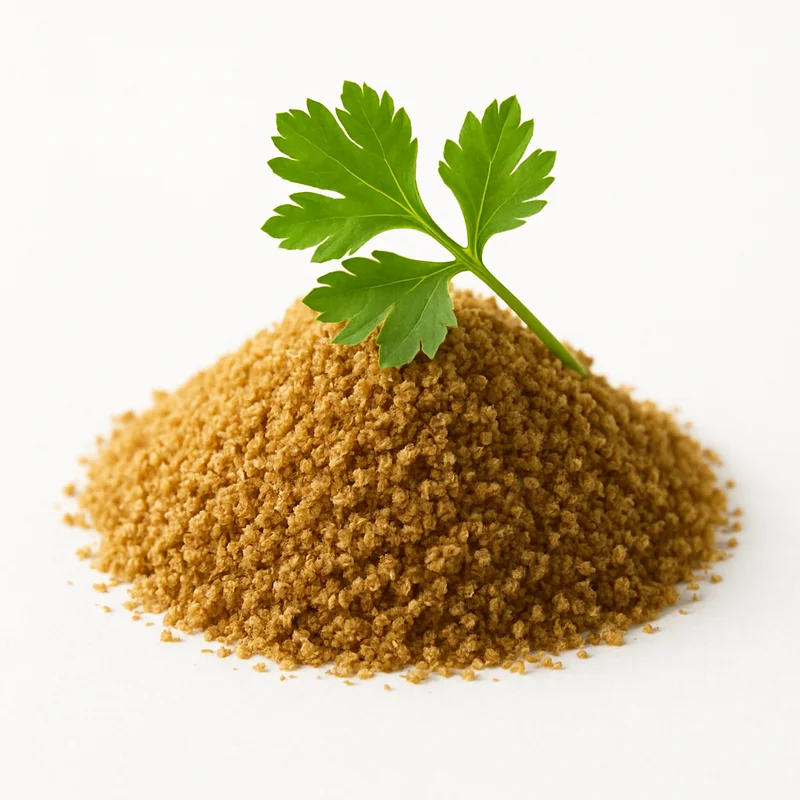
Ground coriander seed is a citrusy-warm spice rich in fiber, iron, and manganese, with linalool-driven digestive and antioxidant benefits.
Vitamins & minerals packed in relative to calories — the single biggest driver of the score.
How much protein it delivers, by absolute grams and per calorie.
Dietary fiber for gut health, satiety and steadier blood sugar.
Fat quality — unsaturated vs saturated, and trans-fat free.
Polyphenols, flavonoids and other beneficial plant compounds for this food group.
Low sugar with a high fiber-to-carb ratio scores best — gentler on blood sugar.
Coriander seed (Coriandrum sativum) is the dried, ground fruit of the same plant whose leaves are sold as cilantro, offering a warm, citrusy, faintly sweet flavor distinct from the pungent leaf. Its principal bioactive is linalool, a monoterpene alcohol that makes up the bulk of its essential oil and drives its digestive, carminative, and antimicrobial effects, alongside geraniol, camphor, and flavonoid antioxidants. Ground coriander seed is concentrated at about 298 kcal per 100g, providing 12.4g protein, 55g carbohydrate (an excellent 42g of it fiber), and 17.8g fat. Its mineral profile is robust: roughly 16.3mg iron per 100g, 1246mg calcium, 330mg magnesium, 1.9mg manganese, 1267mg potassium, 4.7mg zinc, and 0.98mg copper. It also supplies vitamin C, niacin, and small amounts of other B vitamins. The longevity thesis rests on its very high fiber content supporting gut and metabolic health, plus linalool and flavonoids that provide antioxidant and mild glucose- and lipid-lowering activity in animal and early human studies. Traditionally used as a carminative, coriander eases bloating and stimulates digestion. Typical culinary doses are 1-5g daily, and like other seed spices it benefits from toasting and blooming in fat.
Coriander's carminative and digestive-stimulant effects are most useful taken within meals, and its fat-soluble terpenes absorb best with dietary fat.
Negligible calories at culinary doses.
