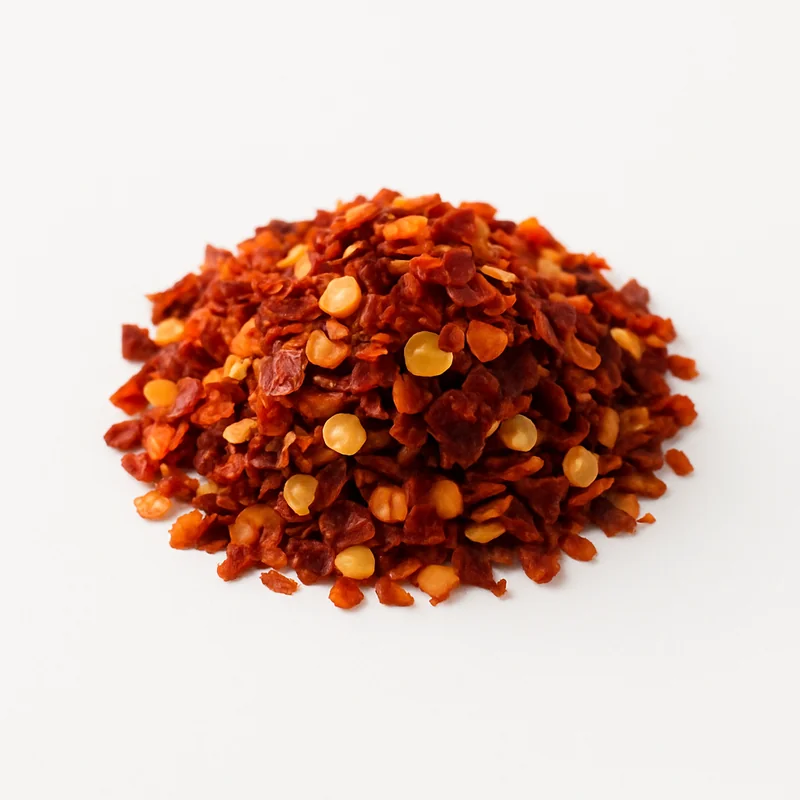
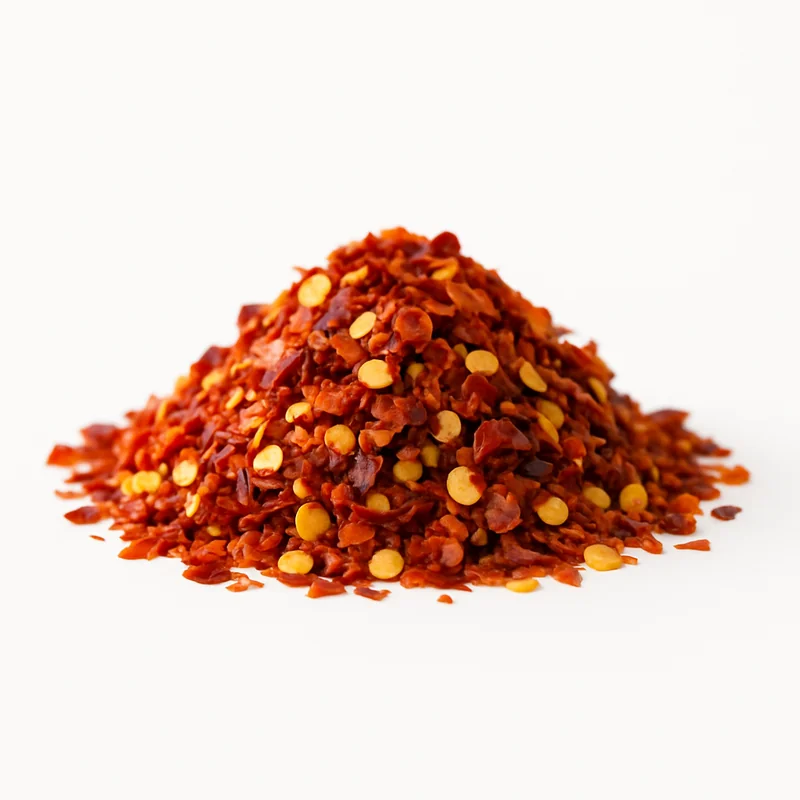
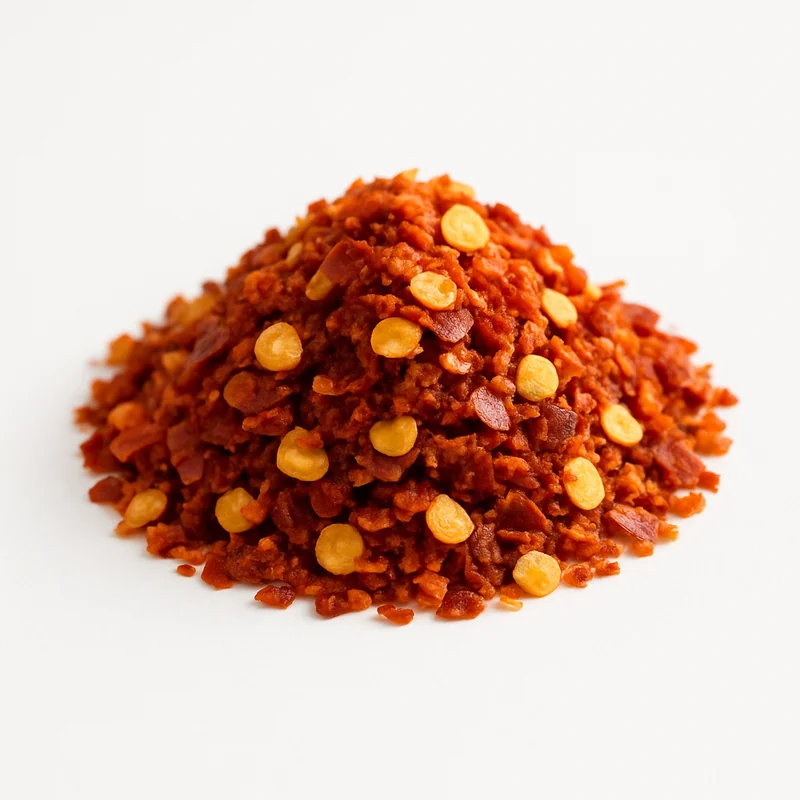
Crushed Red Pepper Flakes
Crushed red pepper flakes are coarsely milled dried red chilies, seeds and all, delivering visible heat from capsaicin plus abundant provitamin-A carotenoids.
Nutrition · per ~2 g serving · ≈ a pinch
- Vitamin A832.2 iu17% DV
- Vitamin E0.60 mg4% DV
- Vitamin B60.05 mg3% DV
- Vitamin C1.5 mg2% DV
- Riboflavin0.02 mg1% DV
- Vitamin K1.6 mcg1% DV
- Niacin0.17 mg1% DV
- Thiamin0.01 mg<1% DV
- Folate2.1 mcg<1% DV
- Manganese0.04 mg2% DV
- Iron0.16 mg<1% DV
- Potassium40.3 mg<1% DV
- Copper0.01 mg<1% DV
- Magnesium3.0 mg<1% DV
- Phosphorus5.9 mg<1% DV
- Zinc0.05 mg<1% DV
- Selenium0.18 mcg<1% DV
- Calcium3.0 mg<1% DV
- Sodium0.60 mg<1% DV
- Saturated Fat0.07 g
- Beta-carotene~0.10 mg
- Carotenoids~0.12 mg
- Capsaicin~1.0 mg
Score · 97/100
Vitamins & minerals packed in relative to calories — the single biggest driver of the score.
How much protein it delivers, by absolute grams and per calorie.
Dietary fiber for gut health, satiety and steadier blood sugar.
Fat quality — unsaturated vs saturated, and trans-fat free.
Polyphenols, flavonoids and other beneficial plant compounds for this food group.
Low sugar with a high fiber-to-carb ratio scores best — gentler on blood sugar.
- Vitamin E199% DV
- Vitamin B6144% DV
- Manganese87% DV
- Vitamin C85% DV
- Riboflavin71% DV
Overview
Crushed red pepper flakes are dried ripe Capsicum annuum chilies, typically cayenne-type, coarsely ground with the seeds included rather than reduced to fine powder, producing the familiar flecked condiment that tops pizza and pasta. Because they are essentially the same dried chili as cayenne, their composition is similar: per 100 g they supply roughly 318 kcal, 12 g protein, 57 g carbohydrate, 17 g fat and 27 g dietary fiber. They are rich in provitamin-A carotenoids, providing about 41,600 IU of vitamin A per 100 g from beta-carotene and capsanthin, plus vitamin E (~30 mg), vitamin C (~76 mg), vitamin K (~80 mcg), potassium (~2014 mg), iron, manganese and B6. The defining bioactive is capsaicin, concentrated in the placental tissue and clinging seeds, which binds TRPV1 to drive heat perception, thermogenesis, vasodilation and appetite suppression, and gives the flakes their characteristic slow-building burn. The coarse, seed-inclusive form means flakes release their heat gradually as they steep in oil or sauce. Used as a finishing pinch, crushed red pepper contributes negligible calories while delivering a concentrated daily dose of capsaicin and fat-soluble carotenoid antioxidants prized for metabolic and cardiovascular support.
Health Benefits (4)
- Drives thermogenesis and supports weight managementmoderateCapsaicin activates TRPV1 and sympathetic output, raising energy expenditure and fat oxidation while modestly suppressing appetite
- Supports cardiovascular healthmoderateCapsaicin promotes nitric-oxide-mediated vasodilation and may improve endothelial function, while high potassium counters sodium's effect on blood pressure
- Supplies provitamin-A carotenoid and vitamin-E antioxidantsstrongBeta-carotene, capsanthin and tocopherols quench reactive oxygen species and limit LDL oxidation, protecting tissues from oxidative damage
- Offers anti-inflammatory and analgesic activitystrongSustained TRPV1 activation depletes substance P in sensory neurons and downregulates inflammatory signaling
Food Pairings
- ·Steep in warm olive oil because capsaicin and the carotenoids are fat-soluble and the oil draws out and carries the heat and antioxidants
- ·Pair with tomato-based sauces because lycopene and the chili's carotenoids together broaden the antioxidant spectrum
- ·Combine with garlic and leafy greens because the fat and the flakes' fat-soluble nutrients enhance overall absorption
Practical Tips
- ·Add flakes early when cooking in oil so the capsaicin and pigments have time to infuse, or sprinkle at the end for sharper, more localized heat
- ·Start with a small pinch and adjust; seed-inclusive flakes can be hotter than expected
- ·Store airtight away from light to slow carotenoid fading and preserve potency
- ·Buy whole-flake products rather than powder when you want gradual, oil-infused heat
Optimal Timing
Capsaicin's thermogenic effects are useful around meals and the carotenoids have no circadian dependency; flakes suit any meal.
- · late evening if heat triggers reflux or disrupts sleep
Culinary pinches are calorically negligible and fasting-compatible; capsaicin can aggravate reflux in sensitive individuals.
