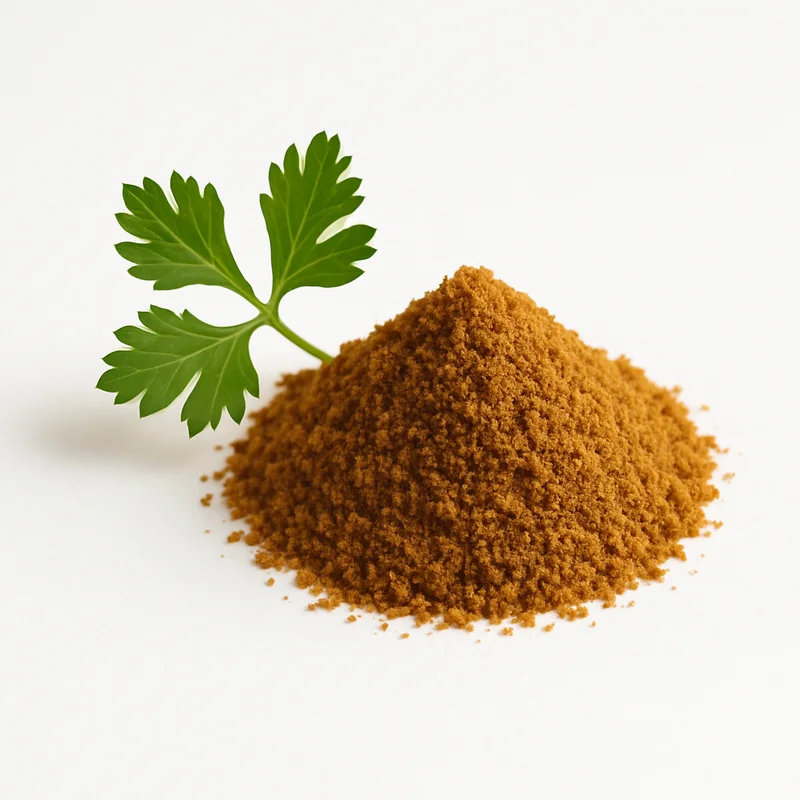
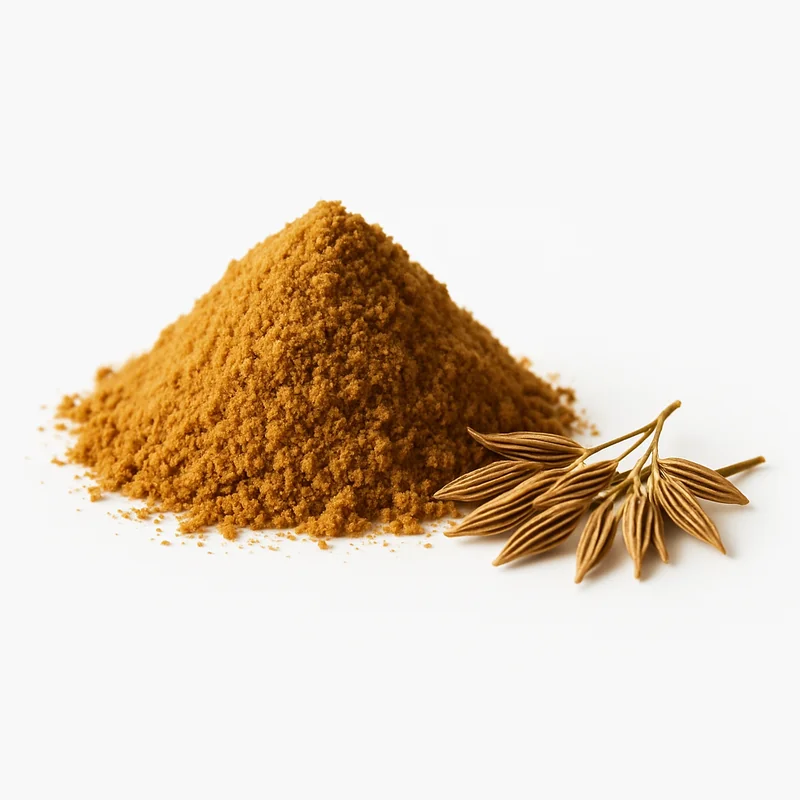
Cumin (Ground)
Ground cumin is a warm, earthy seed powder exceptionally high in iron and rich in calcium, manganese, and aldehyde antioxidants supporting digestion and metabolism.
Nutrition · per ~2 g serving · ≈ a pinch
- Thiamin0.01 mg1% DV
- Niacin0.09 mg<1% DV
- Vitamin B60.01 mg<1% DV
- Vitamin A25.4 iu<1% DV
- Riboflavin0.01 mg<1% DV
- Vitamin E0.07 mg<1% DV
- Vitamin C0.15 mg<1% DV
- Vitamin K0.11 mcg<1% DV
- Folate0.20 mcg<1% DV
- Iron1.3 mg7% DV
- Manganese0.07 mg3% DV
- Copper0.02 mg2% DV
- Magnesium7.3 mg2% DV
- Calcium18.6 mg1% DV
- Zinc0.10 mg<1% DV
- Phosphorus10.0 mg<1% DV
- Potassium35.8 mg<1% DV
- Selenium0.10 mcg<1% DV
- Sodium3.4 mg<1% DV
- Saturated Fat0.03 g
- Polyphenols~3.0 mg
Score · 97/100
Vitamins & minerals packed in relative to calories — the single biggest driver of the score.
How much protein it delivers, by absolute grams and per calorie.
Dietary fiber for gut health, satiety and steadier blood sugar.
Fat quality — unsaturated vs saturated, and trans-fat free.
Polyphenols, flavonoids and other beneficial plant compounds for this food group.
Low sugar with a high fiber-to-carb ratio scores best — gentler on blood sugar.
- Iron369% DV
- Manganese145% DV
- Copper96% DV
- Magnesium87% DV
- Calcium72% DV
Overview
Cumin (Cuminum cyminum) is the ground seed of a flowering plant in the parsley family, native to the eastern Mediterranean and South Asia and central to Indian, Middle Eastern, and Mexican cuisines. Its characteristic warm, earthy flavor comes from cuminaldehyde, the dominant volatile aldehyde, supported by terpenes (pinene, terpinene), thymol, and flavonoid antioxidants. Ground cumin is concentrated at about 375 kcal per 100g, providing 18g protein, 44g carbohydrate (10.5g fiber), and a substantial 22g fat from its essential-oil-rich seeds. Its standout mineral is iron at a remarkable 66.4mg per 100g—among the densest plant iron sources—along with 931mg calcium, 366mg magnesium, 3.3mg manganese, 1788mg potassium, 4.8mg zinc, and 0.87mg copper. It also supplies vitamin A, vitamin C, vitamin E, niacin, and B6. The longevity thesis combines its dense antioxidant load with traditional digestive benefits: cuminaldehyde stimulates salivary and digestive enzyme secretion, and human trials suggest cumin may aid weight management and improve lipid profiles. Like other seed spices its iron and fat-soluble compounds absorb best when bloomed in oil. Typical culinary doses are 1-5g daily.
Health Benefits (4)
- Supports digestion and reduces bloatingmoderateCuminaldehyde stimulates secretion of pancreatic enzymes and bile, accelerating digestion and easing gas and indigestion
- Provides highly bioavailable plant ironstrongExceptional iron density (66mg/100g) contributes meaningful non-heme iron, supporting oxygen transport especially when paired with vitamin C
- Delivers antioxidant and anti-inflammatory protectionmoderateCuminaldehyde, thymol, and flavonoids scavenge free radicals and dampen inflammatory signaling
- May improve lipid profile and support weight managementemergingTrials show cumin powder modestly lowers total cholesterol, triglycerides, and body weight, possibly via enhanced fat metabolism
Food Pairings
- ·Pair with lentils and beans because cumin's iron complements legume meals and its compounds reduce digestive gas
- ·Combine with citrus or tomatoes because vitamin C sharply increases absorption of cumin's non-heme iron
- ·Bloom in hot oil with onions because cuminaldehyde and fat-soluble terpenes release fully into the cooking fat
Practical Tips
- ·Toast whole or ground cumin briefly in a dry pan to intensify cuminaldehyde aroma before adding to dishes
- ·Bloom in oil at the start of cooking to extract its fat-soluble flavor and aid mineral release
- ·Pair with a vitamin-C source to maximize uptake of its abundant iron
- ·Store airtight and dark; ground cumin loses its volatile punch within 6 months faster than whole seeds
Optimal Timing
Cumin's digestive-enzyme stimulation and fat-soluble antioxidants are most beneficial consumed within a meal.
Negligible calories at culinary doses; pairing with vitamin C optimizes iron absorption.
