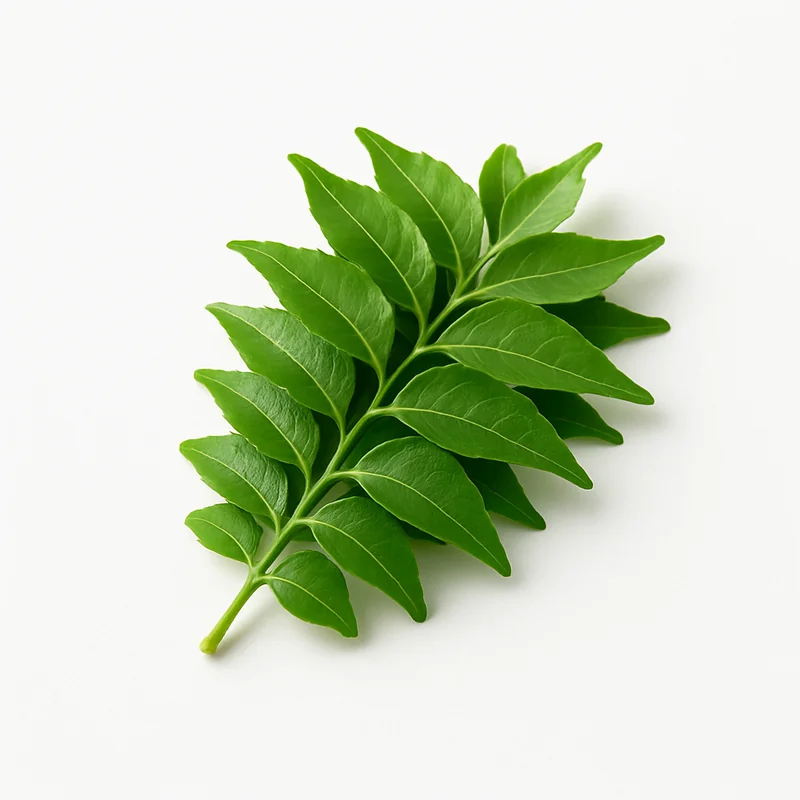
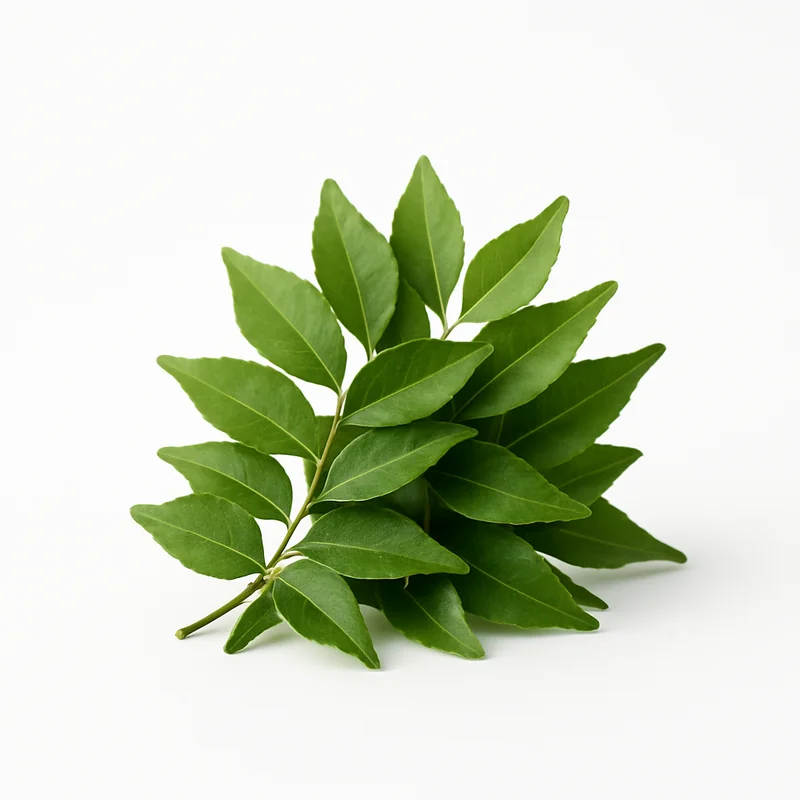
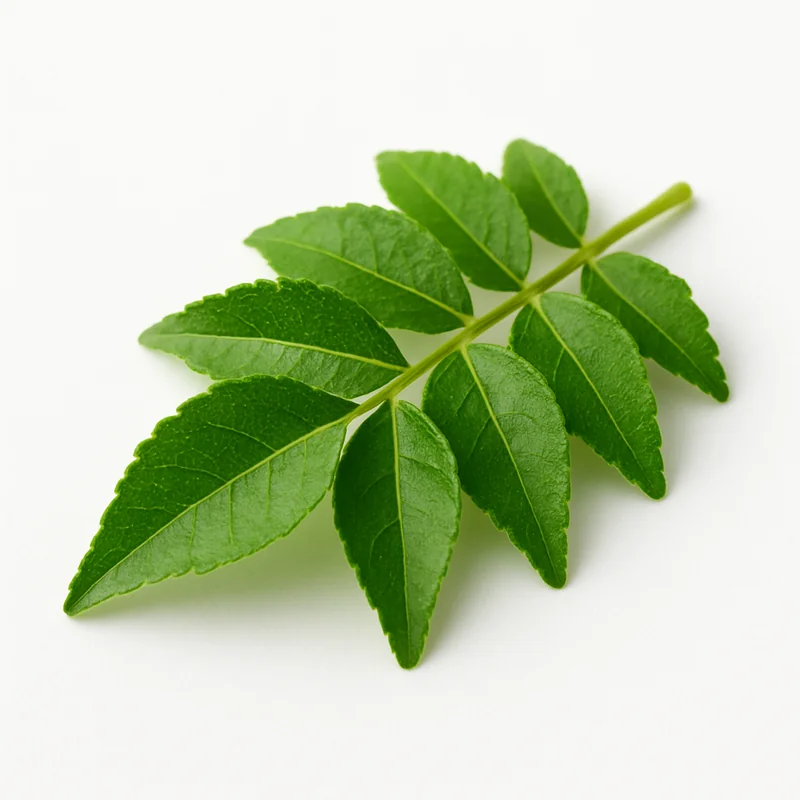
Curry Leaf — image 1 of 3Curry Leaf — image 2 of 3Curry Leaf — image 3 of 3
Herbs & Spices

Curry Leaf

97/ 100
Also known as: murraya koenigii, kadi patta, sweet neem, curry tree leaf

Curry leaf is an aromatic South Indian leaf tempered in hot oil, supplying iron and calcium plus antioxidant carbazole alkaloids.

Nutrition · per ~2 g serving · ≈ a pinch

🔥 Calories
6/ 2000 kcal day
🥩Protein0.2 g<1% DV
🍞Carbs1.2 g<1% DV
🥑Fat0.1 g<1% DV
🌿Fiber0.5 g2% DV
1g net carbs · carbs − fiber
Vitamins
  • Vitamin A18.0 iu<1% DV
  • Vitamin C0.16 mg<1% DV
Minerals
  • Manganese0.08 mg3% DV
  • Iron0.34 mg2% DV
  • Calcium16.6 mg1% DV
  • Potassium30.0 mg<1% DV
  • Magnesium2.4 mg<1% DV
BioactivesEstimated
  • Polyphenols~3.0 mg
Estimated typical amounts — derived from this food's profile, not measured for this item. Real bioactive content varies widely by variety, ripeness, storage and preparation; use as a rough guide only.

Score · 97/100

Nutrient Density34.5 / 35

Vitamins & minerals packed in relative to calories — the single biggest driver of the score.

Protein Quality7.8 / 15

How much protein it delivers, by absolute grams and per calorie.

Fiber Content10.0 / 10

Dietary fiber for gut health, satiety and steadier blood sugar.

Healthy Fats5.0 / 10

Fat quality — unsaturated vs saturated, and trans-fat free.

Bioactives13.5 / 15

Polyphenols, flavonoids and other beneficial plant compounds for this food group.

Glycemic Impact10.0 / 10

Low sugar with a high fiber-to-carb ratio scores best — gentler on blood sugar.

Top Nutrients
  • Manganese174% DV
  • Iron94% DV
  • Calcium64% DV
  • Potassium32% DV
  • Magnesium29% DV

Overview

Curry leaf (Murraya koenigii), known in India as kadi patta, is the glossy aromatic leaf of the curry tree, native to the Indian subcontinent and central to South Indian cooking. Despite its name it is unrelated to curry powder; instead it carries a distinctive nutty, citrus-pepper fragrance that is unlocked by frying the leaves in hot oil or ghee at the start of a dish, a technique called tadka or tempering. The leaf is a modest source of iron and calcium and contributes plant polyphenols, but its most studied compounds are carbazole alkaloids such as mahanimbine and koenigine, which show antioxidant and metabolic activity in laboratory and animal research, including effects on blood lipids and glucose. Curry leaves flavor dals, sambar, rasam, chutneys, and curries and are typically left in and eaten with the dish. Because they are used in small amounts and dried leaf loses potency relatively fast, their role is primarily aromatic and bioactive rather than a major nutrient source.

Health Benefits (3)

  • Provides antioxidant protection
    limited
    Carbazole alkaloids including mahanimbine and koenigine scavenge free radicals and inhibit lipid peroxidation
  • Supports healthy lipid and glucose metabolism
    limited
    Carbazole alkaloids have shown lipid-lowering and glucose-modulating effects in animal studies
  • Contributes iron and calcium
    limited
    The leaf supplies non-heme iron and calcium that support oxygen transport and bone health

Food Pairings

  • ·Pair with mustard seeds and ghee in a tempering because hot fat blooms the curry leaf's aromatic oils
  • ·Combine with lentils and dal because the nutty citrus note lifts simple legume dishes
  • ·Use with coconut and chili in South Indian chutneys because they balance its peppery fragrance

Practical Tips

  • ·Always temper the leaves in hot oil at the start of cooking to unlock the aroma
  • ·Crush the leaves gently between your fingers first to wake up the oils
  • ·Store dried leaves airtight away from light, as they lose potency faster than most spices

Optimal Timing

🕒
anytime
Fasting-compatible

Curry leaves are added at the tempering stage whenever a dish is cooked.

Used in small culinary amounts they add negligible calories.

Systems supported

body systems this food feeds

Pathways supported

biochemical reactions enabled by this food