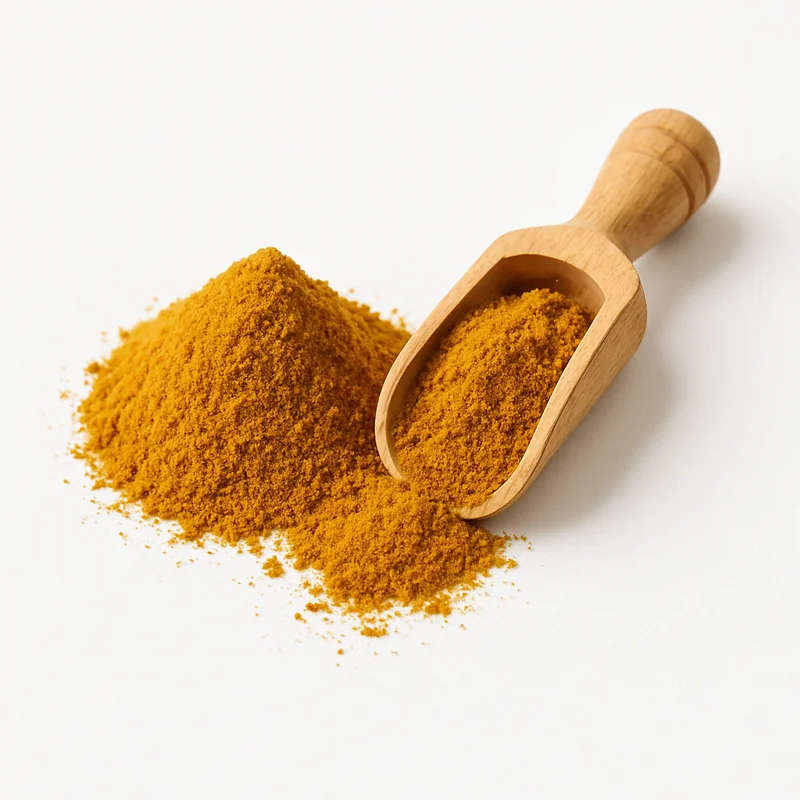
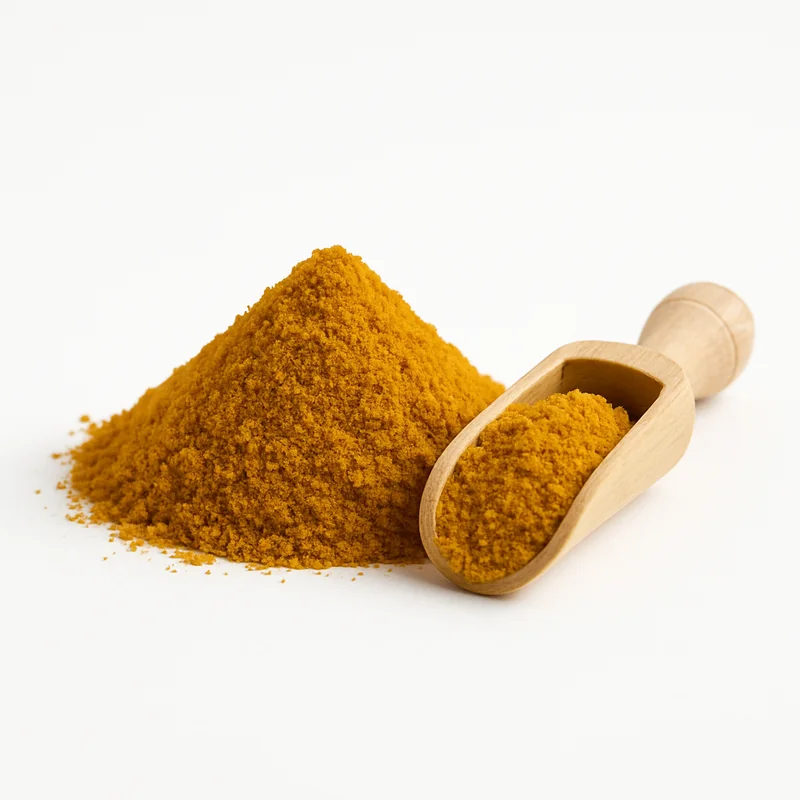
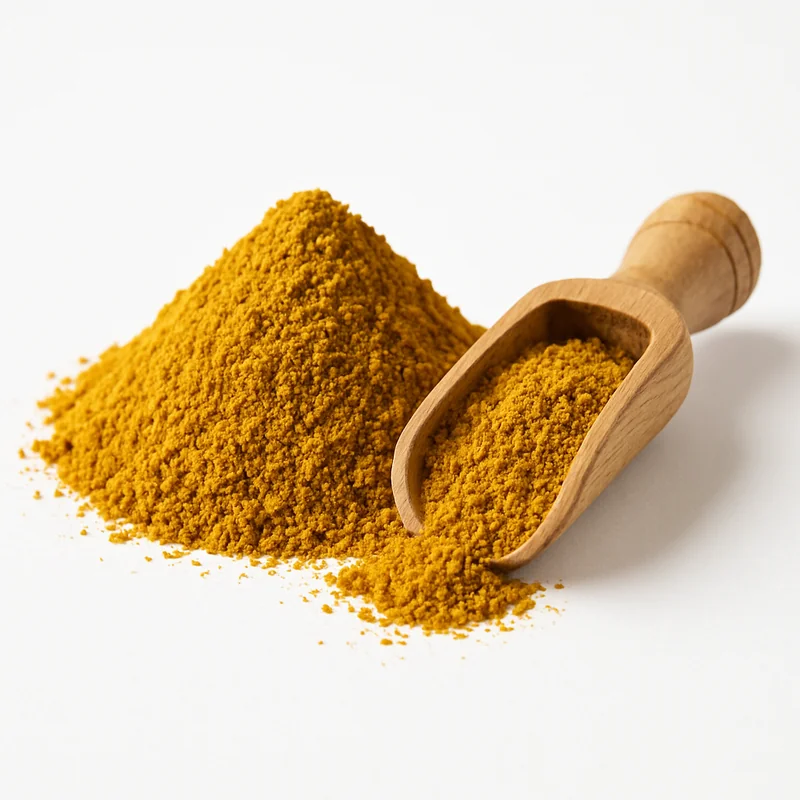
Curry Powder — image 1 of 3Curry Powder — image 2 of 3Curry Powder — image 3 of 3
Herbs & Spices

Curry Powder

97/ 100
Also known as: madras curry powder, yellow curry powder, curry spice blend

Curry powder is a turmeric-led ground spice blend that is exceptionally iron- and manganese-dense, delivering curcumin, piperine, and capsaicin for a strong antioxidant and anti-inflammatory profile.

Nutrition · per ~2 g serving · ≈ a pinch

🔥 Calories
7/ 2000 kcal day
🥩Protein0.3 g<1% DV
🍞Carbs1.1 g<1% DV
🥑Fat0.3 g<1% DV
🌿Fiber1.1 g4% DV
0g net carbs · carbs − fiber
Vitamins
  • Vitamin E0.44 mg3% DV
  • Vitamin K2.0 mcg2% DV
  • Vitamin B60.02 mg1% DV
  • Folate3.1 mcg<1% DV
  • Riboflavin0.01 mg<1% DV
  • Niacin0.07 mg<1% DV
  • Thiamin0.01 mg<1% DV
  • Vitamin A19.7 iu<1% DV
  • Vitamin C0.23 mg<1% DV
Minerals
  • Manganese0.19 mg8% DV
  • Iron0.38 mg2% DV
  • Copper0.02 mg2% DV
  • Magnesium5.1 mg1% DV
  • Zinc0.08 mg<1% DV
  • Calcium9.6 mg<1% DV
  • Potassium30.9 mg<1% DV
  • Selenium0.35 mcg<1% DV
  • Phosphorus7.0 mg<1% DV
  • Sodium1.0 mg<1% DV
Other
  • Saturated Fat0.04 g
BioactivesEstimated
  • Curcumin~60 mg
  • Piperine~80 mg
  • Polyphenols~3.0 mg
Estimated typical amounts — derived from this food's profile, not measured for this item. Real bioactive content varies widely by variety, ripeness, storage and preparation; use as a rough guide only.

Score · 97/100

Nutrient Density35.0 / 35

Vitamins & minerals packed in relative to calories — the single biggest driver of the score.

Protein Quality9.8 / 15

How much protein it delivers, by absolute grams and per calorie.

Fiber Content10.0 / 10

Dietary fiber for gut health, satiety and steadier blood sugar.

Healthy Fats8.5 / 10

Fat quality — unsaturated vs saturated, and trans-fat free.

Bioactives13.5 / 15

Polyphenols, flavonoids and other beneficial plant compounds for this food group.

Glycemic Impact10.0 / 10

Low sugar with a high fiber-to-carb ratio scores best — gentler on blood sugar.

Top Nutrients
  • Manganese413% DV
  • Vitamin E146% DV
  • Iron106% DV
  • Copper84% DV
  • Vitamin K83% DV

Overview

Curry powder is a Western-codified ground blend of South Asian spices, typically led by turmeric and balanced with coriander, cumin, fenugreek, and dried chili, then rounded with ginger, black pepper, cinnamon, and cardamom. It is one of the few spice blends well documented in USDA SR Legacy, landing around 325 kcal per 100 g and ranking among the most mineral-dense seasonings available: roughly 19 mg iron, 9.5 mg manganese, and over 1,500 mg potassium per 100 g, with strong calcium (~478 mg) and magnesium (~254 mg) and a high fiber content (~53 g) from its seed-heavy base. Its headline bioactives come directly from its components: curcumin from turmeric (the most-studied anti-inflammatory polyphenol in the blend), piperine from black pepper (which dramatically increases curcumin bioavailability), and capsaicin from chili, alongside the antioxidant polyphenols of coriander and cumin. Because curry powder is consumed by the teaspoon, its practical micronutrient delivery is modest, but its phytochemical density per gram is among the highest of any pantry staple, making it a flavorful everyday way to raise a dish's antioxidant load.

Health Benefits (3)

  • Reduces systemic inflammation and oxidative stress
    moderate
    Curcumin from turmeric inhibits NF-κB and COX-2 signaling and scavenges free radicals, while co-present piperine from black pepper increases curcumin bioavailability up to ~20-fold
  • Supports healthy blood glucose response
    moderate
    Fenugreek and cinnamon components contribute soluble fiber and polyphenols (galactomannan, cinnamaldehyde) that slow carbohydrate absorption and improve insulin sensitivity
  • Supports oxygen transport and metabolic enzyme function
    limited
    High iron and manganese content provide cofactors for hemoglobin synthesis and antioxidant superoxide dismutase activity

Food Pairings

  • ·Pair with black pepper and a fat source because piperine and dietary fat together multiply curcumin absorption
  • ·Combine with coconut milk or yogurt because the fat carries the blend's fat-soluble curcuminoids and capsaicin
  • ·Add to legumes and rice because the spice polyphenols complement plant iron and the dish balances the blend's heat

Practical Tips

  • ·Bloom curry powder in warm oil for 30-60 seconds to release its fat-soluble aromatics before adding liquids
  • ·Add a pinch of black pepper to any turmeric-based dish to maximize curcumin bioavailability
  • ·Store in an airtight jar away from light and heat; ground blends lose aroma within 6-12 months

Optimal Timing

🕒
anytime
Fasting-compatible

Curry powder's bioactives have no circadian dependency and benefit from consistent daily culinary use.

Negligible calories at culinary doses; compatible with fasting.

Systems supported

body systems this food feeds

Pathways supported

biochemical reactions enabled by this food