

Dill Seed
Dill seed is the warm, carvone-rich fruit of Anethum graveolens, an exceptionally calcium- and fiber-dense pickling spice and the traditional basis of gripe water for digestive relief.
Nutrition · per ~2 g serving · ≈ a pinch
- Thiamin0.01 mg<1% DV
- Vitamin C0.42 mg<1% DV
- Riboflavin0.01 mg<1% DV
- Niacin0.06 mg<1% DV
- Vitamin B60.00 mg<1% DV
- Folate0.20 mcg<1% DV
- Vitamin A1.1 iu<1% DV
- Calcium30.3 mg2% DV
- Iron0.33 mg2% DV
- Copper0.02 mg2% DV
- Manganese0.04 mg2% DV
- Magnesium5.1 mg1% DV
- Zinc0.10 mg<1% DV
- Potassium23.7 mg<1% DV
- Phosphorus5.5 mg<1% DV
- Selenium0.24 mcg<1% DV
- Sodium0.40 mg<1% DV
- Quercetin~0.30 mg
- Polyphenols~3.0 mg
Score · 97/100
Vitamins & minerals packed in relative to calories — the single biggest driver of the score.
How much protein it delivers, by absolute grams and per calorie.
Dietary fiber for gut health, satiety and steadier blood sugar.
Fat quality — unsaturated vs saturated, and trans-fat free.
Polyphenols, flavonoids and other beneficial plant compounds for this food group.
Low sugar with a high fiber-to-carb ratio scores best — gentler on blood sugar.
- Calcium117% DV
- Iron91% DV
- Copper87% DV
- Manganese80% DV
- Magnesium61% DV
Overview
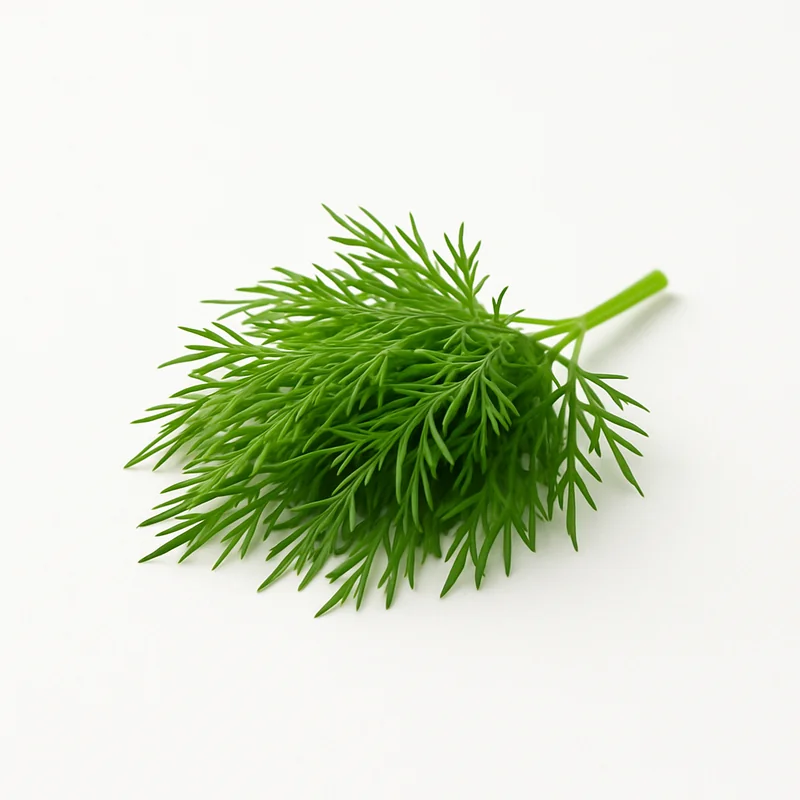
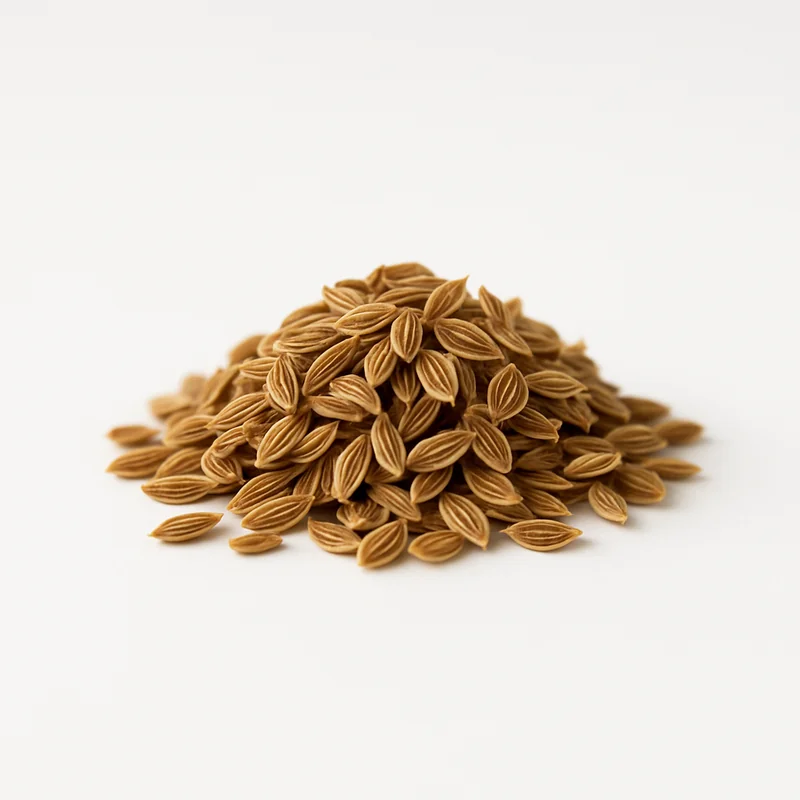
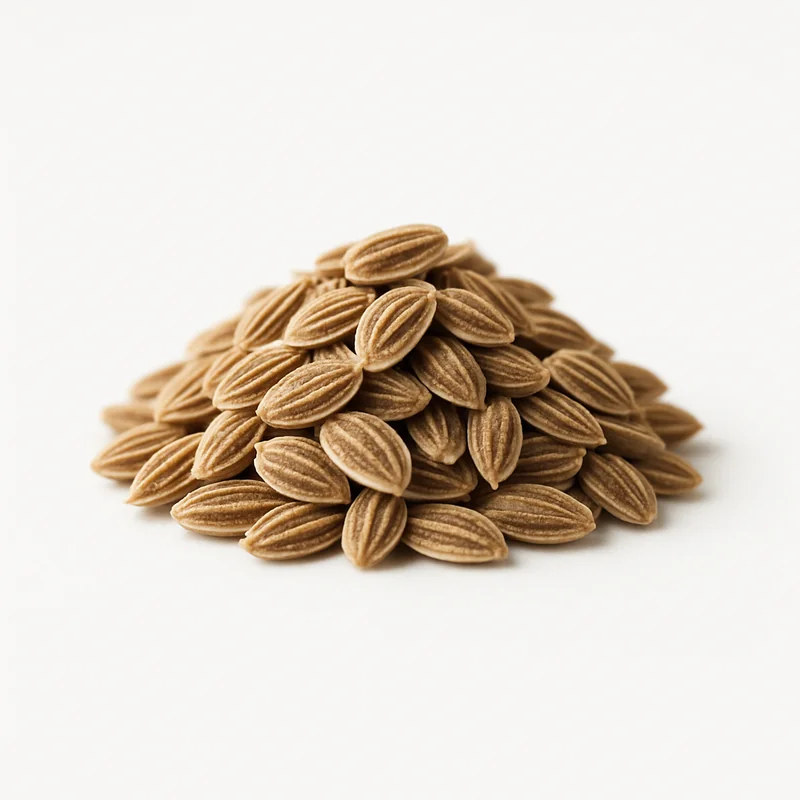
Dill seed (Anethum graveolens) is the dried fruit of the same plant that yields feathery dill weed, but the flat, ribbed tan seeds carry a stronger, warmer, more caraway-like flavor dominated by carvone, accompanied by limonene and dillapiole. A pickling staple across Europe and South Asia, dill seed is also among the most calcium-dense culinary spices at about 1516mg per 100g, with 21.1g of fiber, 16.3mg of iron, 256mg of magnesium, and 1186mg of potassium. Its carvone-rich essential oil underlies a long carminative tradition: dill water, or gripe water, was historically given to soothe infant colic and adult indigestion, and laboratory studies show antimicrobial and antispasmodic activity. The seeds also provide antioxidant flavonoids such as quercetin and phenolic acids. Stronger and more bitter than fresh dill weed, dill seed is used in smaller amounts, classically in dill pickle brines, rye breads, sauerkraut, and braised cabbage and potatoes. For longevity-focused cooking, it concentrates dense calcium and fiber and aromatic digestive oils into a small, assertive seed. Toasting lightly deepens its flavor before use.
Health Benefits (4)
- Eases bloating, colic, and indigestionmoderateCarvone-rich dill oil relaxes gastrointestinal smooth muscle as a carminative; it is the traditional basis of gripe water for colic and indigestion
- Provides antimicrobial activitymoderateCarvone, limonene, and dillapiole inhibit bacterial and fungal growth in laboratory and food-preservation studies
- Supports bone health through dense calciummoderateAbout 1516mg calcium per 100g, with magnesium and phosphorus, supplies minerals central to bone mineralization
- Delivers antioxidant flavonoids and fibermoderateQuercetin and phenolic acids scavenge free radicals while 21g of fiber per 100g supports gut motility
Food Pairings
- ·Use in vinegar-based pickle brines because acidity carries dill seed's carvone aroma and complements its warm flavor
- ·Pair with cabbage and potato because the carminative oils ease digestion of starchy and gas-forming vegetables
- ·Combine with fish and sour cream because the seed's warm note balances rich, creamy, and oily foods
- ·Add to a fat source such as butter or oil because the active carvone and limonene are fat-soluble
Practical Tips
- ·Toast whole dill seeds lightly to deepen their warm, caraway-like flavor before use
- ·Use less than you would fresh dill weed; the seed is stronger and more bitter
- ·Buy whole seeds; they hold their carvone oils for 3-4 years versus months for ground dill seed
- ·Steep crushed seeds in hot water for a traditional digestive tea
- ·Store in an airtight container in a cool, dark pantry, keeping dry to avoid clumping
Optimal Timing
Dill seed's carminative and gripe-water tradition make it most beneficial taken with or after meals to support digestion.
Used in small amounts it adds negligible calories; dill seed tea is fasting-compatible.