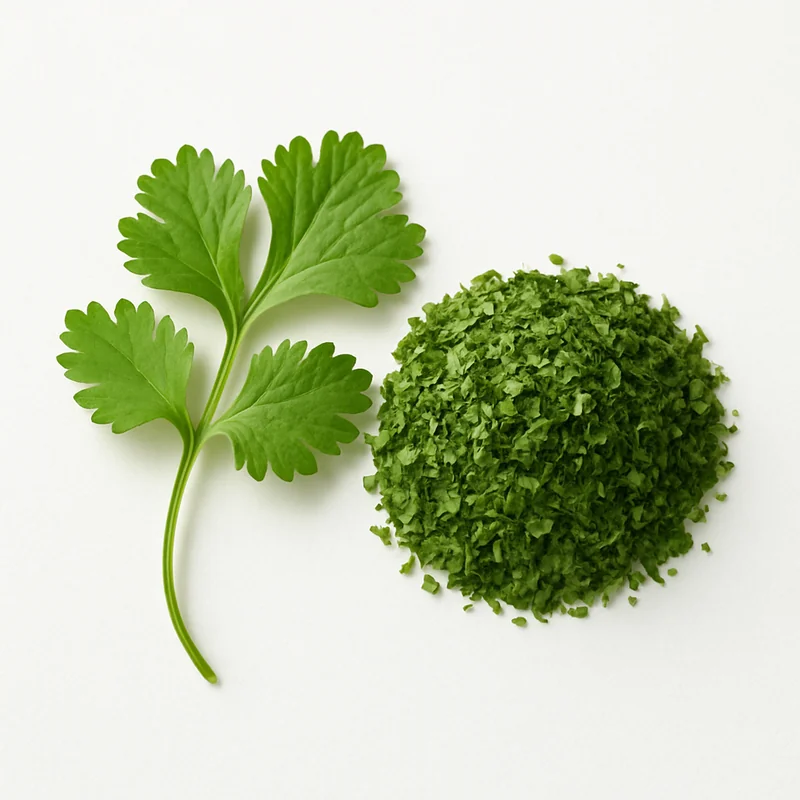
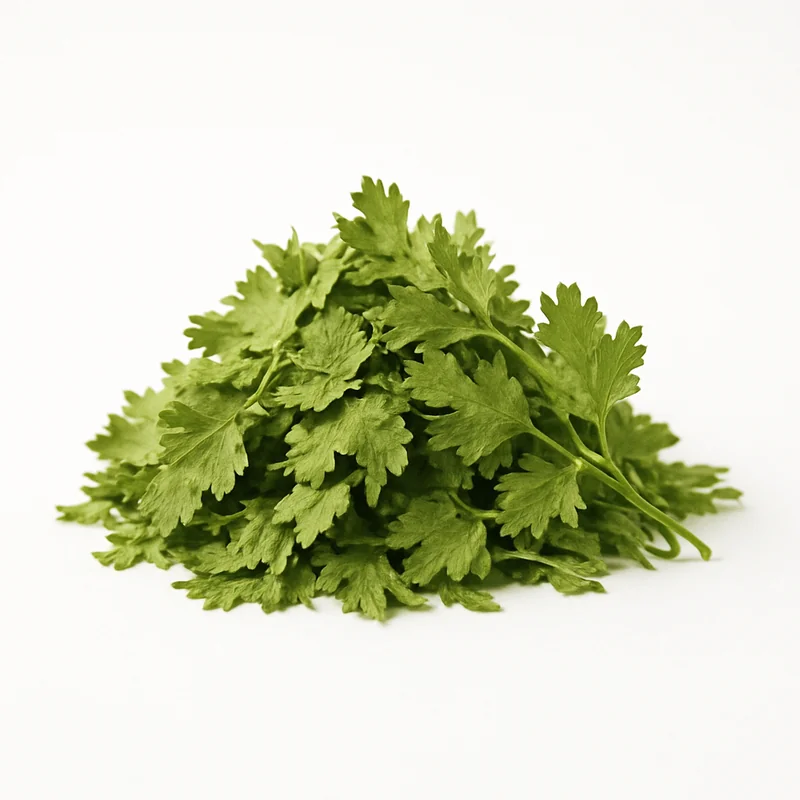
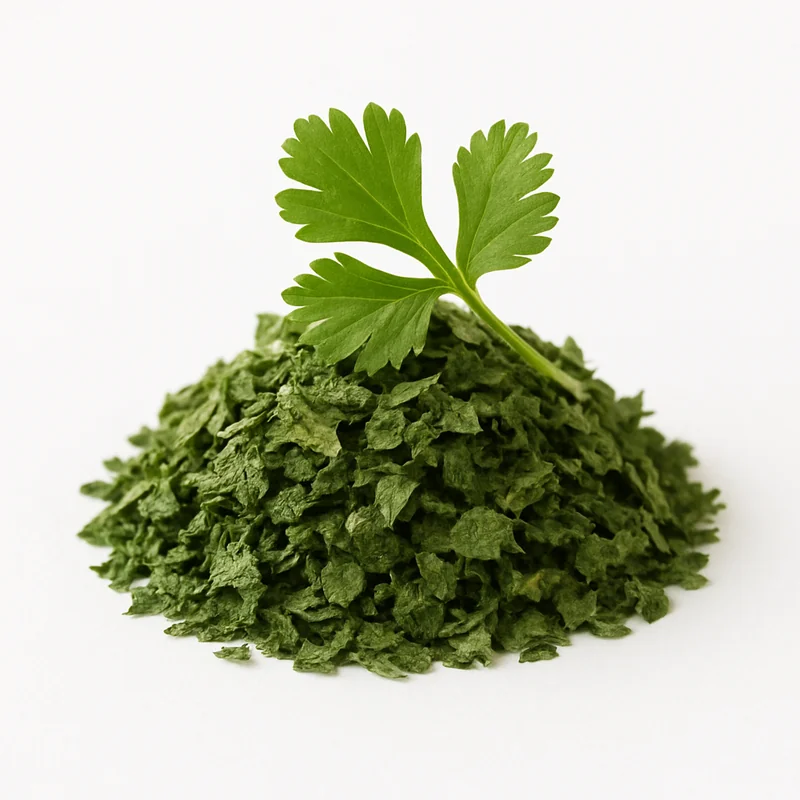
Cilantro (Dried) — image 1 of 3Cilantro (Dried) — image 2 of 3Cilantro (Dried) — image 3 of 3
Herbs & Spices

Cilantro (Dried)

97/ 100
Also known as: dried cilantro, coriander leaf, coriandrum sativum, dried coriander leaves, chinese parsley

Dried cilantro is the dehydrated leaf of the coriander plant, very rich in vitamin A, vitamin C, iron, and potassium, with aromatic aldehydes and antioxidant polyphenols.

Nutrition · per ~2 g serving · ≈ a pinch

🔥 Calories
6/ 2000 kcal day
🥩Protein0.4 g<1% DV
🍞Carbs1.0 g<1% DV
🥑Fat0.1 g<1% DV
🌿Fiber0.2 g<1% DV
1g net carbs · carbs − fiber
Vitamins
  • Vitamin C11.3 mg13% DV
  • Vitamin A117.0 iu2% DV
  • Riboflavin0.03 mg2% DV
  • Thiamin0.03 mg2% DV
  • Folate5.5 mcg1% DV
  • Niacin0.21 mg1% DV
  • Vitamin B60.01 mg<1% DV
Minerals
  • Manganese0.13 mg6% DV
  • Iron0.85 mg5% DV
  • Copper0.04 mg4% DV
  • Magnesium13.9 mg3% DV
  • Calcium24.9 mg2% DV
  • Potassium89.3 mg2% DV
  • Selenium0.59 mcg1% DV
  • Zinc0.09 mg<1% DV
  • Phosphorus9.6 mg<1% DV
  • Sodium4.2 mg<1% DV
Other
  • Saturated Fat0.00 g
BioactivesEstimated
  • Carotenoids~0.12 mg
  • Polyphenols~3.0 mg
Estimated typical amounts — derived from this food's profile, not measured for this item. Real bioactive content varies widely by variety, ripeness, storage and preparation; use as a rough guide only.

Score · 97/100

Nutrient Density35.0 / 35

Vitamins & minerals packed in relative to calories — the single biggest driver of the score.

Protein Quality12.0 / 15

How much protein it delivers, by absolute grams and per calorie.

Fiber Content10.0 / 10

Dietary fiber for gut health, satiety and steadier blood sugar.

Healthy Fats8.5 / 10

Fat quality — unsaturated vs saturated, and trans-fat free.

Bioactives13.5 / 15

Polyphenols, flavonoids and other beneficial plant compounds for this food group.

Glycemic Impact10.0 / 10

Low sugar with a high fiber-to-carb ratio scores best — gentler on blood sugar.

Top Nutrients
  • Vitamin C630% DV
  • Manganese276% DV
  • Iron236% DV
  • Copper199% DV
  • Magnesium165% DV

Overview

Cilantro (Coriandrum sativum) is the leafy stage of the coriander plant, native to a region spanning southern Europe to western Asia, and a defining fresh herb across Mexican, Indian, Thai, and Middle Eastern cuisines. (Its seeds, harvested later, are the spice coriander.) Drying concentrates the leaf's nutrients substantially: per 100 g, dried cilantro provides roughly 279 kcal, 21.9 g protein, 52 g carbohydrate (~10 g fiber), and an impressive micronutrient profile. It is an outstanding source of vitamin A (~5850 IU), vitamin C (~566 mg—exceptionally high), and vitamin K, along with a robust mineral content of ~1246 mg calcium, ~42 mg iron, ~694 mg magnesium, ~4466 mg potassium, ~6.4 mg manganese, and ~1.79 mg copper. Cilantro's distinctive aroma—polarizing due to a genetically determined perception of 'soapiness'—comes from long-chain aldehydes such as (E)-2-decenal and dodecanal, complemented by flavonoids like quercetin and the polyphenol antioxidants that give it strong free-radical-scavenging capacity. Cilantro is also widely studied for its ability to bind and help mobilize heavy metals. As with all dried herbs, culinary servings are small, but dried cilantro's vitamin and mineral density make it a nutrient-rich aromatic addition.

Health Benefits (4)

  • Provides abundant vitamin A and vitamin C antioxidants
    moderate
    High provitamin-A carotenoids and exceptional vitamin C support vision, immune function, and protect cells from oxidative damage
  • May support heavy-metal detoxification
    limited
    Cilantro constituents have been shown to chelate and mobilize metals such as lead and mercury, aiding their excretion in preliminary studies
  • Delivers iron and potassium for blood and fluid balance
    moderate
    Rich iron supports hemoglobin synthesis while very high potassium contributes to healthy blood pressure regulation
  • Offers anti-inflammatory and antimicrobial activity
    limited
    Aromatic aldehydes and flavonoids inhibit inflammatory signaling and exhibit activity against foodborne bacteria

Food Pairings

  • ·Pair with lime and chili because cilantro's vitamin C and bright aldehydes complement acidic, spicy dishes and aid iron absorption
  • ·Combine with cumin and beans where its aromatics balance earthiness and its iron complements legumes
  • ·Add to fat-containing salsas and curries because its carotenoids and flavonoids are better absorbed with dietary fat

Practical Tips

  • ·Dried cilantro loses much of fresh cilantro's signature aroma, so rehydrate it in warm liquid and use it where its nutrients matter more than fresh punch
  • ·Add near the end of cooking; prolonged heat further dulls its already delicate flavor
  • ·Store airtight and dark; the volatile aldehydes that give cilantro its character degrade quickly

Optimal Timing

🕒
anytime
Fasting-compatible

Cilantro's vitamins and bioactives have no time-of-day dependency and suit regular culinary use.

Seasoning amounts are negligible in calories and fasting-compatible.

Systems supported

body systems this food feeds

Pathways supported

biochemical reactions enabled by this food