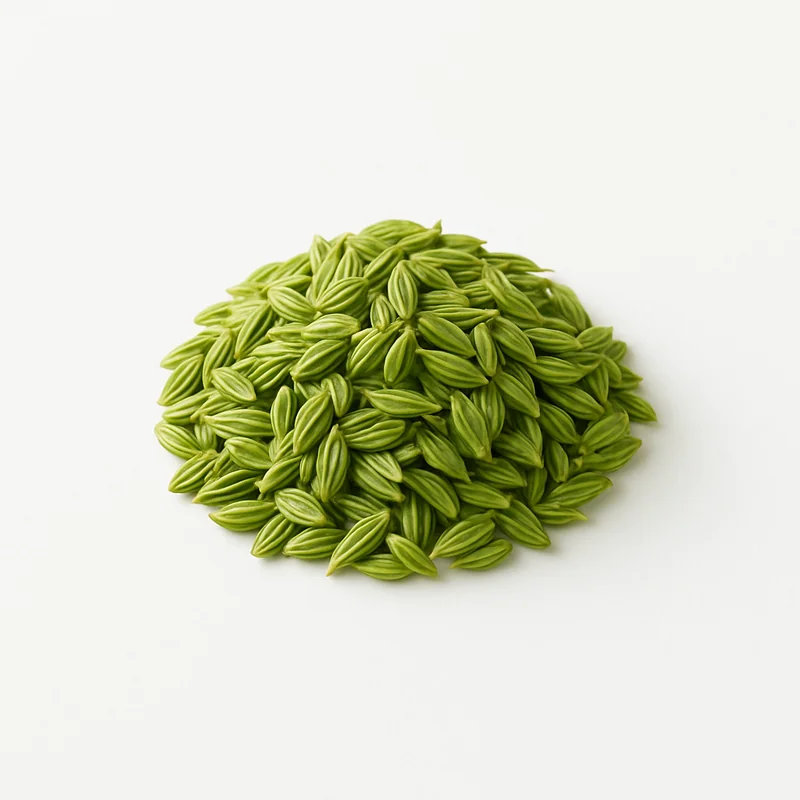
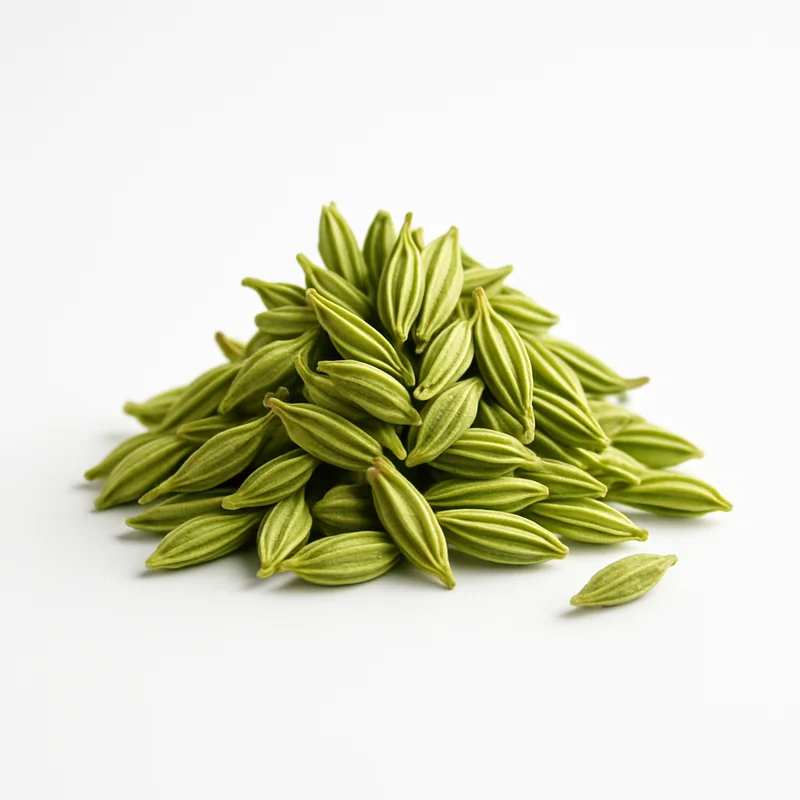
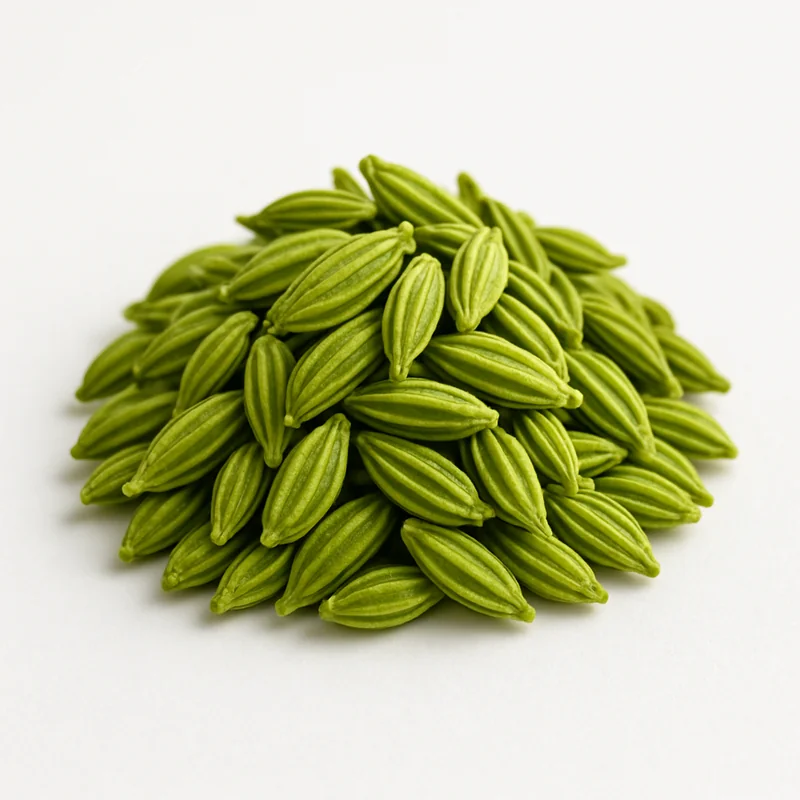
Fennel Seed
Fennel seed is the sweet, anethole-rich fruit of Foeniculum vulgare, one of the most calcium- and fiber-dense spices and a classic carminative digestive aid chewed across South Asia as an after-meal mukhwas.
Nutrition · per ~2 g serving · ≈ a pinch
- Niacin0.12 mg<1% DV
- Thiamin0.01 mg<1% DV
- Vitamin B60.01 mg<1% DV
- Riboflavin0.01 mg<1% DV
- Vitamin C0.42 mg<1% DV
- Vitamin A2.7 iu<1% DV
- Manganese0.13 mg6% DV
- Copper0.02 mg2% DV
- Iron0.37 mg2% DV
- Calcium23.9 mg2% DV
- Magnesium7.7 mg2% DV
- Phosphorus9.7 mg<1% DV
- Potassium33.9 mg<1% DV
- Zinc0.07 mg<1% DV
- Selenium0.15 mcg<1% DV
- Sodium1.8 mg<1% DV
Score · 97/100
Vitamins & minerals packed in relative to calories — the single biggest driver of the score.
How much protein it delivers, by absolute grams and per calorie.
Dietary fiber for gut health, satiety and steadier blood sugar.
Fat quality — unsaturated vs saturated, and trans-fat free.
Polyphenols, flavonoids and other beneficial plant compounds for this food group.
Low sugar with a high fiber-to-carb ratio scores best — gentler on blood sugar.
- Manganese284% DV
- Copper119% DV
- Iron103% DV
- Calcium92% DV
- Magnesium92% DV
Overview
Fennel seed (Foeniculum vulgare) is the dried, ridged greenish-brown fruit of an aromatic perennial in the carrot family (Apiaceae). Its sweet, warm, licorice-like flavor comes from anethole, balanced by the slightly camphoraceous monoterpene fenchone. Fennel seed is among the most mineral-dense culinary spices, supplying about 1196mg of calcium, 385mg of magnesium, 6.5mg of manganese, and 1694mg of potassium per 100g, along with an exceptional 39.8g of fiber and 15.8g of protein. Used from Mediterranean to Indian kitchens, it is also the defining digestive seed of South Asia, where sugar-coated fennel (mukhwas) is chewed after meals to freshen breath and ease digestion. Its anethole-rich oil relaxes gastrointestinal smooth muscle, the basis for clinical use in infant colic and dysmenorrhea, while mild phytoestrogenic activity underlies traditional lactation support. For longevity-focused eating, fennel is a low-calorie flavor enhancer carrying concentrated calcium, fiber, and antioxidant volatile oils. Toasting the seeds rounds their sweetness and mobilizes the fat-soluble aromatics that deliver their effects.
Health Benefits (4)
- Eases bloating, gas, and digestive crampsstrongAnethole relaxes gastrointestinal smooth muscle as a carminative and antispasmodic, reducing gas retention and spasm
- Relieves infant colic and menstrual painmoderateAntispasmodic and mild estrogenic actions of fennel oil reduce smooth-muscle spasm; clinical trials support fennel for colic and dysmenorrhea
- Supports bone health through dense calcium and manganesemoderateVery high calcium (1196mg) and manganese (6.5mg) per 100g supply cofactors and minerals for bone matrix formation
- Promotes digestive and metabolic regularity via fibermoderateNearly 40g of fiber per 100g supports gut motility and may modulate post-meal blood sugar and appetite
Food Pairings
- ·Pair with olive oil or other fats because fennel's anethole and antioxidant oils are fat-soluble and absorb better with dietary fat
- ·Combine with cumin and coriander because these Apiaceae and seed spices share complementary digestive and aromatic profiles
- ·Use with pork, sausage, and fatty fish because the carminative oils aid digestion of rich proteins
- ·Add to tomato dishes because fennel's volatile oils complement and lift the acidity and lycopene of tomatoes
Practical Tips
- ·Dry-toast whole fennel seeds until fragrant to round out sweetness before grinding or using whole
- ·Chew a pinch of plain or sugar-coated seeds after a meal as a breath freshener and digestive aid
- ·Buy whole seeds; they retain aroma for 3-4 years versus 6 months for pre-ground fennel
- ·Choose plump, bright greenish seeds over dull gray ones, which indicate older, less fragrant stock
- ·Store in an airtight container in a cool, dark pantry to protect the essential oils
Optimal Timing
Fennel's carminative effect and traditional mukhwas use make it most beneficial chewed or brewed after eating to support digestion.
Eaten in small amounts it adds negligible calories; fennel tea is fasting-compatible.
