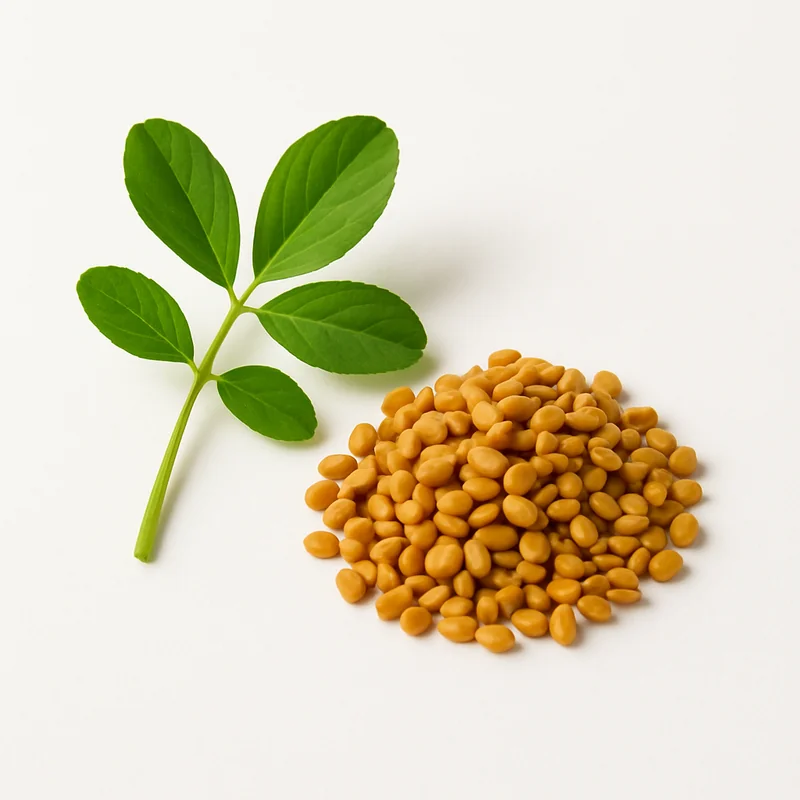
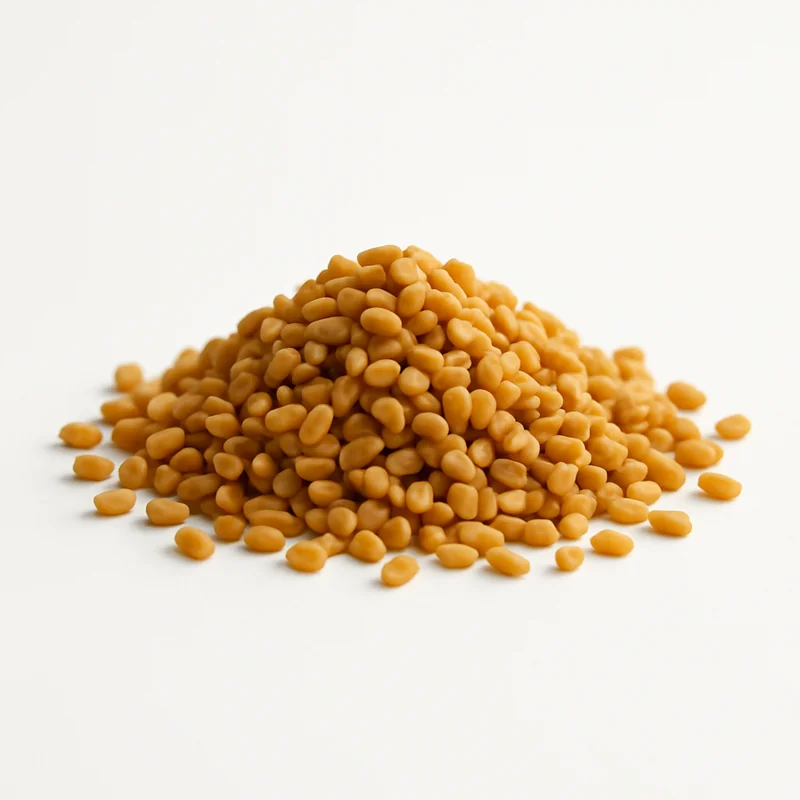
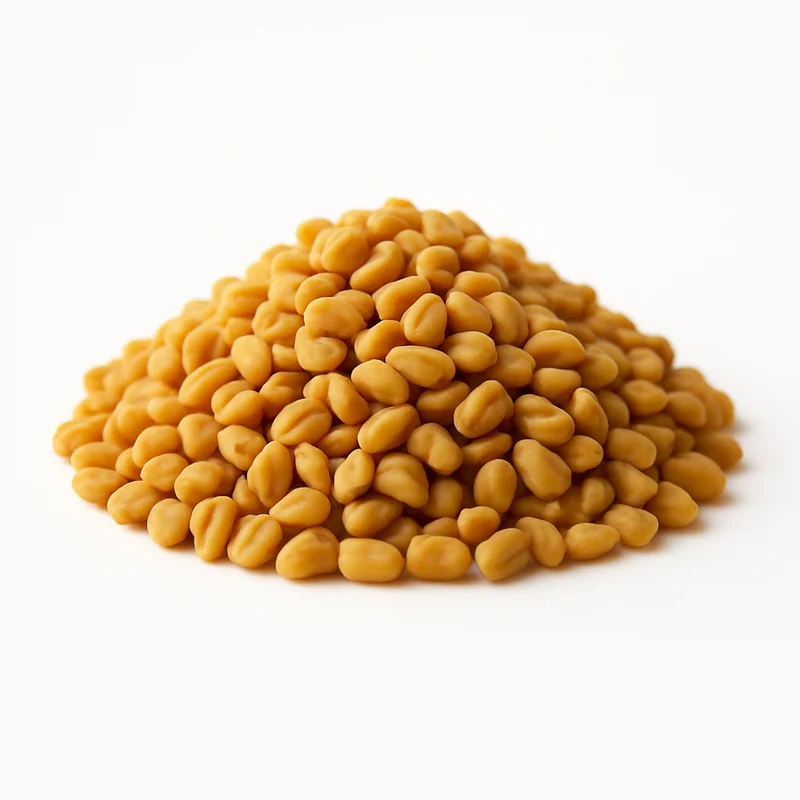
Fenugreek Seed — image 1 of 3Fenugreek Seed — image 2 of 3Fenugreek Seed — image 3 of 3
Herbs & Spices

Fenugreek Seed

97/ 100
Also known as: methi, trigonella foenum-graecum

Fenugreek seed is a maple-scented legume spice with the strongest clinical evidence of any culinary seed for lowering blood sugar and cholesterol, driven by soluble galactomannan fiber and the compounds trigonelline and 4-hydroxyisoleucine.

Nutrition · per ~2 g serving · ≈ a pinch

🔥 Calories
6/ 2000 kcal day
🥩Protein0.5 g<1% DV
🍞Carbs1.2 g<1% DV
🥑Fat0.1 g<1% DV
🌿Fiber0.5 g2% DV
1g net carbs · carbs − fiber
Vitamins
  • Vitamin B60.01 mg<1% DV
  • Riboflavin0.01 mg<1% DV
  • Thiamin0.01 mg<1% DV
  • Folate1.1 mcg<1% DV
  • Niacin0.03 mg<1% DV
  • Vitamin C0.06 mg<1% DV
  • Vitamin A1.2 iu<1% DV
Minerals
  • Iron0.67 mg4% DV
  • Copper0.02 mg2% DV
  • Manganese0.02 mg1% DV
  • Magnesium3.8 mg<1% DV
  • Phosphorus5.9 mg<1% DV
  • Zinc0.05 mg<1% DV
  • Potassium15.4 mg<1% DV
  • Calcium3.5 mg<1% DV
  • Selenium0.13 mcg<1% DV
  • Sodium1.3 mg<1% DV
BioactivesEstimated
  • Saponins~6.0 mg
Estimated typical amounts — derived from this food's profile, not measured for this item. Real bioactive content varies widely by variety, ripeness, storage and preparation; use as a rough guide only.
Source: USDA SR Legacy · 170921

Score · 97/100

Nutrient Density35.0 / 35

Vitamins & minerals packed in relative to calories — the single biggest driver of the score.

Protein Quality12.0 / 15

How much protein it delivers, by absolute grams and per calorie.

Fiber Content10.0 / 10

Dietary fiber for gut health, satiety and steadier blood sugar.

Healthy Fats7.5 / 10

Fat quality — unsaturated vs saturated, and trans-fat free.

Bioactives13.5 / 15

Polyphenols, flavonoids and other beneficial plant compounds for this food group.

Glycemic Impact10.0 / 10

Low sugar with a high fiber-to-carb ratio scores best — gentler on blood sugar.

Top Nutrients
  • Iron186% DV
  • Copper123% DV
  • Manganese53% DV
  • Magnesium46% DV
  • Vitamin B635% DV

Overview

Fenugreek seed (Trigonella foenum-graecum) is the hard, yellow-brown seed of an annual legume (Fabaceae) used as both spice and herb across India, the Middle East, and the Mediterranean. The bittersweet seeds release a distinctive maple/burnt-sugar aroma (from trigonelline and sotolon) when toasted. Among the highest-protein and highest-fiber spices at 23g protein and 24.6g fiber per 100g, fenugreek is unusual in being lower in fat and exceptionally rich in iron (33.5mg) and folate. Much of its fiber is viscous soluble galactomannan, which slows carbohydrate absorption, and the seed carries two notable bioactives: trigonelline, a pyridine alkaloid studied for glucose-lowering and neuroprotective effects, and 4-hydroxyisoleucine, an unusual amino acid that stimulates insulin secretion. Together these give fenugreek the best human evidence of any culinary spice for metabolic effects, with trials showing reduced fasting and post-meal glucose, improved HbA1c, and lower total and LDL cholesterol. It is also a traditional galactagogue used to support milk supply. For longevity-focused diets, fenugreek is a potent functional spice combining metabolic activity with dense iron, protein, and fiber. Brief toasting tames bitterness and unlocks its maple aroma.

Health Benefits (4)

  • Lowers fasting and post-meal blood glucose
    strong
    Soluble galactomannan fiber slows carbohydrate absorption while 4-hydroxyisoleucine stimulates insulin secretion and trigonelline improves glucose handling; trials show reduced fasting glucose and HbA1c
  • Reduces total and LDL cholesterol
    moderate
    Viscous soluble fiber binds bile acids and the steroidal saponin diosgenin reduces cholesterol absorption, lowering serum lipids in multiple studies
  • Supports lactation (galactagogue)
    emerging
    Traditional and small-trial evidence indicates fenugreek increases breast-milk production, attributed to phytoestrogenic and galactagogue compounds
  • Delivers exceptional iron, protein, and folate
    strong
    33.5mg iron, 23g protein, and 57mcg folate per 100g support oxygen transport, tissue maintenance, and cell division

Food Pairings

  • ·Pair with vitamin C-rich vegetables or citrus because ascorbate sharply increases absorption of fenugreek's abundant non-heme iron
  • ·Combine with cumin, coriander, and turmeric because they form the aromatic base of curry blends and balance fenugreek's bitterness
  • ·Use with high-carbohydrate meals because its soluble fiber and insulinotropic compounds blunt the post-meal glucose rise
  • ·Add to tomatoes and tamarind because acidity and sweetness counter the seed's natural bitterness

Practical Tips

  • ·Toast whole seeds only briefly; over-toasting turns fenugreek acrid rather than maple-sweet
  • ·Soak or sprout the seeds to soften bitterness and improve digestibility
  • ·Buy whole seeds; they keep for 3-4 years while ground fenugreek loses aroma and grows more bitter within months
  • ·Expect a harmless maple smell in sweat or urine after eating large amounts, a documented and benign effect
  • ·Store in an airtight container in a cool, dark pantry

Optimal Timing

🕒
with meals
Best with food

Taking fenugreek with carbohydrate-containing meals maximizes its blunting of post-meal blood sugar via soluble fiber and insulinotropic compounds.

Its metabolic benefits are tied to consumption alongside food, so it is best used within meals rather than during fasting windows.

Systems supported

body systems this food feeds

Pathways supported

biochemical reactions enabled by this food