Garam Masala
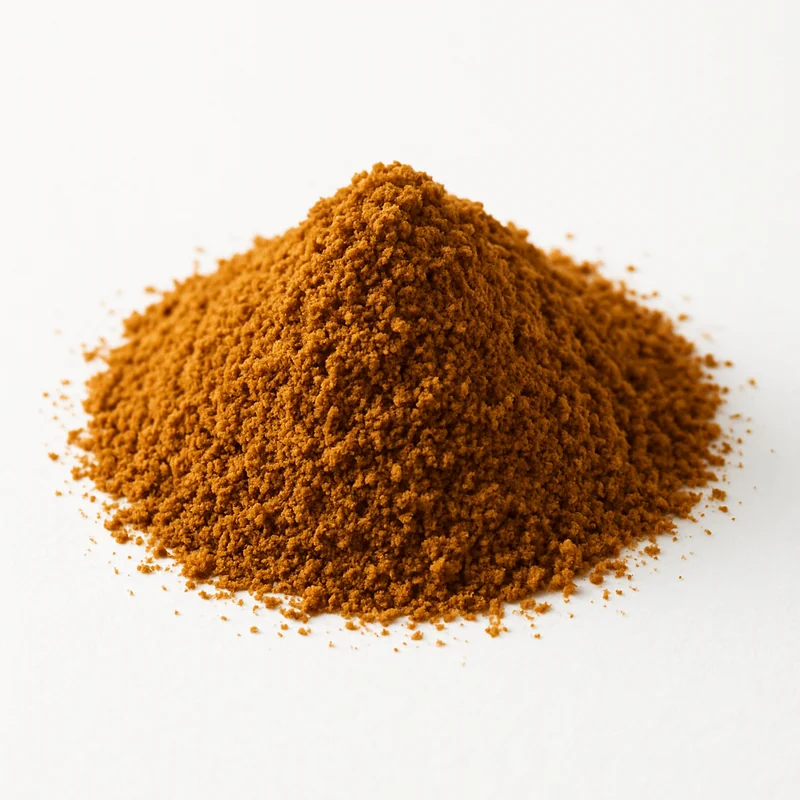
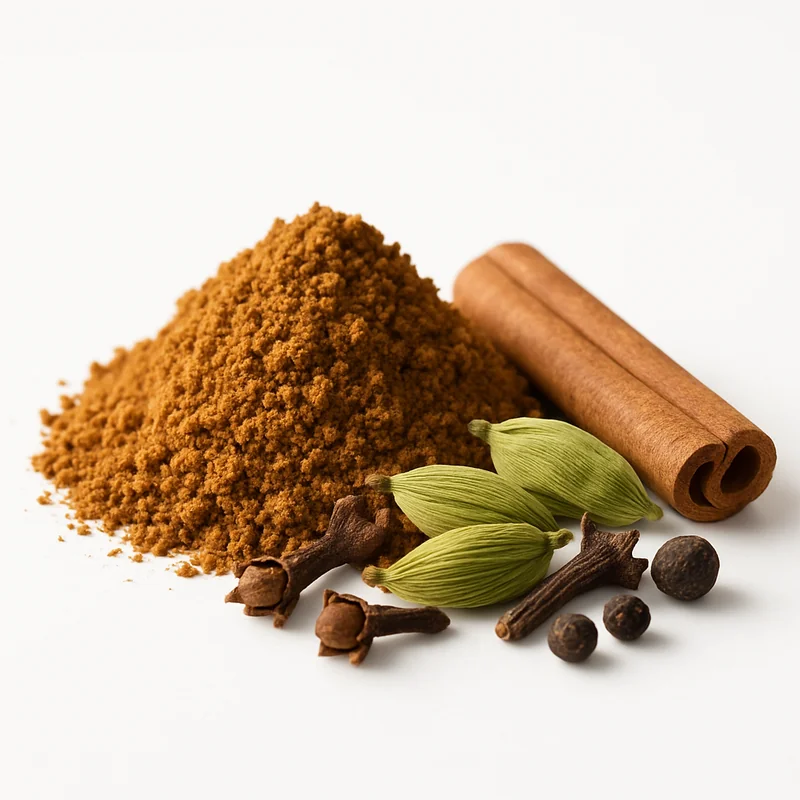
Garam masala is a warming North Indian blend of toasted cinnamon, cardamom, cloves, cumin, coriander, black pepper, and nutmeg, rich in iron and manganese and dense in antioxidant volatiles like eugenol and cinnamaldehyde.
Nutrition · per ~2 g serving · ≈ a pinch
- Vitamin K1.0 mcg<1% DV
- Vitamin B60.01 mg<1% DV
- Thiamin0.01 mg<1% DV
- Riboflavin0.01 mg<1% DV
- Niacin0.07 mg<1% DV
- Vitamin E0.06 mg<1% DV
- Folate1.2 mcg<1% DV
- Vitamin C0.24 mg<1% DV
- Vitamin A7.0 iu<1% DV
- Manganese0.24 mg10% DV
- Iron0.44 mg2% DV
- Copper0.02 mg2% DV
- Magnesium4.8 mg1% DV
- Calcium12.0 mg<1% DV
- Zinc0.08 mg<1% DV
- Potassium28.0 mg<1% DV
- Phosphorus6.4 mg<1% DV
- Selenium0.24 mcg<1% DV
- Sodium1.2 mg<1% DV
- Saturated Fat0.05 g
- Polyphenols~3.0 mg
Score · 97/100
Vitamins & minerals packed in relative to calories — the single biggest driver of the score.
How much protein it delivers, by absolute grams and per calorie.
Dietary fiber for gut health, satiety and steadier blood sugar.
Fat quality — unsaturated vs saturated, and trans-fat free.
Polyphenols, flavonoids and other beneficial plant compounds for this food group.
Low sugar with a high fiber-to-carb ratio scores best — gentler on blood sugar.
- Manganese522% DV
- Iron122% DV
- Copper100% DV
- Magnesium57% DV
- Calcium46% DV
Overview
Garam masala, literally 'warm spice mix,' is the finishing blend of North Indian kitchens, where its toasted aromatic spices are stirred in near the end of cooking to bloom their fragrance. The classic mix centers on cinnamon, green cardamom, cloves, cumin, coriander, black pepper, and nutmeg, and is typically free of the turmeric and chili that define curry powder. As a seed-and-bark blend it is energy-dense (~380 kcal per 100 g) and mineral-rich, supplying roughly 22 mg iron, 12 mg manganese, 600 mg calcium, and 1,400 mg potassium per 100 g, with substantial magnesium and fiber. Its real distinction is aromatic and phytochemical: eugenol from cloves and cinnamaldehyde from cinnamon are potent antioxidant volatiles, while piperine from its generous black pepper content can enhance the absorption of co-ingested compounds, and cumin and coriander add their own polyphenols. Because each cook's blend differs and it is used by the teaspoon, garam masala is best understood as a high-impact flavor and antioxidant layer rather than a bulk nutritional source.
Health Benefits (3)
- Delivers a concentrated antioxidant volatile loadmoderateEugenol from cloves and cinnamaldehyde from cinnamon are phenylpropanoids that scavenge reactive oxygen species and downregulate inflammatory mediators
- Supports digestion and gastric comfortlimitedCumin, coriander, and cardamom carminatives stimulate digestive enzyme and bile secretion, easing bloating and gas
- Provides trace minerals for enzyme functionlimitedIron and manganese serve as cofactors for oxygen transport and antioxidant defense enzymes
Food Pairings
- ·Pair with a fat such as ghee because the blend's eugenol and cinnamaldehyde are fat-soluble
- ·Add to slow-cooked meats and lentils where the warm spices balance richness
- ·Finish dishes with garam masala rather than cooking it long, preserving its volatile aromatics
Practical Tips
- ·Add garam masala in the last few minutes of cooking to keep its toasted aromatics intact
- ·Toast and grind whole spices fresh for the most potent blend; pre-ground loses aroma quickly
- ·Store in an airtight container away from heat and light
Optimal Timing
No circadian dependency; benefits accrue from regular culinary use.
Negligible calories at culinary doses; compatible with fasting.
