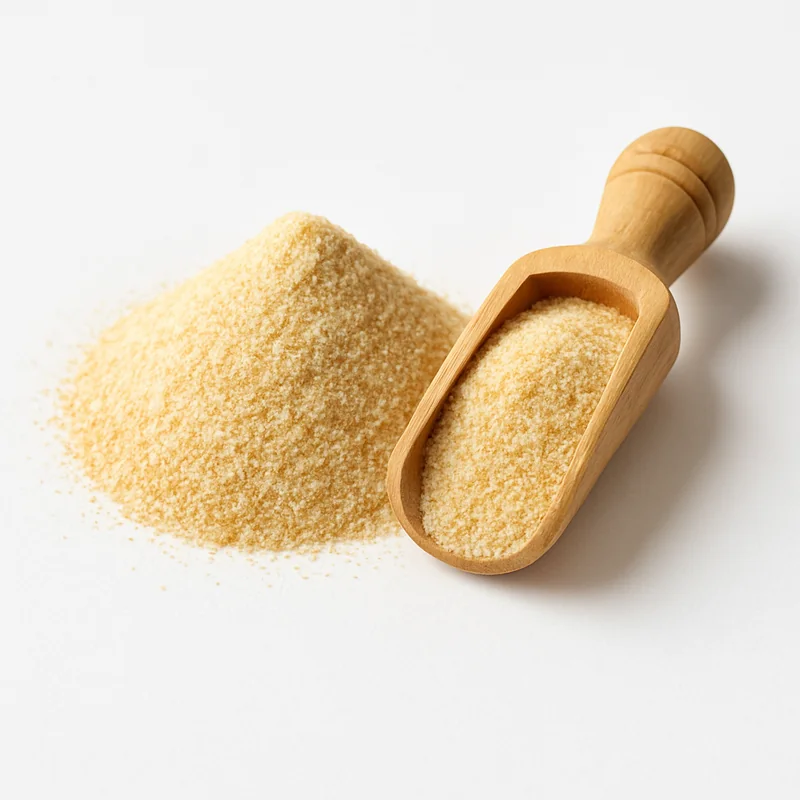
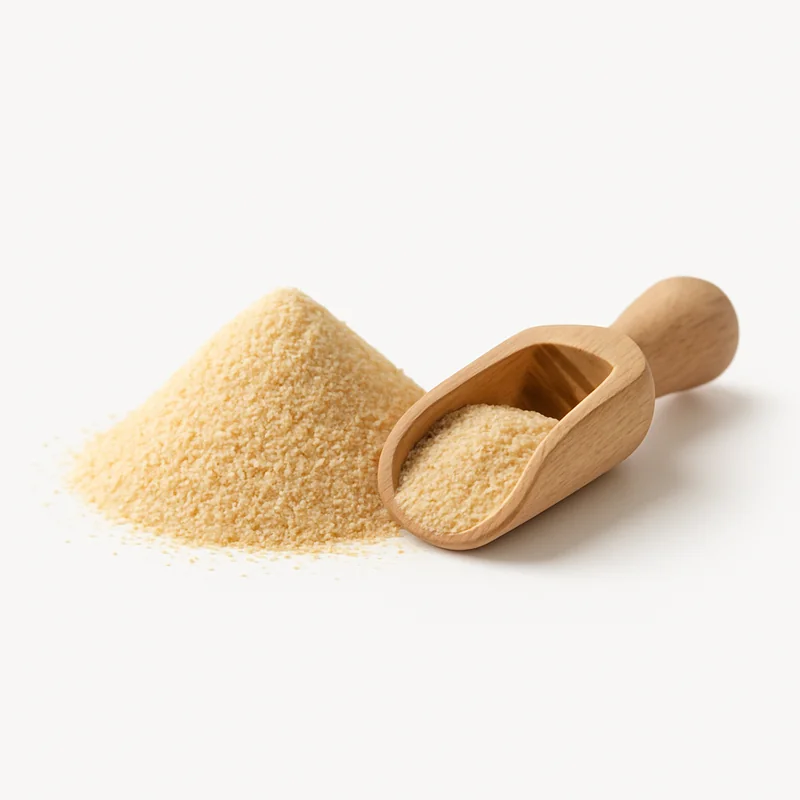
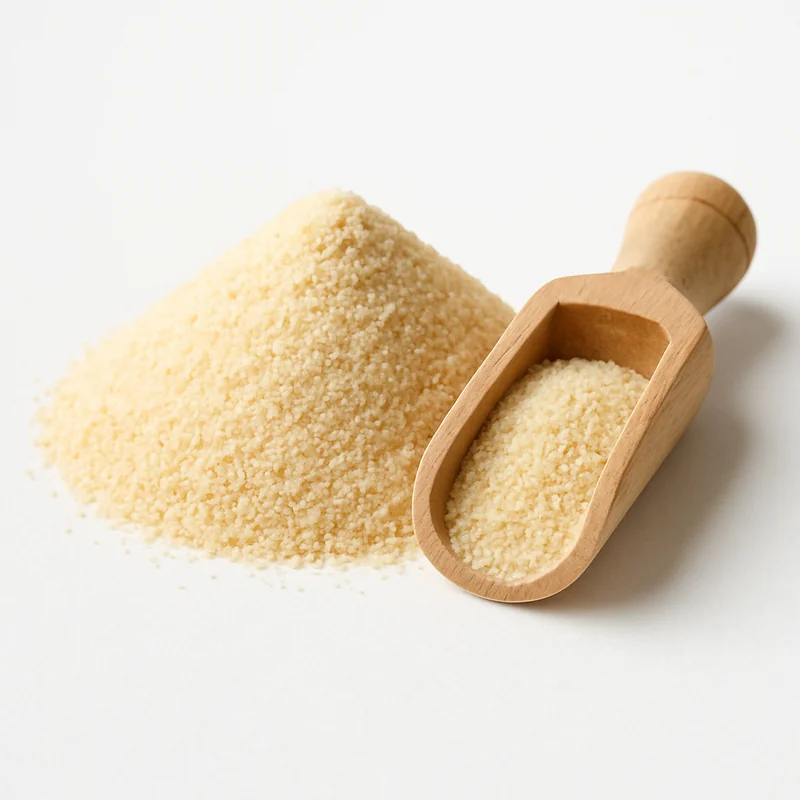
Garlic Powder
Garlic powder is dehydrated, ground garlic concentrating organosulfur compounds like allicin and alliin, supporting cardiovascular and immune health.
Nutrition · per ~2 g serving · ≈ a pinch
- Vitamin B60.03 mg2% DV
- Thiamin0.01 mg<1% DV
- Pantothenic Acid0.01 mg<1% DV
- Folate0.94 mcg<1% DV
- Riboflavin0.00 mg<1% DV
- Niacin0.02 mg<1% DV
- Vitamin C0.02 mg<1% DV
- Manganese0.07 mg3% DV
- Selenium0.48 mcg<1% DV
- Copper0.01 mg<1% DV
- Phosphorus8.3 mg<1% DV
- Iron0.11 mg<1% DV
- Zinc0.06 mg<1% DV
- Potassium23.9 mg<1% DV
- Magnesium1.5 mg<1% DV
- Calcium1.6 mg<1% DV
- Sodium1.2 mg<1% DV
- Saturated Fat0.00 g
- Organosulfur (Allicin)~1.2 mg
Score · 96/100
Vitamins & minerals packed in relative to calories — the single biggest driver of the score.
How much protein it delivers, by absolute grams and per calorie.
Dietary fiber for gut health, satiety and steadier blood sugar.
Fat quality — unsaturated vs saturated, and trans-fat free.
Polyphenols, flavonoids and other beneficial plant compounds for this food group.
Low sugar with a high fiber-to-carb ratio scores best — gentler on blood sugar.
- Manganese144% DV
- Vitamin B697% DV
- Selenium44% DV
- Thiamin36% DV
- Copper33% DV
Overview
Garlic powder (Allium sativum) is dehydrated, finely milled garlic that concentrates the bulb's prized chemistry into a shelf-stable spice of roughly 331 kcal per 100g. Drying preserves alliin, the odorless precursor that converts to the pungent thiosulfinate allicin when the powder is rehydrated and its alliinase enzyme acts; downstream products include diallyl disulfide, diallyl trisulfide, and the stable, well-absorbed S-allyl cysteine. Nutritionally it is striking: about 3.3 mg manganese, 1.65 mg vitamin B6, and 414 mg phosphorus per 100g, alongside roughly 1,193 mg potassium and meaningful copper, selenium, and iron. The organosulfur fraction is the longevity headline—these compounds modulate nitric-oxide signaling for vasodilation, inhibit cholesterol synthesis, exert broad antimicrobial activity, and activate Nrf2 antioxidant defenses. Because allicin is heat-labile and generated only on enzyme contact, the most bioactive use is to rehydrate garlic powder briefly before light cooking. As a concentrated culinary medicine, even a teaspoon delivers a dense organosulfur and mineral payload with negligible calories.
Health Benefits (3)
- Supports healthy blood pressure and vascular functionstrongAllicin and S-allyl cysteine enhance endothelial nitric-oxide production and hydrogen sulfide signaling, promoting vasodilation and reducing arterial stiffness
- Improves blood lipid profilemoderateDiallyl disulfide and related organosulfur compounds inhibit hepatic HMG-CoA reductase, lowering cholesterol synthesis
- Provides broad antimicrobial and immune supportmoderateAllicin disrupts microbial thiol-dependent enzymes and stimulates immune cell activity
Food Pairings
- ·Pair with olive oil because garlic's fat-soluble organosulfur compounds and the formation of allicin are enhanced in a lipid medium
- ·Combine with tomatoes and herbs because the antioxidant synergy supports cardiovascular benefits in Mediterranean-style dishes
Practical Tips
- ·Rehydrate garlic powder in a little water for 10 minutes before cooking to allow alliinase to generate allicin
- ·Add late in cooking and avoid prolonged high heat, since allicin and many thiosulfinates are heat-sensitive
Optimal Timing
Garlic's organosulfur bioactives have no circadian dependency and benefit from consistent daily intake.
Negligible calories per culinary serving; compatible with fasting.
