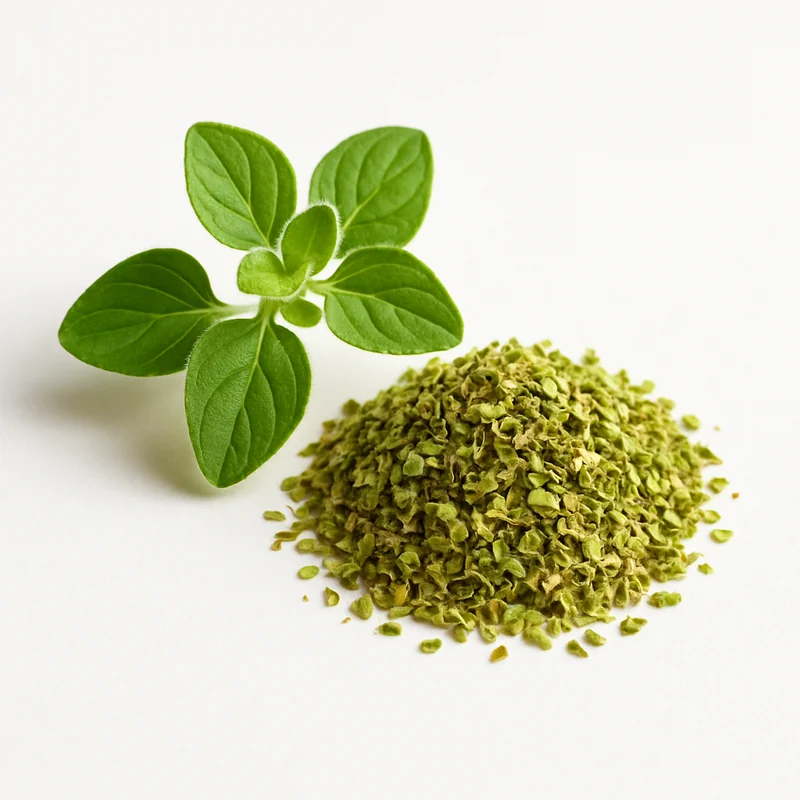
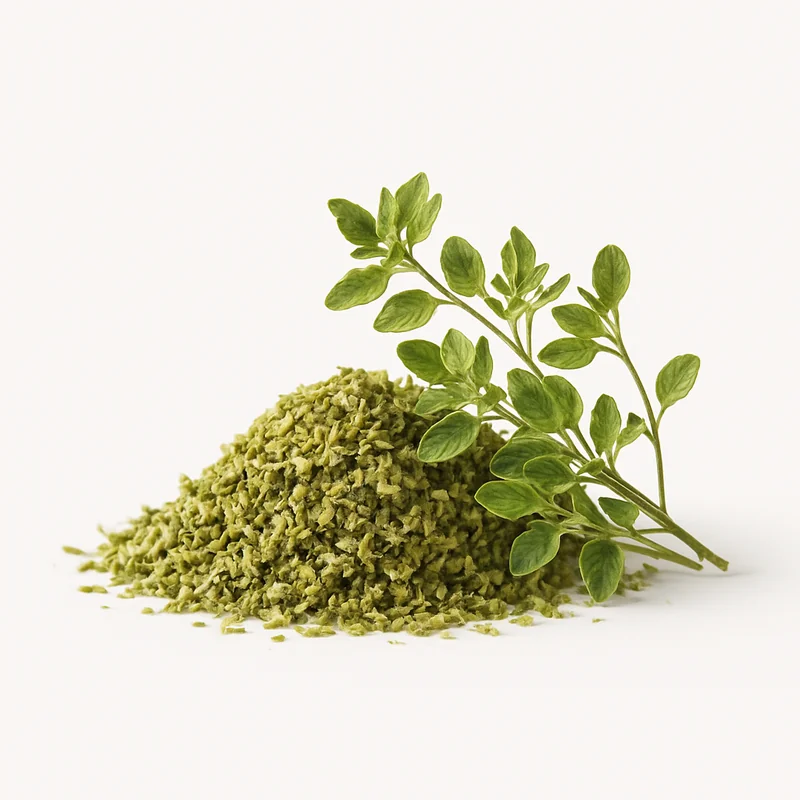
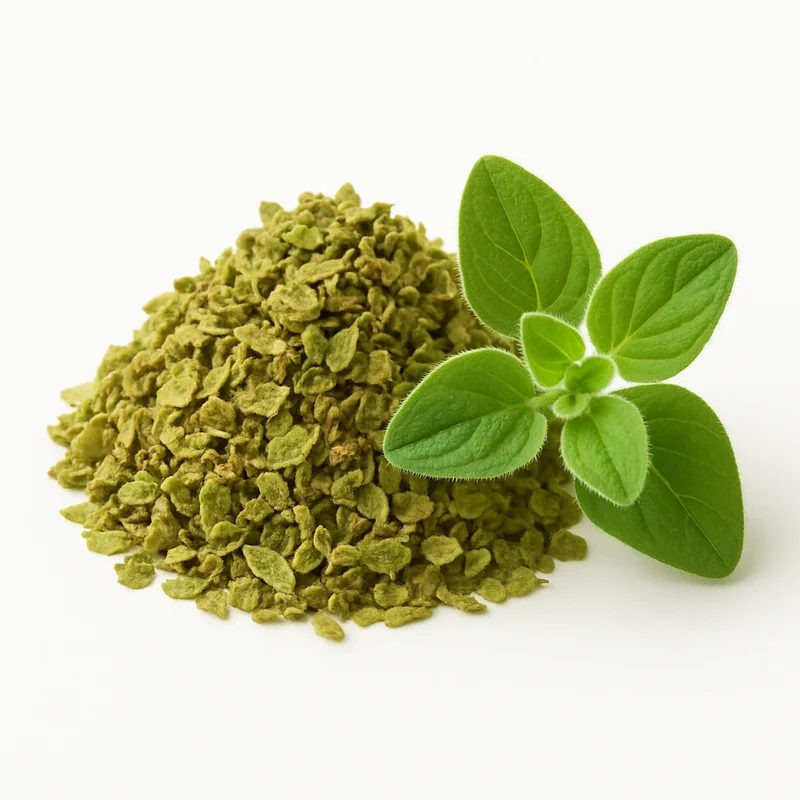
Oregano (Dried)
Dried oregano is one of the most antioxidant-dense culinary herbs, exceptionally rich in vitamin K, calcium, iron, and the phenolic compounds carvacrol and thymol.
Nutrition · per ~2 g serving · ≈ a pinch
- Vitamin K12.4 mcg10% DV
- Vitamin E0.37 mg2% DV
- Vitamin B60.02 mg1% DV
- Folate4.7 mcg1% DV
- Riboflavin0.01 mg<1% DV
- Vitamin A34.0 iu<1% DV
- Niacin0.09 mg<1% DV
- Thiamin0.00 mg<1% DV
- Vitamin C0.05 mg<1% DV
- Manganese0.10 mg4% DV
- Iron0.74 mg4% DV
- Calcium31.9 mg2% DV
- Copper0.01 mg1% DV
- Magnesium5.4 mg1% DV
- Potassium25.2 mg<1% DV
- Zinc0.05 mg<1% DV
- Phosphorus3.0 mg<1% DV
- Selenium0.09 mcg<1% DV
- Sodium0.50 mg<1% DV
- Saturated Fat0.03 g
- Polyphenols~3.0 mg
Score · 97/100
Vitamins & minerals packed in relative to calories — the single biggest driver of the score.
How much protein it delivers, by absolute grams and per calorie.
Dietary fiber for gut health, satiety and steadier blood sugar.
Fat quality — unsaturated vs saturated, and trans-fat free.
Polyphenols, flavonoids and other beneficial plant compounds for this food group.
Low sugar with a high fiber-to-carb ratio scores best — gentler on blood sugar.
- Vitamin K518% DV
- Manganese217% DV
- Iron204% DV
- Calcium123% DV
- Vitamin E122% DV
Overview
Oregano (Origanum vulgare) is a perennial herb native to the Mediterranean basin and western Asia, where it has been central to Greek and Italian cooking and folk medicine for millennia—its very name derives from the Greek for 'joy of the mountain.' Drying concentrates its nutrition dramatically: per 100 g, dried oregano supplies roughly 265 kcal, 11 g protein, 69 g carbohydrate (of which ~42 g is fiber), and a remarkable mineral profile led by ~1597 mg calcium, ~37 mg iron, ~270 mg magnesium, ~1260 mg potassium, and ~5 mg manganese. Its standout micronutrient is vitamin K at roughly 622 mcg per 100 g, alongside meaningful vitamin E (~18 mg) and vitamin A. What sets oregano apart pharmacologically is its volatile oil, dominated by the phenolic monoterpenes carvacrol and thymol, supported by rosmarinic acid, p-cymene, and a high concentration of flavonoids—giving dried oregano one of the highest ORAC antioxidant values of any common food. Because culinary amounts are small (a teaspoon is ~1 g), oregano contributes little bulk nutrition, but its bioactives punch far above their weight as antimicrobial, anti-inflammatory, and antioxidant agents, making it a quintessential example of culinary medicine.
Health Benefits (4)
- Provides potent antioxidant and anti-inflammatory protectionmoderateCarvacrol, thymol, and rosmarinic acid scavenge reactive oxygen species and downregulate NF-κB and COX-2 signaling, lowering systemic oxidative and inflammatory load
- Exerts broad antimicrobial activitymoderateCarvacrol disrupts bacterial and fungal cell membranes, increasing permeability and dissipating ion gradients, which inhibits a wide range of pathogens including E. coli and Candida
- Supports bone health and proper calcium handlingstrongHigh vitamin K activates osteocalcin and matrix Gla protein, directing dietary calcium into bone while inhibiting arterial calcification
- Aids digestion and gut comfortlimitedVolatile phenolics stimulate digestive secretions and exert carminative and antispasmodic effects on the gastrointestinal tract
Food Pairings
- ·Pair with olive oil and tomato because oregano's carvacrol and thymol are fat-soluble and dissolve into the oil, improving absorption and flavor distribution
- ·Combine with legumes and red meat because its iron and vitamin C-independent phenolics complement plant and heme iron in hearty dishes
- ·Use with garlic because their combined antimicrobial compounds act synergistically
Practical Tips
- ·Crush dried oregano between your fingers before adding to release the volatile oils trapped in the dried leaf
- ·Add early in cooking for sauces and braises since the dried form withstands heat well, unlike delicate fresh herbs
- ·Store in an airtight jar away from light and heat; potency fades within 1-2 years
Optimal Timing
Oregano's bioactives have no circadian dependency and are best consumed consistently as part of meals.
Culinary amounts are negligible in calories and compatible with fasting.
