Poppy Seed
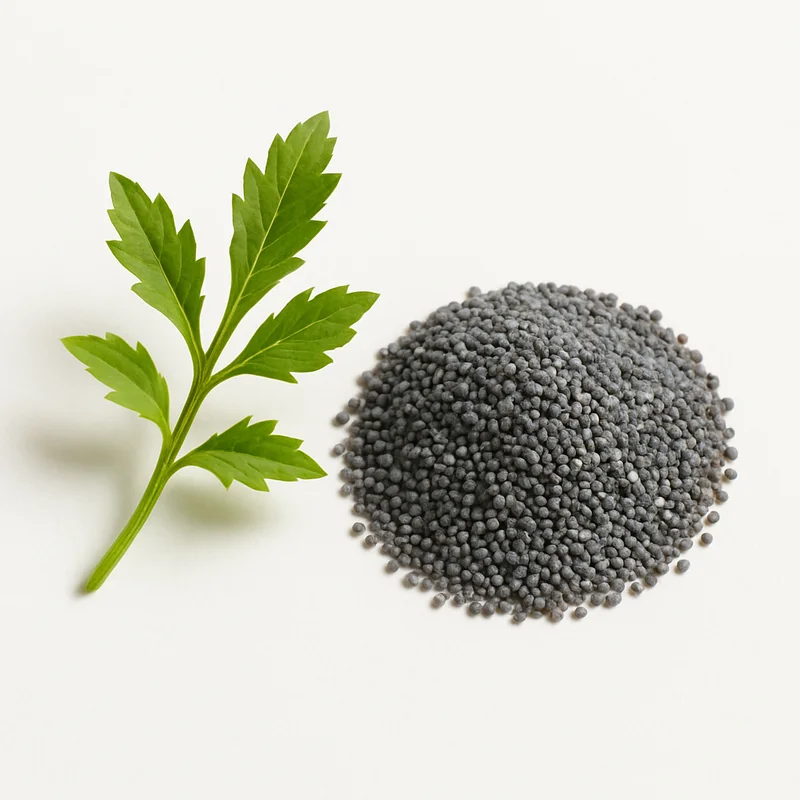
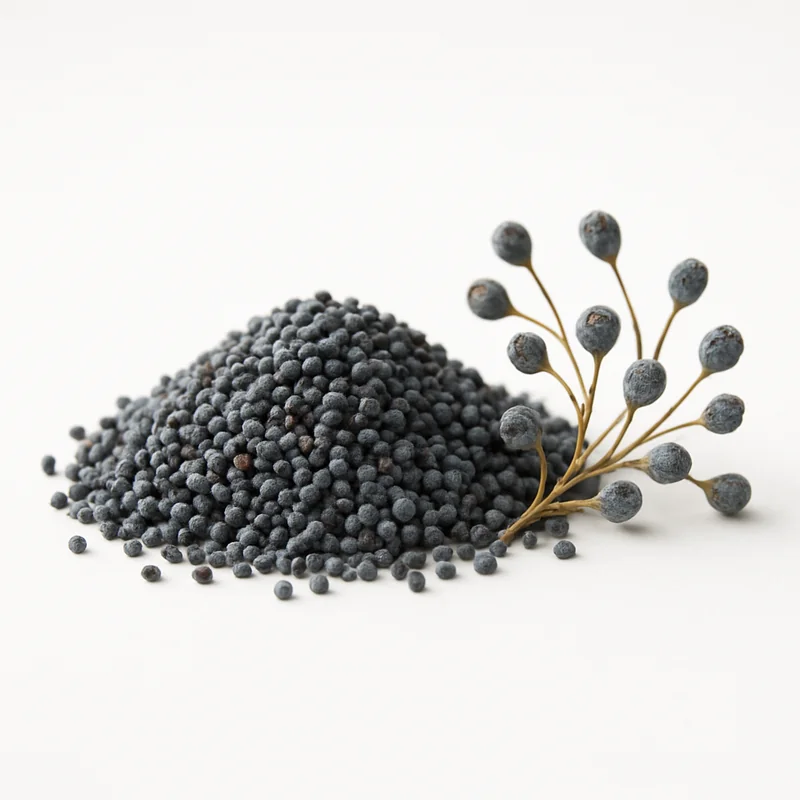
Poppy seed is the oil-rich, nutty seed of Papaver somniferum, one of the most calorie- and calcium-dense culinary seeds, prized for crunch in baking and free of meaningful narcotic content.
Nutrition · per ~2 g serving · ≈ a pinch
- Thiamin0.02 mg1% DV
- Folate1.6 mcg<1% DV
- Vitamin B60.00 mg<1% DV
- Vitamin E0.04 mg<1% DV
- Riboflavin0.00 mg<1% DV
- Niacin0.02 mg<1% DV
- Vitamin C0.02 mg<1% DV
- Manganese0.13 mg6% DV
- Copper0.03 mg4% DV
- Calcium28.8 mg2% DV
- Magnesium6.9 mg2% DV
- Zinc0.16 mg1% DV
- Phosphorus17.4 mg1% DV
- Iron0.20 mg1% DV
- Selenium0.27 mcg<1% DV
- Potassium14.4 mg<1% DV
- Sodium0.52 mg<1% DV
Score · 97/100
Vitamins & minerals packed in relative to calories — the single biggest driver of the score.
How much protein it delivers, by absolute grams and per calorie.
Dietary fiber for gut health, satiety and steadier blood sugar.
Fat quality — unsaturated vs saturated, and trans-fat free.
Polyphenols, flavonoids and other beneficial plant compounds for this food group.
Low sugar with a high fiber-to-carb ratio scores best — gentler on blood sugar.
- Manganese292% DV
- Copper181% DV
- Calcium111% DV
- Magnesium83% DV
- Zinc72% DV
Overview
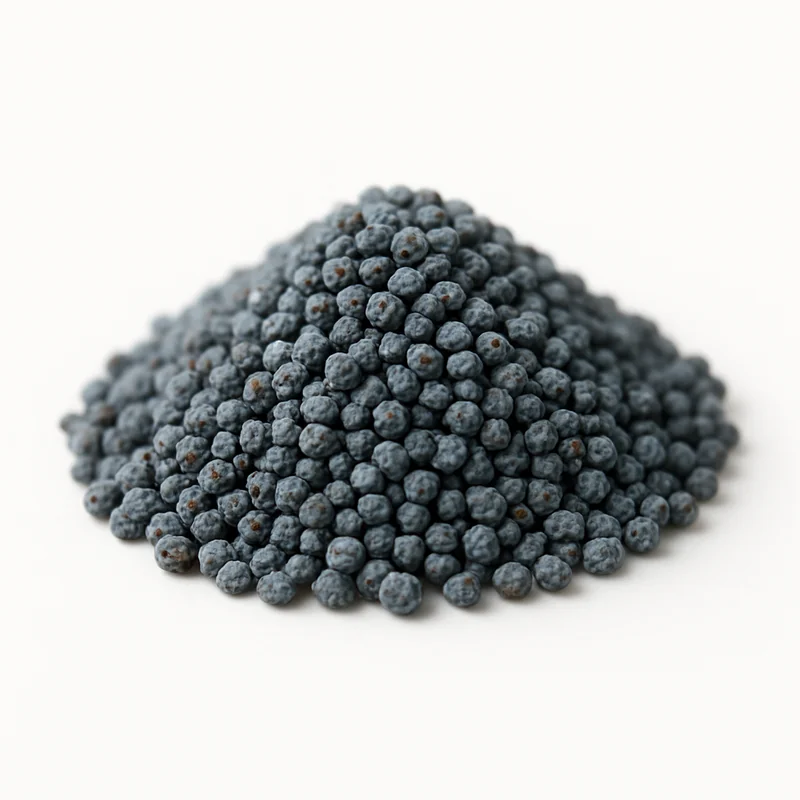
Poppy seed is the tiny, kidney-shaped, slate-blue or white seed of the opium poppy, Papaver somniferum. The mature seeds contain virtually no narcotic alkaloids and are entirely a food, prized for a delicate nutty, slightly sweet flavor and satisfying crunch. Because they are over 40% oil, poppy seeds are the most calorie-dense of the common culinary seeds at about 525 kcal per 100g, with the fat dominated by the polyunsaturated linoleic acid plus monounsaturated oleic acid and protective tocopherols. They are also exceptionally mineral-rich, supplying about 1438mg of calcium, 870mg of phosphorus, 347mg of magnesium, 6.7mg of manganese, and 7.9mg of zinc per 100g, along with thiamin and folate. Used whole for crunch on bagels, breads, and lemon-poppy cakes, or ground into rich fillings for Central European pastries and South Asian curries (khus khus), poppy seeds add both texture and nutrition. A documented quirk is that poppy-seed foods can occasionally trigger positive opiate drug tests from trace surface alkaloids, despite the seeds being non-narcotic. For longevity-focused eating, poppy seed delivers healthy unsaturated fats and a dense load of bone-supporting minerals; light toasting amplifies its nutty aroma.
Health Benefits (4)
- Supports bone health through dense mineralsmoderateVery high calcium (1438mg), phosphorus (870mg), magnesium (347mg), and manganese (6.7mg) per 100g supply the mineral matrix and cofactors for bone formation
- Provides healthy unsaturated fatsmoderateOver 40g fat per 100g, chiefly polyunsaturated linoleic and monounsaturated oleic acid, supports cardiovascular and cell-membrane health
- Contributes zinc, thiamin, and folatemoderateZinc (7.9mg), thiamin (0.85mg), and folate (82mcg) per 100g support immune function, energy metabolism, and cell division
- Delivers antioxidant tocopherolsmoderateVitamin E tocopherols in the seed oil protect its polyunsaturated fats and cell membranes from oxidation
Food Pairings
- ·Pair with lemon and honey because the bright acidity and sweetness offset poppy seed's nutty, oily richness in baked goods
- ·Combine with whole-grain breads and rolls because the seed adds crunch, minerals, and healthy fats to the grain
- ·Use ground poppy seed with butter and sugar for traditional Central European pastry fillings that carry its fat-soluble flavor
- ·Add to yogurt or salad dressings because the seed's calcium and fats complement creamy, acidic bases
Practical Tips
- ·Toast poppy seeds lightly to amplify their nutty aroma before adding to dough or dressings
- ·Because of the high oil content, store poppy seeds in the refrigerator or freezer and use within about a year to prevent rancidity
- ·Smell-check older seeds; a rancid or musty odor means they should be discarded
- ·Be aware that eating poppy-seed foods can occasionally cause a positive opiate drug test from trace surface residue, despite the seeds being non-narcotic
- ·Buy from a high-turnover source so the oil-rich seeds are fresh
Optimal Timing
Poppy seed is a baking and finishing seed with no circadian dependency; its minerals and fats benefit any meal.
Being oil-rich and calorie-dense, poppy seed contributes real calories and is best used within meals rather than during fasting windows.
