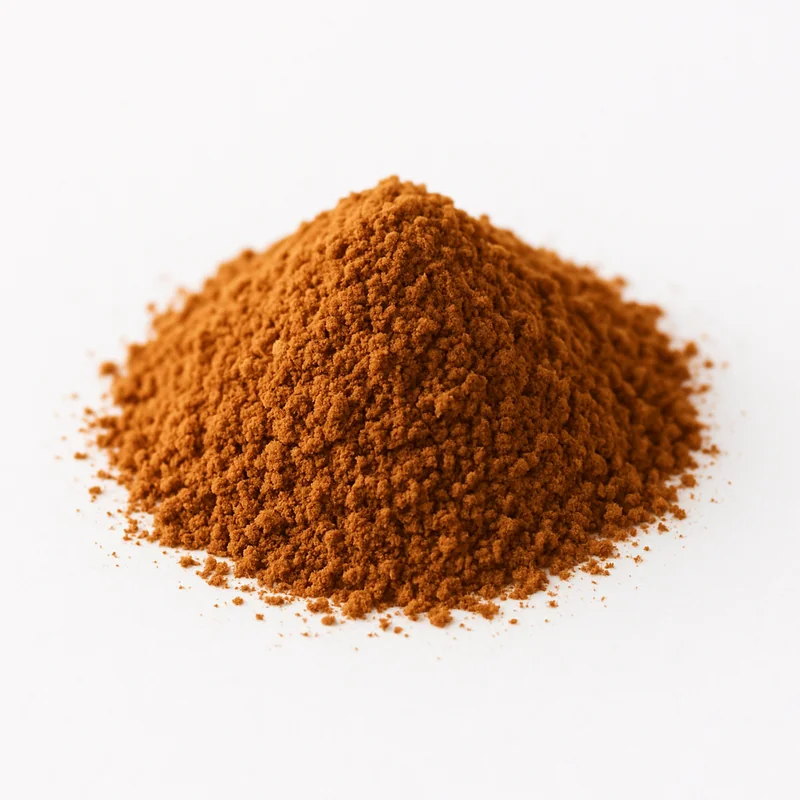
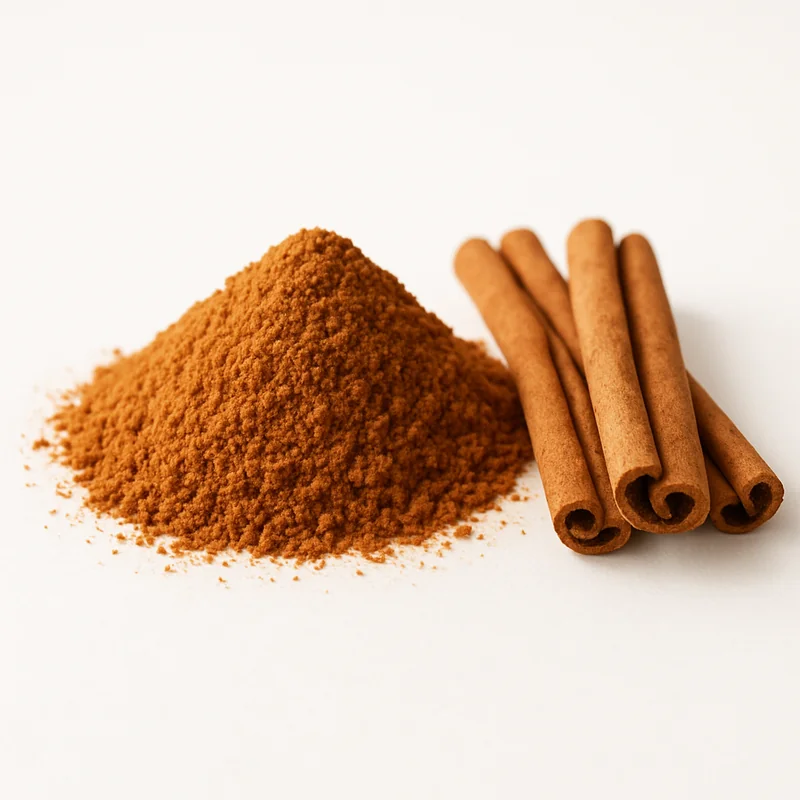
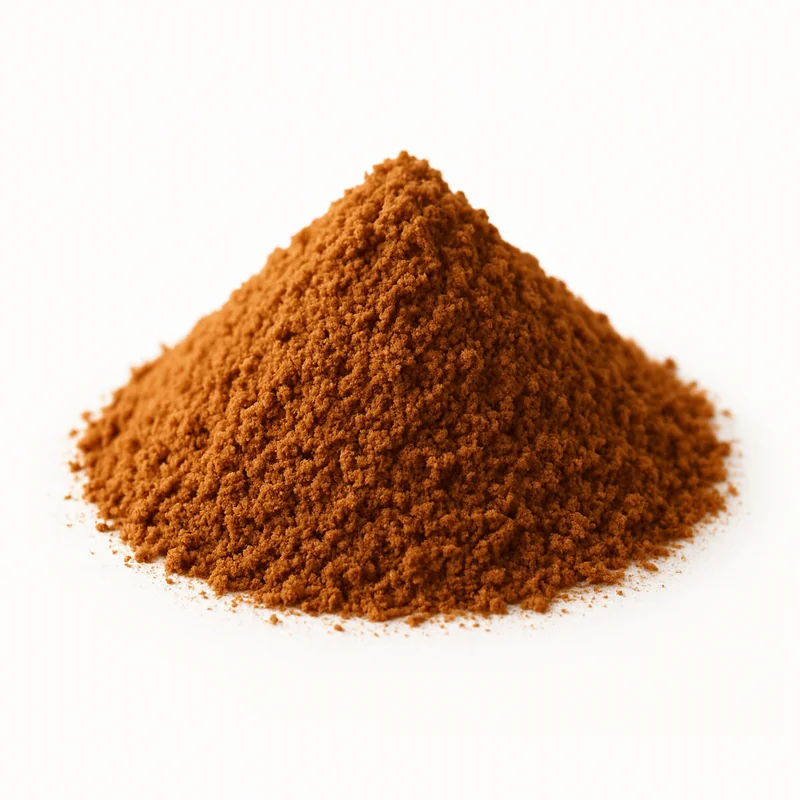
Pumpkin Pie Spice
Pumpkin pie spice is a cinnamon-led sweet-warm blend with ginger, nutmeg, allspice, and cloves, rich in manganese and calcium and carrying cinnamaldehyde, eugenol, and gingerols.
Nutrition · per ~2 g serving · ≈ a pinch
- Vitamin K0.70 mcg<1% DV
- Vitamin B60.01 mg<1% DV
- Vitamin E0.04 mg<1% DV
- Niacin0.03 mg<1% DV
- Riboflavin0.00 mg<1% DV
- Thiamin0.00 mg<1% DV
- Vitamin A6.0 iu<1% DV
- Vitamin C0.10 mg<1% DV
- Folate0.30 mcg<1% DV
- Manganese0.30 mg13% DV
- Iron0.26 mg1% DV
- Calcium15.0 mg1% DV
- Copper0.01 mg1% DV
- Magnesium2.6 mg<1% DV
- Zinc0.04 mg<1% DV
- Potassium17.0 mg<1% DV
- Phosphorus2.4 mg<1% DV
- Selenium0.08 mcg<1% DV
- Sodium0.50 mg<1% DV
- Saturated Fat0.06 g
- Gingerols~1.6 mg
- Polyphenols~3.0 mg
Score · 97/100
Vitamins & minerals packed in relative to calories — the single biggest driver of the score.
How much protein it delivers, by absolute grams and per calorie.
Dietary fiber for gut health, satiety and steadier blood sugar.
Fat quality — unsaturated vs saturated, and trans-fat free.
Polyphenols, flavonoids and other beneficial plant compounds for this food group.
Low sugar with a high fiber-to-carb ratio scores best — gentler on blood sugar.
- Manganese652% DV
- Iron72% DV
- Calcium58% DV
- Copper56% DV
- Magnesium31% DV
Overview
Pumpkin pie spice is the autumn baking staple that flavors far more than pie, lending its cozy warmth to pancakes, lattes, oatmeal, baked squash, and quick breads. The blend is led by cinnamon, the most generously used component, and rounded with ginger, nutmeg, allspice, and cloves; it is essentially a sweet-leaning cousin of the savory warm-spice blends. Because cinnamon and the other barks and seeds in it are mineral-dense, the powder is rich in manganese (~15 mg per 100 g) and calcium (~750 mg) with useful iron, potassium, and magnesium, at about 340 kcal per 100 g, though its by-the-teaspoon baking use keeps its real nutrient contribution modest. The interest, as with all warm-spice blends, is phytochemical: cinnamaldehyde from cinnamon, eugenol from cloves and allspice, pungent gingerols from ginger, and aromatic myristicin from nutmeg combine into a fragrant, antioxidant-rich profile. A note of caution applies to nutmeg, whose myristicin is psychoactive at very high doses, irrelevant at culinary amounts but worth knowing. Treat pumpkin pie spice as a flavorful seasoning that adds a quiet antioxidant lift to sweet cooking.
Health Benefits (3)
- Supports healthy blood glucose responsemoderateCinnamaldehyde and related cinnamon polyphenols may improve insulin sensitivity and slow gastric emptying, blunting post-meal glucose spikes
- Provides warming antioxidant aromaticsmoderateEugenol, gingerols, and cinnamaldehyde scavenge free radicals and modulate inflammatory signaling
- Supplies manganese for antioxidant enzymeslimitedCinnamon-derived manganese is a cofactor for mitochondrial superoxide dismutase
Food Pairings
- ·Pair with oats and yogurt where the warm spices add flavor without added sugar
- ·Combine with coffee or milk for a lower-sugar spiced latte that leverages the aromatics
- ·Use to season roasted squash and sweet potato to enhance natural sweetness without sweeteners
Practical Tips
- ·Use pumpkin pie spice to reduce added sugar; its sweet aroma makes foods taste sweeter
- ·Add a pinch to coffee grounds before brewing for an infused spiced cup
- ·Keep nutmeg-heavy blends to culinary amounts only
- ·Store airtight away from light and heat
Optimal Timing
No circadian dependency; benefits from regular culinary use.
Negligible calories at culinary doses; compatible with fasting.
