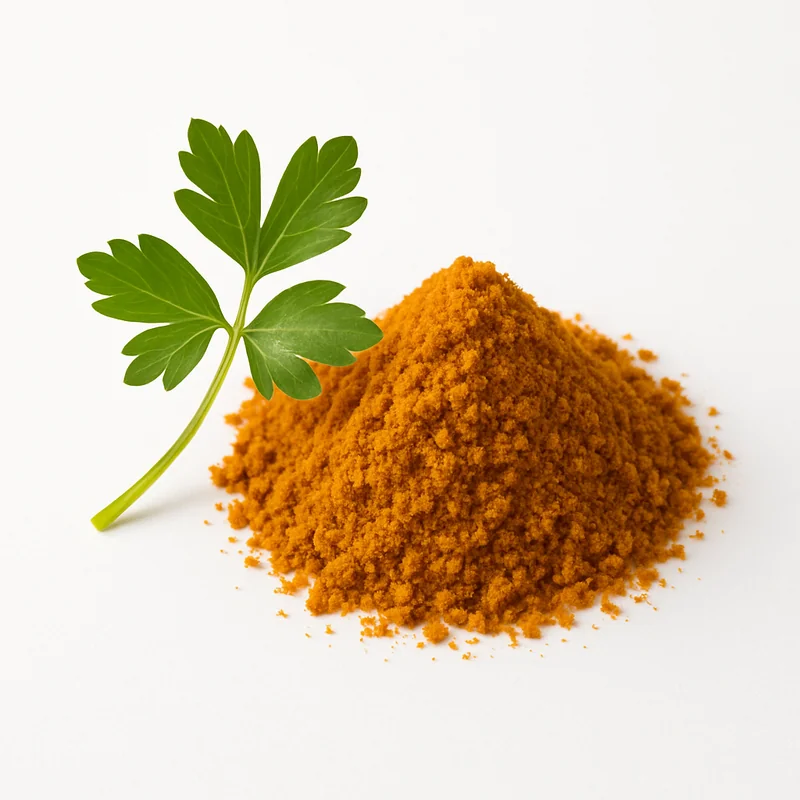
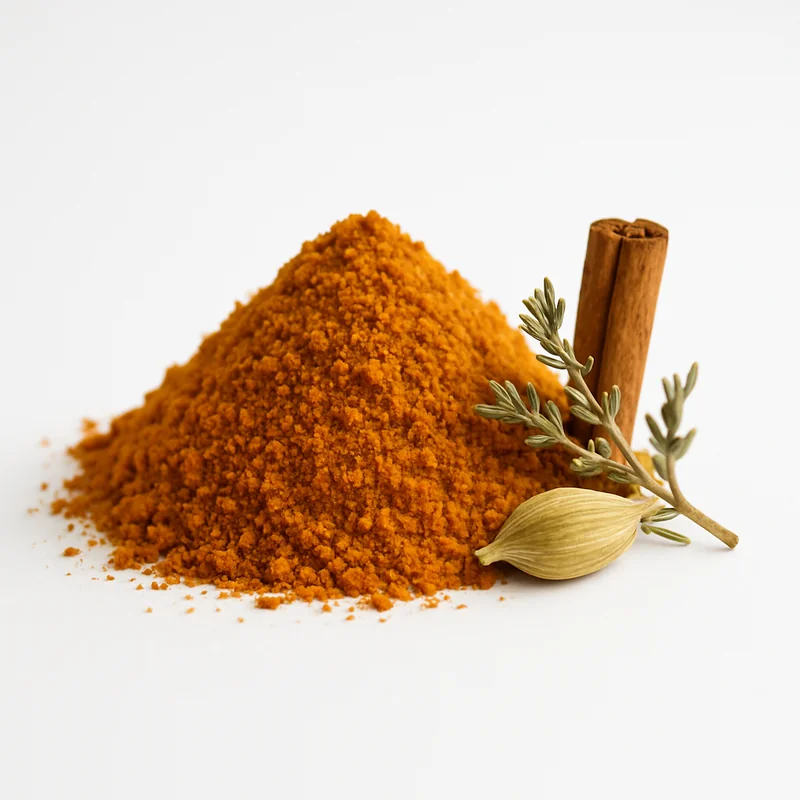
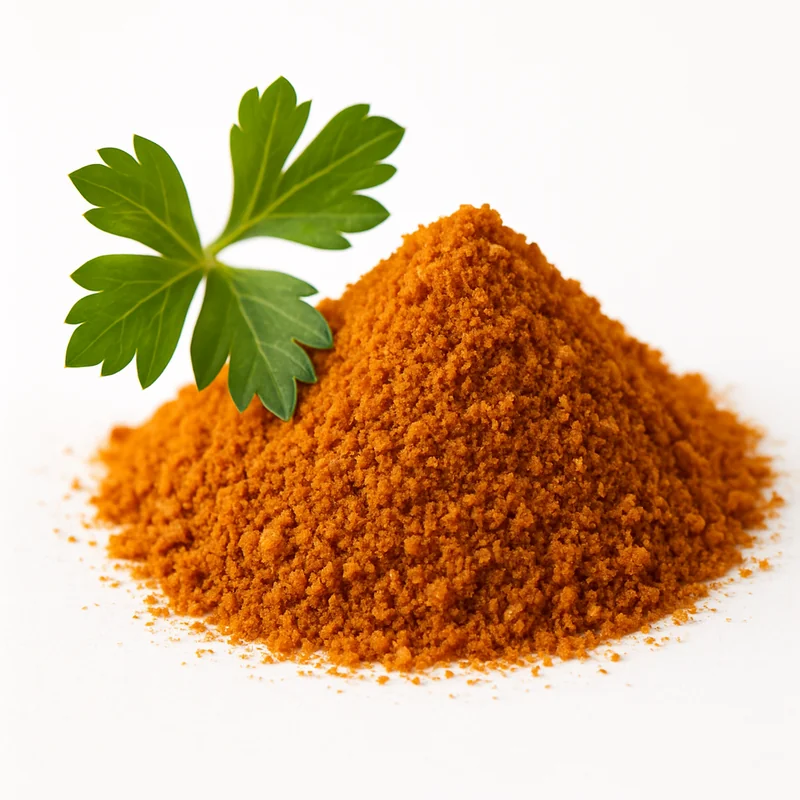
Ras el Hanout
Ras el hanout is a complex North African blend of a dozen or more spices, rich in iron and manganese and carrying curcumin, cinnamaldehyde, eugenol, piperine, and capsaicin for a broad antioxidant profile.
Nutrition · per ~2 g serving · ≈ a pinch
- Vitamin K1.2 mcg1% DV
- Vitamin B60.02 mg<1% DV
- Vitamin E0.08 mg<1% DV
- Thiamin0.01 mg<1% DV
- Riboflavin0.01 mg<1% DV
- Niacin0.07 mg<1% DV
- Folate1.8 mcg<1% DV
- Vitamin C0.26 mg<1% DV
- Vitamin A12.0 iu<1% DV
- Manganese0.22 mg10% DV
- Iron0.42 mg2% DV
- Copper0.02 mg2% DV
- Magnesium5.0 mg1% DV
- Calcium11.6 mg<1% DV
- Zinc0.08 mg<1% DV
- Potassium29.0 mg<1% DV
- Phosphorus6.6 mg<1% DV
- Selenium0.26 mcg<1% DV
- Sodium1.1 mg<1% DV
- Saturated Fat0.05 g
- Curcumin~60 mg
- Capsaicin~1.0 mg
- Piperine~80 mg
- Polyphenols~3.0 mg
Score · 97/100
Vitamins & minerals packed in relative to calories — the single biggest driver of the score.
How much protein it delivers, by absolute grams and per calorie.
Dietary fiber for gut health, satiety and steadier blood sugar.
Fat quality — unsaturated vs saturated, and trans-fat free.
Polyphenols, flavonoids and other beneficial plant compounds for this food group.
Low sugar with a high fiber-to-carb ratio scores best — gentler on blood sugar.
- Manganese478% DV
- Iron117% DV
- Copper94% DV
- Magnesium60% DV
- Vitamin K50% DV
Overview
Ras el hanout, 'head of the shop,' is North Africa's most elaborate blend, traditionally a closely guarded mix of a dozen or more spices that varies by maker. A typical version layers earthy cumin and coriander, warm cinnamon and ginger, golden turmeric, floral cardamom, pungent cloves and black pepper, nutmeg, and a touch of chili, sometimes with dried rosebud or lavender for fragrance. Because it draws on the same seed-and-bark spices as curry powder and garam masala, it is similarly mineral-dense, supplying roughly 21 mg iron, 11 mg manganese, 580 mg calcium, 250 mg magnesium, and 1,450 mg potassium per 100 g at about 360 kcal. Its teaspoon-scale use keeps the practical micronutrient contribution small, but its phytochemical breadth is the point: curcumin, cinnamaldehyde, eugenol, piperine, and capsaicin all appear together, and the pepper content can aid the absorption of co-ingested compounds. Ras el hanout is best appreciated as a flavor-and-antioxidant tour de force used to season Moroccan tagines, couscous, and roasted meats.
Health Benefits (3)
- Provides a broad spectrum of antioxidant polyphenolsmoderateCurcumin, cinnamaldehyde, eugenol, and capsaicin together scavenge free radicals and modulate multiple inflammatory pathways, with piperine enhancing their bioavailability
- Supports digestion and appetitelimitedCumin, coriander, ginger, and cardamom carminatives stimulate digestive secretions and ease gastrointestinal discomfort
- Supplies minerals for enzyme and oxygen-transport functionlimitedIron and manganese act as cofactors for hemoglobin synthesis and antioxidant defense
Food Pairings
- ·Pair with olive oil or ghee because the blend's curcumin and capsaicin are fat-soluble
- ·Add to lamb, chicken, and chickpea tagines where the warm complexity shines
- ·Include black pepper, already present in most blends, to support curcumin absorption
Practical Tips
- ·Bloom in warm fat before adding liquid to release the full aromatic spectrum
- ·Use as a dry rub or stir into stews; a little carries a lot of flavor
- ·Buy small quantities fresh, as a blend this complex loses nuance within months
Optimal Timing
No circadian dependency; benefits from regular culinary use.
Negligible calories at culinary doses; compatible with fasting.
