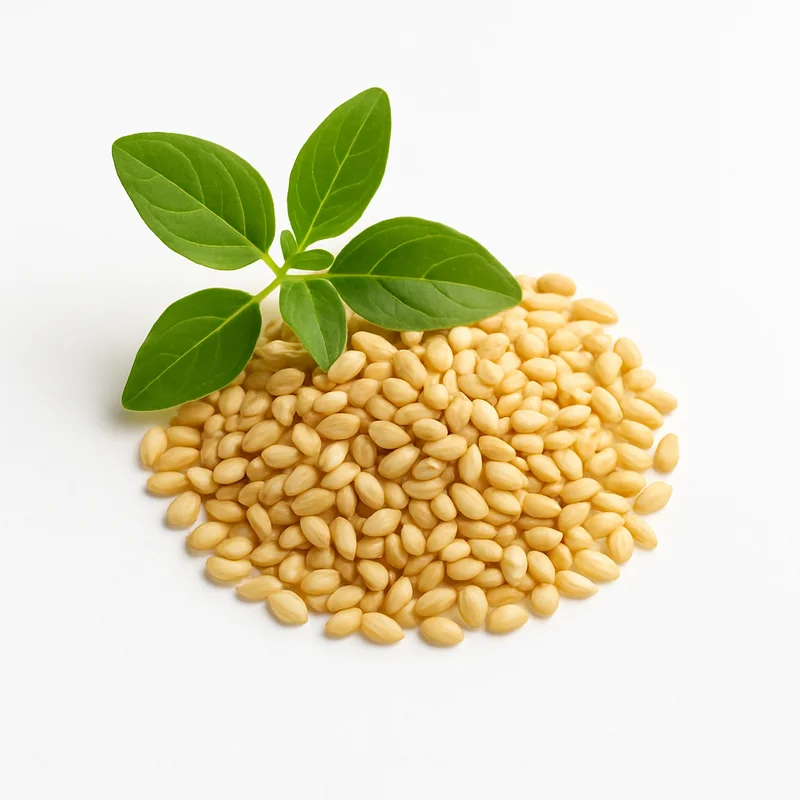
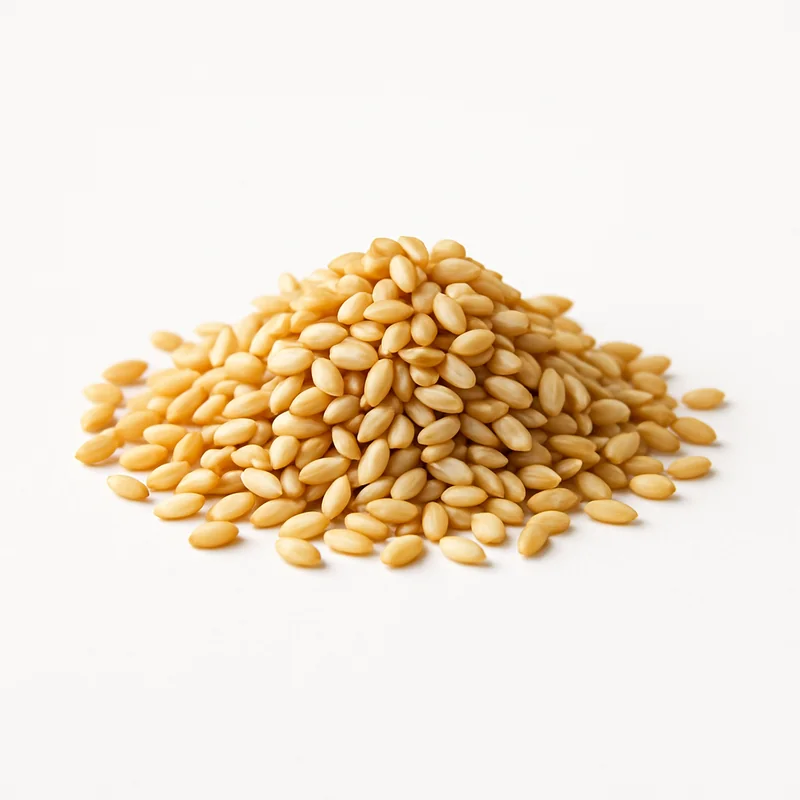
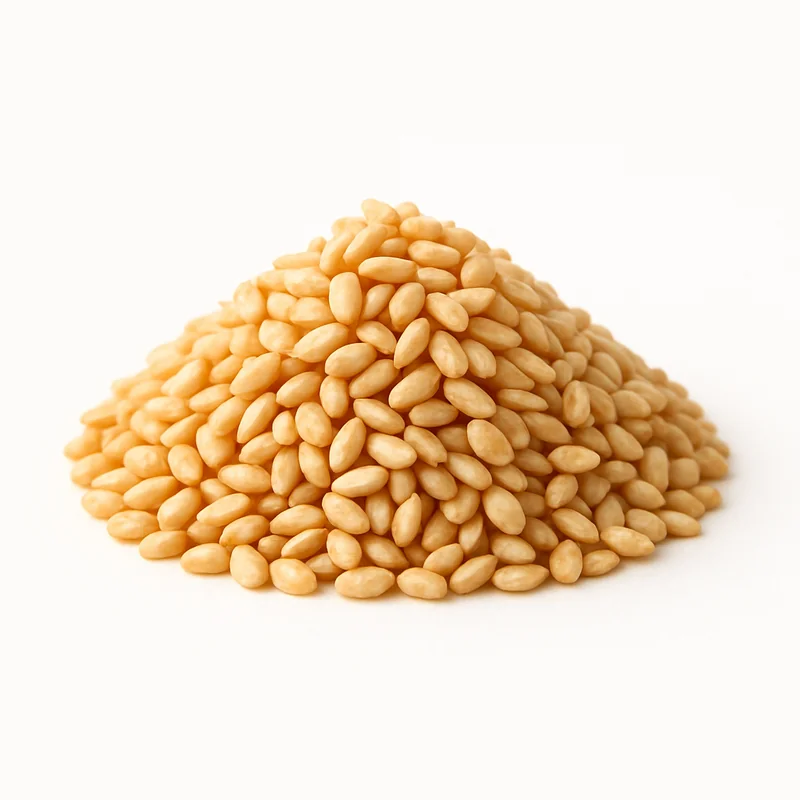
Sesame Seed
Sesame seeds are oil-rich seeds exceptionally dense in calcium, copper, and manganese and the source of the lignans sesamin and sesamolin.
Nutrition · per ~2 g serving · ≈ a pinch
- Thiamin0.02 mg1% DV
- Vitamin B60.02 mg<1% DV
- Niacin0.09 mg<1% DV
- Folate1.9 mcg<1% DV
- Riboflavin0.00 mg<1% DV
- Vitamin E0.01 mg<1% DV
- Pantothenic Acid0.00 mg<1% DV
- Vitamin A0.18 iu<1% DV
- Copper0.08 mg9% DV
- Manganese0.05 mg2% DV
- Magnesium7.0 mg2% DV
- Iron0.29 mg2% DV
- Calcium19.5 mg2% DV
- Zinc0.15 mg1% DV
- Selenium0.69 mcg1% DV
- Phosphorus12.6 mg1% DV
- Potassium9.4 mg<1% DV
- Sodium0.22 mg<1% DV
- Saturated Fat0.14 g
- Lignans~0.60 mg
Score · 97/100
Vitamins & minerals packed in relative to calories — the single biggest driver of the score.
How much protein it delivers, by absolute grams and per calorie.
Dietary fiber for gut health, satiety and steadier blood sugar.
Fat quality — unsaturated vs saturated, and trans-fat free.
Polyphenols, flavonoids and other beneficial plant compounds for this food group.
Low sugar with a high fiber-to-carb ratio scores best — gentler on blood sugar.
- Copper454% DV
- Manganese107% DV
- Magnesium84% DV
- Iron81% DV
- Calcium75% DV
Overview
Sesame seeds (Sesamum indicum) are among the oldest cultivated oilseed crops, domesticated over 5,000 years ago across Africa and the Indian subcontinent. At roughly 573 kcal per 100g they are nutritionally concentrated, supplying about 49.7g of predominantly unsaturated fat, 17.7g of plant protein, and 11.8g of fiber. Their standout minerals are calcium (~975 mg/100g, among the richest plant sources), copper (~4.1 mg), manganese (~2.5 mg), magnesium (~351 mg), iron (~14.6 mg), and phosphorus (~629 mg). Sesame's signature bioactives are the furofuran lignans sesamin and sesamolin, studied for antioxidant, cholesterol-lowering, and liver-supportive effects, alongside the antioxidant sesamol formed on roasting. Their nutty flavor deepens with toasting, and they form the base of tahini, halva, and gomashio across Middle Eastern, East Asian, and African cuisines. Because the minerals and oils are concentrated in the hull, hulled and unhulled seeds differ markedly in calcium content.
Health Benefits (3)
- Supports bone mineral densitymoderateExceptional calcium, magnesium, copper, and manganese content supplies the mineral cofactors required for collagen cross-linking and bone matrix formation
- Helps lower LDL cholesterol and oxidative stressmoderateSesamin and sesamolin inhibit cholesterol absorption and synthesis while sparing gamma-tocopherol, enhancing systemic antioxidant capacity
- Supports liver function and lipid metabolismmoderateSesamin upregulates hepatic fatty-acid oxidation enzymes and reduces lipid peroxidation
Food Pairings
- ·Pair with leafy greens or tahini-based dressings because the seeds' fat improves absorption of fat-soluble carotenoids and vitamin K
- ·Combine with vitamin-C-rich foods because ascorbate enhances absorption of sesame's non-heme iron
Practical Tips
- ·Toast lightly before use to develop sesamol and deepen flavor, but avoid scorching which degrades the oils
- ·Grind or chew thoroughly because whole seeds often pass undigested, limiting mineral and lignan uptake
- ·Choose unhulled seeds for far higher calcium content
Optimal Timing
Sesame's minerals and lignans have no circadian dependency and benefit from steady daily intake.
Calorie-dense; not fasting-compatible in meaningful amounts.
