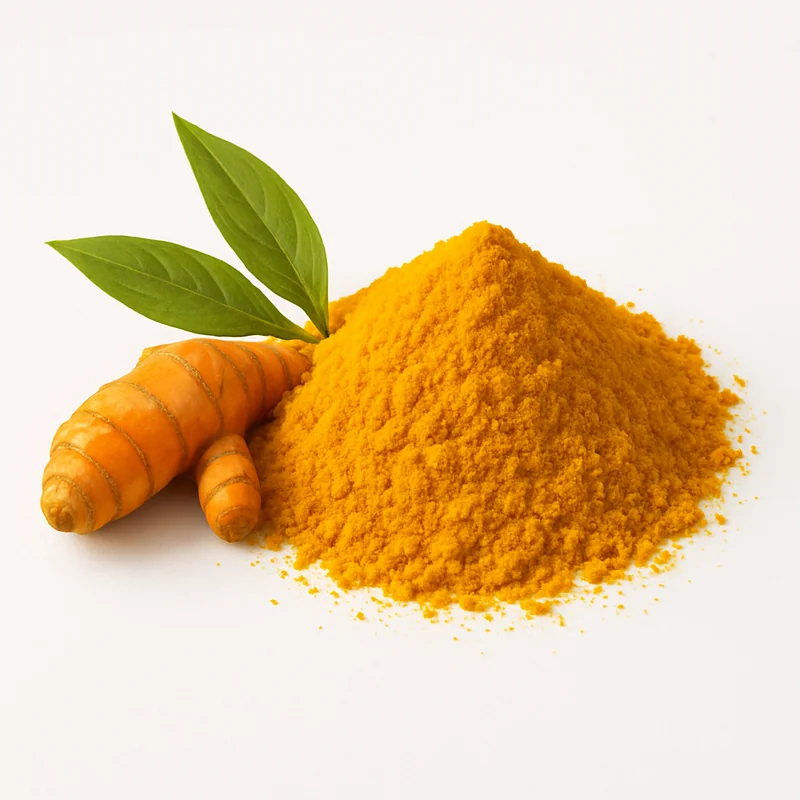
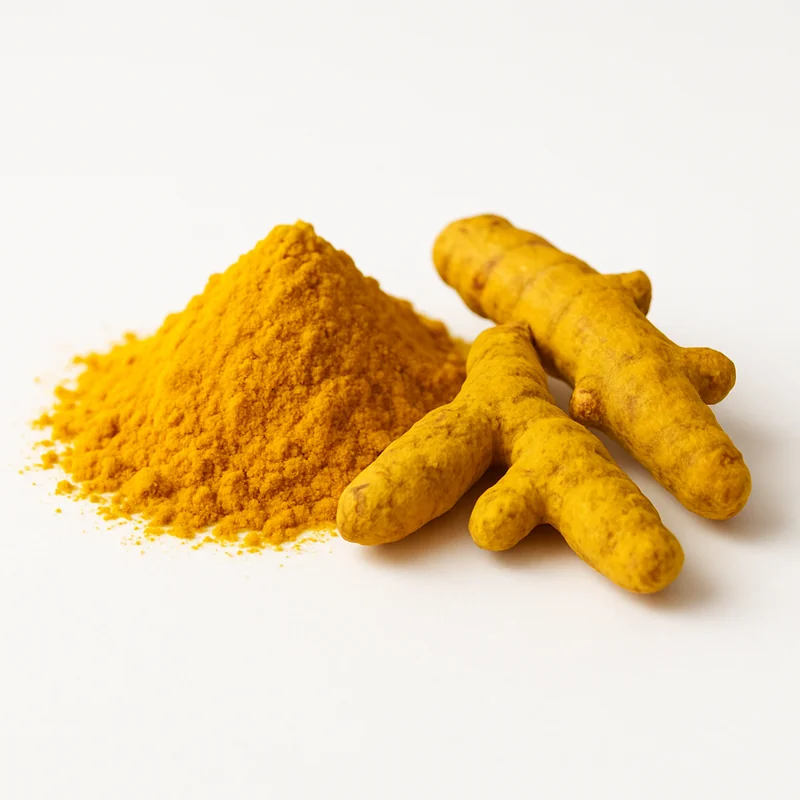
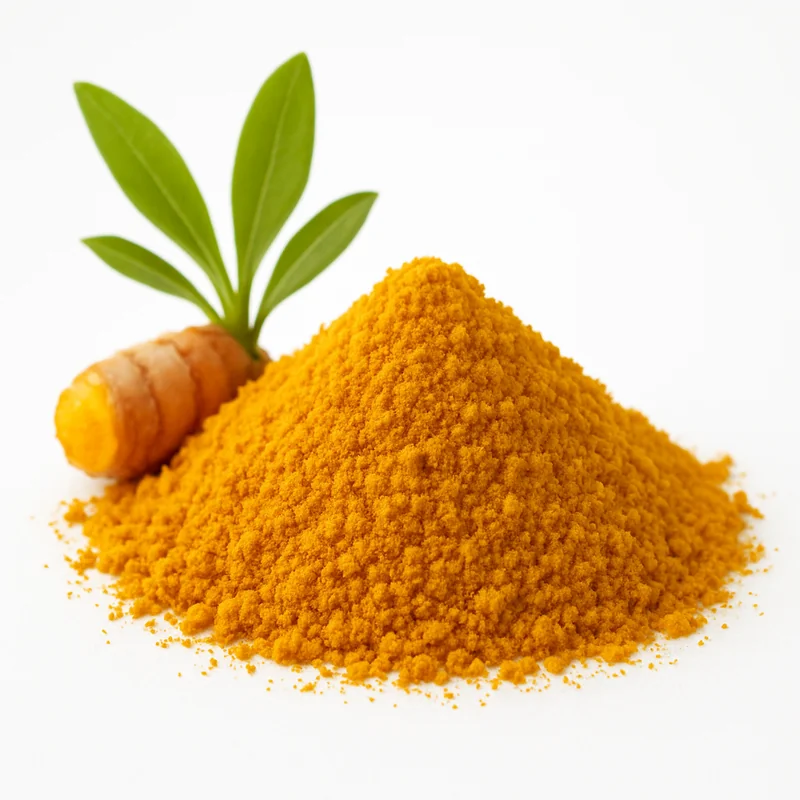
Turmeric (Ground)
Ground turmeric is a vivid yellow rhizome powder rich in curcuminoids, delivering potent anti-inflammatory and antioxidant activity alongside exceptional iron and manganese.
Nutrition · per ~2 g serving · ≈ a pinch
- Vitamin E0.09 mg<1% DV
- Vitamin K0.27 mcg<1% DV
- Niacin0.03 mg<1% DV
- Vitamin B60.00 mg<1% DV
- Folate0.40 mcg<1% DV
- Vitamin C0.01 mg<1% DV
- Manganese0.40 mg17% DV
- Iron1.1 mg6% DV
- Copper0.01 mg1% DV
- Magnesium3.9 mg<1% DV
- Potassium41.6 mg<1% DV
- Zinc0.09 mg<1% DV
- Phosphorus6.0 mg<1% DV
- Calcium3.4 mg<1% DV
- Sodium0.54 mg<1% DV
- Saturated Fat0.04 g
- Curcumin~60 mg
- Glutathione~0.30 mg
- Polyphenols~3.0 mg
Score · 98/100
Vitamins & minerals packed in relative to calories — the single biggest driver of the score.
How much protein it delivers, by absolute grams and per calorie.
Dietary fiber for gut health, satiety and steadier blood sugar.
Fat quality — unsaturated vs saturated, and trans-fat free.
Polyphenols, flavonoids and other beneficial plant compounds for this food group.
Low sugar with a high fiber-to-carb ratio scores best — gentler on blood sugar.
- Manganese861% DV
- Iron306% DV
- Copper67% DV
- Magnesium46% DV
- Potassium44% DV
Overview
Turmeric (Curcuma longa) is a rhizome native to South and Southeast Asia, ground into a deep-gold powder that has anchored Ayurvedic and culinary traditions for over 4,000 years. Its signature bioactives are the curcuminoids—curcumin, demethoxycurcumin, and bisdemethoxycurcumin—which comprise roughly 2-5% of the dried rhizome and drive nearly all of its researched health effects. Ground turmeric is nutrient-dense and concentrated at about 312 kcal per 100g, with 9.7g protein, 67g carbohydrate (22.7g of it fiber), and 3.25g fat. Mineral content is striking: roughly 55mg iron per 100g (one of the richest plant sources), 19.8mg manganese, 193mg magnesium, 268mg calcium, and 2080mg potassium, plus 0.6mg copper and 4.5mg zinc. It also supplies vitamin C, niacin, vitamin B6, and a trace of vitamin K. Beyond curcuminoids, turmeric contains turmerone-rich volatile oils (ar-turmerone) studied for neurogenesis, and the phenolic pigment system gives it its color and free-radical-scavenging capacity. The longevity thesis rests on curcumin's pleiotropic modulation of NF-κB, Nrf2, and inflammatory cytokines, dampening the chronic low-grade inflammation underlying aging. Bioavailability is the central caveat—curcumin is poorly absorbed alone—so turmeric is best consumed with black pepper (piperine boosts absorption up to 20-fold) and a fat source. Typical culinary doses are 1-3g daily; concentrated extracts deliver far more.
Health Benefits (4)
- Reduces systemic inflammation and joint painstrongCurcuminoids inhibit NF-κB and COX-2 signaling and downregulate pro-inflammatory cytokines (TNF-α, IL-6), lowering CRP and easing osteoarthritis symptoms
- Provides broad antioxidant and cellular defensestrongCurcumin activates the Nrf2 pathway, upregulating endogenous antioxidant enzymes (glutathione, SOD, catalase) and directly scavenging reactive oxygen species
- Supports cardiovascular and endothelial healthmoderateCurcuminoids improve endothelial nitric oxide function and reduce oxidative modification of LDL, supporting vascular flexibility
- May support brain health and moodemergingAr-turmerone and curcumin cross the blood-brain barrier, modulating neuroinflammation and supporting BDNF expression
Food Pairings
- ·Pair with black pepper because piperine inhibits curcumin's hepatic glucuronidation, increasing bioavailability up to 2000%
- ·Combine with a fat source like olive oil or coconut milk because curcumin is lipophilic and absorbs poorly without dietary fat
- ·Add to lentils and rice because turmeric's iron complements plant-protein meals and its bioactives stabilize during slow simmering
Practical Tips
- ·Always pair with a pinch of black pepper and some fat to dramatically improve curcumin absorption
- ·Bloom turmeric briefly in warm oil at the start of cooking to release fat-soluble curcuminoids and mellow its raw bitterness
- ·Store in an airtight container away from light; ground turmeric loses curcuminoid potency within 6-12 months
- ·Use 1-3g (about ½-1 tsp) daily for culinary benefit; the bright pigment stains surfaces and fabric permanently
Optimal Timing
Curcumin is fat-soluble and poorly absorbed, so taking turmeric alongside a fat- and pepper-containing meal maximizes uptake.
- · on an empty stomach in high doses
High doses may cause GI upset when fasting; best consumed with food. Those on blood thinners or with gallstones should consult a clinician at therapeutic doses.
