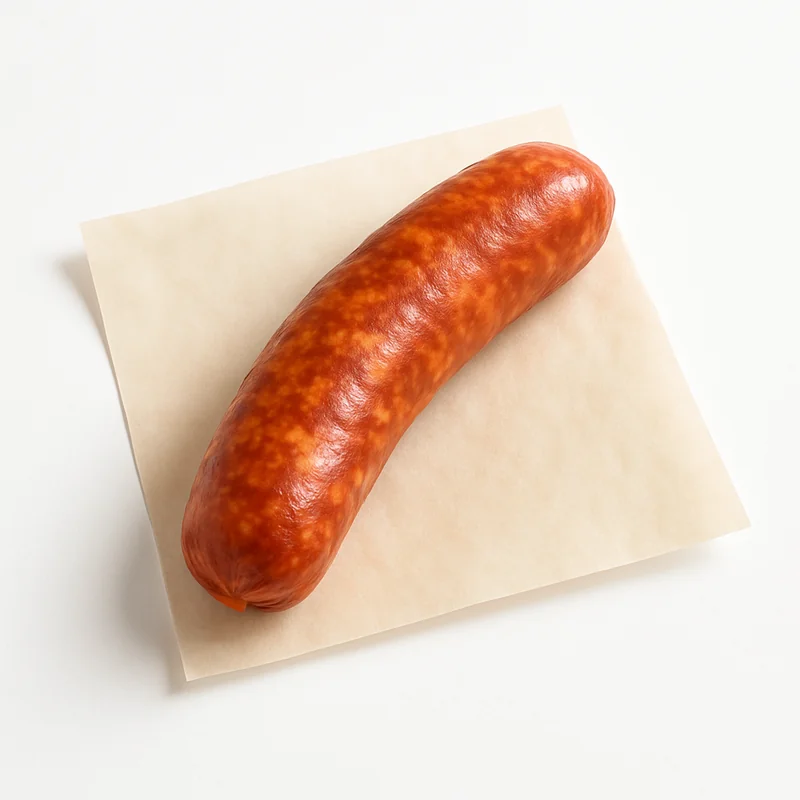
Chorizo Pork Sausage
Chorizo is a highly seasoned pork sausage traditional to Spanish and Latin American cuisines, characterized by its spice profile and fat content. While nutrient-dense in protein and B vitamins, it is calorie and saturated fat-dense, requiring mindful portion control for longevity-focused diets.
Variants (2)
Nutrition · per ~85 g serving · ≈ a palm-sized piece (~3 oz)
- Vitamin K5.1 mcg4% DV
- Sodium926.5 mg40% DV
- Zinc2.0 mg19% DV
- Iron2.3 mg13% DV
- Potassium314.5 mg7% DV
- Magnesium17.8 mg4% DV
- Calcium17.0 mg1% DV
- Monounsaturated Fat15.7 g
- Saturated Fat12.1 g
- Polyunsaturated Fat2.8 g
- Capsaicin~43 mg
- Organosulfur (Allicin)~51 mg
Score · 45/100
Vitamins & minerals packed in relative to calories — the single biggest driver of the score.
How much protein it delivers, by absolute grams and per calorie.
Dietary fiber for gut health, satiety and steadier blood sugar.
Fat quality — unsaturated vs saturated, and trans-fat free.
Polyphenols, flavonoids and other beneficial plant compounds for this food group.
Low sugar with a high fiber-to-carb ratio scores best — gentler on blood sugar.
- Sodium47% DV
- Zinc22% DV
- Iron15% DV
- Potassium8% DV
- Vitamin K5% DV
Overview
Chorizo originated in the Iberian Peninsula and has become a staple across Spanish-speaking regions. This cured pork sausage derives its distinctive color and flavor from paprika, garlic, and various spices including cumin and oregano. Per 100g, chorizo typically provides 24-28g protein, 21-27g fat (with significant saturated fat content), and minimal carbohydrates. While it offers bioavailable heme iron and B vitamins (particularly B12 and niacin) essential for energy metabolism and neurological function, chorizo's high sodium content (600-900mg per 100g) and saturated fat profile (8-12g) present cardiovascular considerations for regular consumption. The paprika and garlic compounds contain polyphenols with antioxidant properties, though quantities are modest. For longevity optimization, chorizo functions best as an occasional flavoring agent rather than a primary protein source, leveraging its concentrated umami and spice profile to enhance vegetable-forward or legume-based dishes. The curing process involves nitrates/nitrites, which warrant consideration for those sensitive to processed meat consumption. Portion control—using 1-2 ounces as a flavoring rather than a main course—allows enjoyment of its culinary benefits while minimizing metabolic burden.
Health Benefits (4)
- Supports energy production and red blood cell formationstrongHigh heme iron (2-3mg per 100g) and B12 (1-2mcg per 100g) facilitate oxygen transport and ATP synthesis, critical for cellular energy metabolism
- Provides complete protein for muscle maintenancestrongContains all nine essential amino acids (24-28g per 100g) necessary for muscle protein synthesis and tissue repair
- Contributes antioxidant activity via paprika and garlic compoundsmoderateCapsaicinoids in paprika and allicin metabolites from garlic reduce oxidative stress and inflammatory markers, though bioavailable quantities are modest in typical servings
- May support iron absorption when paired with vitamin C sourcesstrongHeme iron from pork is highly bioavailable (15-35% absorption rate) and non-heme iron absorption is enhanced by concurrent vitamin C intake
Food Pairings
- ·Pair with bell peppers and tomatoes: vitamin C enhances non-heme iron absorption and the polyphenols in peppers have synergistic antioxidant effects
- ·Combine with legumes (beans, lentils): balances the saturated fat load with fiber and plant compounds while reducing overall sodium density per serving
- ·Mix into vegetable-forward dishes with leafy greens: dilutes calorie/fat concentration while the umami from chorizo enhances vegetable palatability
- ·Pair with fermented foods (kimchi, sauerkraut): probiotics may support gut barrier function and offset processed meat's potential negative effects on microbiome
Practical Tips
- ·Use chorizo as a flavoring agent (1-2 ounces) rather than a main protein; slice thinly and render the fat to distribute flavor while reducing per-serving consumption
- ·Choose Spanish-style chorizo over heavily processed varieties; verify ingredient lists for minimal additives and lower sodium formulations when possible
- ·Store cured chorizo in a cool, dry place or refrigerator; opened packages should be used within 7-10 days to minimize lipid oxidation
- ·Brown chorizo gently to render excess fat; drain on paper towels to reduce saturated fat intake by 20-30% while preserving flavor compounds
- ·Limit consumption to 1-2 times weekly and pair exclusively with high-fiber, nutrient-dense vegetables to maintain cardiovascular health markers
Optimal Timing
Consuming chorizo at lunch allows full digestive capacity and metabolic processing before evening; evening consumption may delay sleep due to high fat and sodium content triggering fluid retention
- · evening
- · late-night
- · fasting
Chorizo's high sodium and saturated fat profile makes it unsuitable for fasting windows; breaks fast with lighter, whole-food proteins instead
Concerns
- · High saturated fat
- · Moderate sodium
- · Processed meat (WHO Group 1 carcinogen)
Systems supported
body systems this food feedsPathways supported
biochemical reactions enabled by this foodCompared to other meats
Per 100 g of the default form. Bars show how much higher or lower chorizo pork sausage is than the average across 25 peer foods in this category. Green means a favorable direction; amber means the opposite.
What people ask about chorizo pork sausage
What is chorizo pork sausage?
Chorizo Pork Sausage is classified as a meat. Chorizo is a highly seasoned pork sausage traditional to Spanish and Latin American cuisines, characterized by its spice profile and fat content.
Is chorizo pork sausage healthy?
Chorizo Pork Sausage scores 45/100 in Formulate, making it a limited choice nutritionally. Its strongest contributions come from Sodium, Zinc, Iron. The score blends nutrient density, fiber, healthy fats, protein quality, bioactive compounds, and glycemic impact.
Is chorizo pork sausage high in protein?
Yes — it's a high-protein food. A 85 g serving provides about 20.4 g of protein (~41% of the 50 g daily value).
Is chorizo pork sausage high in fiber?
Not really. A 85 g serving provides about 0 g of fiber (~0% of the 28 g daily value).
What vitamins and minerals are in chorizo pork sausage?
In a 85 g serving, chorizo pork sausage is highest in Sodium (~40% DV), Zinc (~19% DV), Iron (~13% DV).
Is chorizo pork sausage keto-friendly?
Yes — it fits comfortably in most keto plans. A 85 g serving has about 1.9 g of net carbs (1.9 g total minus 0 g fiber).
When is the best time to eat chorizo pork sausage?
Best in the midday. Consuming chorizo at lunch allows full digestive capacity and metabolic processing before evening; evening consumption may delay sleep due to high fat and sodium content triggering fluid retention
How much chorizo pork sausage should I eat?
A typical serving is around 85 g (~387 kcal), based on the FDA's Reference Amount Customarily Consumed for this food category. There's no fixed daily target — most adults benefit from rotating chorizo pork sausage alongside several other meat sources.
What pairs well with chorizo pork sausage?
Chorizo Pork Sausage pairs nicely with: Pair with bell peppers and tomatoes: vitamin C enhances non-heme iron absorption and the polyphenols in peppers have synergistic antioxidant effects; Combine with legumes (beans, lentils): balances the saturated fat load with fiber and plant compounds while reducing overall sodium density per serving; Mix into vegetable-forward dishes with leafy greens: dilutes calorie/fat concentration while the umami from chorizo enhances vegetable palatability; Pair with fermented foods (kimchi, sauerkraut): probiotics may support gut barrier function and offset processed meat's potential negative effects on microbiome.
Are there any concerns with eating chorizo pork sausage?
High saturated fat; Moderate sodium; Processed meat (WHO Group 1 carcinogen).
Supplements that mirror Chorizo Pork Sausage's nutrient profile
Encyclopedia entries that supply the same signature nutrients chorizo pork sausage contributes. Click through to see clinical dose ranges, evidence quality, and bioavailable forms.
Signature nutrients in Chorizo Pork Sausage
These are the nutrients chorizo pork sausagecontributes meaningfully toward (≥10% DV per 100 g serving). Click one to see what it does in the body, which supplements concentrate it, and which other foods are top sources.